

Old Dhaka’s Iftar: A Timeless Cuisine of Flavours and Heritage
Each afternoon, countless fasting Muslims from every corner of the capital flock to Chawkbazaar—not simply to acquire food, but to immerse themselves in a living legacy that has flourished for more than four centuries

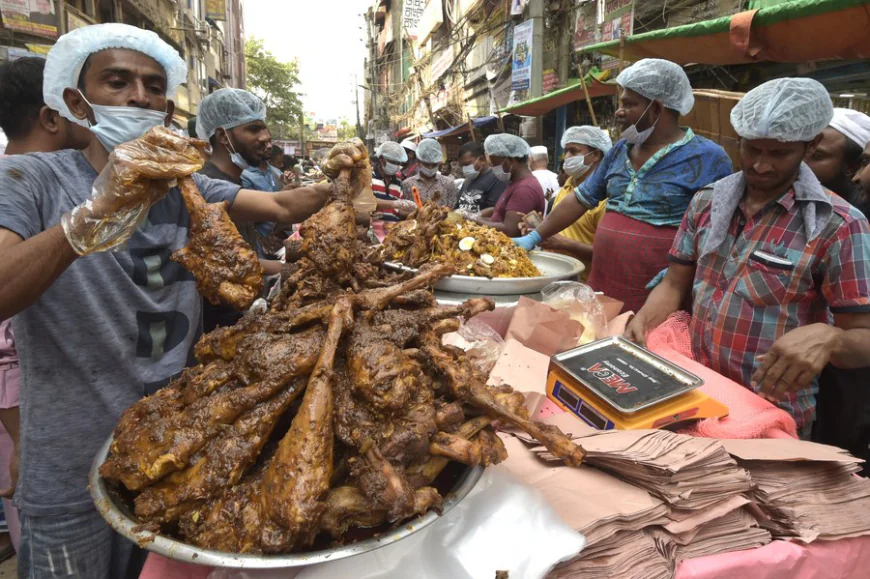
As the sacred month of Ramadan begins, the winding lanes of Old Dhaka become resonant with the humming of humans in the afternoon all browsing one shop to another for fast-breaking iftar. Chawkbazar, the key traditional iftar market, is one such place that becomes a vivid mosaic of fragrances, hues and time-honored culinary customs.
Each afternoon, countless fasting Muslims from every corner of the capital flock to this historic bazaar—not simply to acquire food, but to immerse themselves in a living legacy that has flourished for more than four centuries.
Today, Chawkbazar’s iftar market delivers an overwhelming sensory experience. On the first evening of Ramadan 1447 Hijri, the congested lanes before the historic Shahi Mosque overflowed with families, companions, and devoted food enthusiasts.
Nearly 100 popular varieties on offer include chicken kababs, morog musallam, boti kebab, tikka kebab, kofta, chicken kathi, shammi or shish kebab, sutki kebab, quail roast, pigeon roast, jalebi, shahi jalebi, nimki, samucha, halwa, haleem and doi bora. As for beverages, Chawkbazar offers Saudi Labang, Kashmiri sharbat and Irani sharbat.
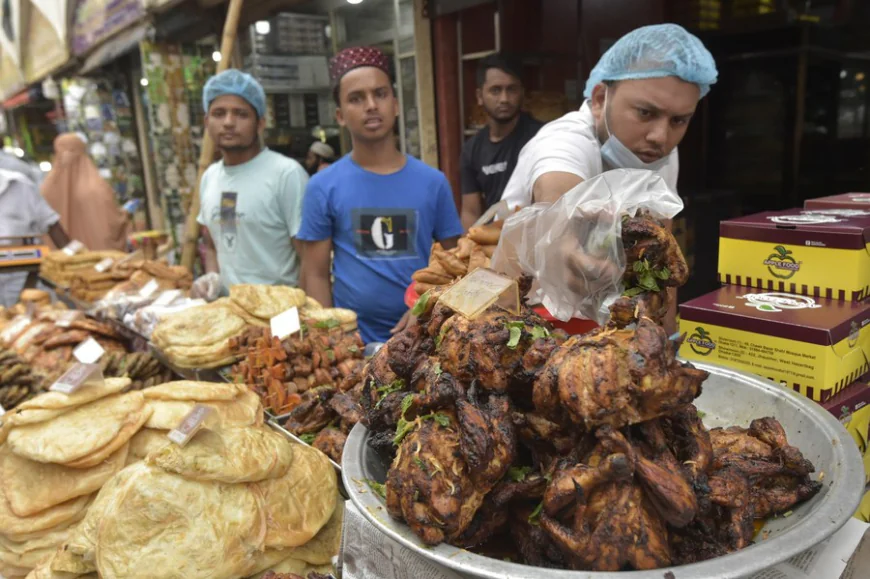
The assortment astonishes—from modest roadside stalls offering beguni and piyaju for a mere Tk 5 to Tk 10, to extravagant delicacies such as whole roasted mutton kebab priced at Tk 10,000. Time-honored favorites including Beauty Lacchi and Faluda, Doi Bora and Borhani continue attracting crowds alongside contemporary adaptations.
Naan shops have special arrangements, with milk naan selling for Tk 60, garlic naan for Tk 70 and special almond naan for Tk 80. Mutton leg is usually priced at Tk 800 apiece, beef suti kebab at Tk 1,200 per kg and mutton suti kebab at Tk 1,600 per kg.
Other popular items include beef kala bhuna at Tk 150 per packet and chicken tawa at Tk 120. Quail roast sells at Tk 80-90, chicken skewers at Tk 50-60, chicken roast at Tk 320-350 apiece, chicken lollipop at Tk 50, and kebabs and chicken balls at Tk 60.
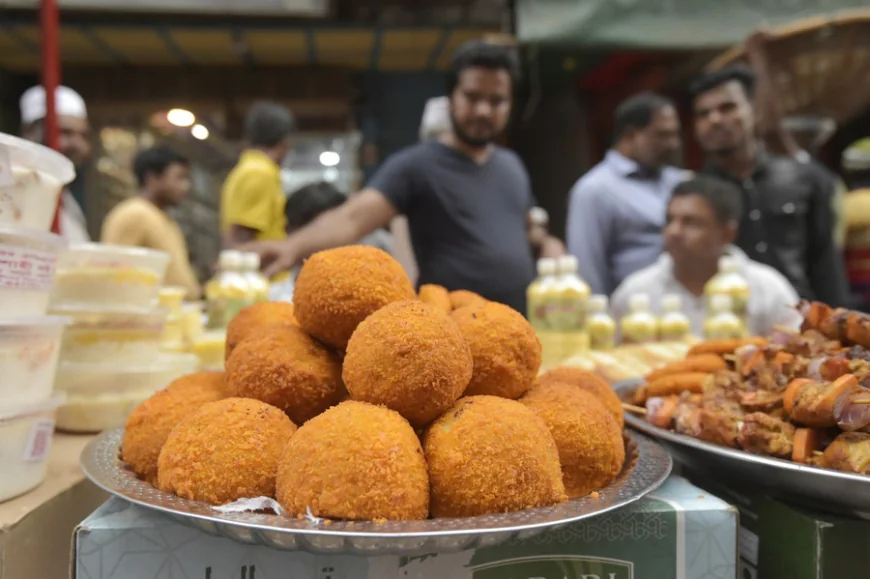
For numerous visitors, a pilgrimage to Chawkbazar during Ramadan remains essential. Arafat Hossain, who journeys from beyond Old Dhaka seven or eight times each Ramadan, reflects, “The inaugural day of fasting demands I procure my iftar from here. Visiting during this sacred period reminds me profoundly of our historical richness.”
Four centuries after its genesis, Chawkbazar's iftar marketplace endures as far more than a mere food destination—it stands as a living repository of Bangladeshi gastronomic heritage.
The origins of Chawkbazar’s iftar tradition stretch back to the seventeenth century, when Mughal Subahdar Shaista Khan erected the Shahi Mosque in 1676, catalysing this area's emergence as a commercial and cultural nucleus. In 1702, Nawab Murshid Quli Khan officially constituted Chawkbazar as an organized marketplace, and surrounding the mosque, a seasonal market of delicacies gradually materialised during Ramadan.
When Mughal forces established their Dhaka encampment during the sixteenth century, they transported both their culinary heritage and expert cooks. These imperial chefs introduced sophisticated preparations characterized by robust spices and generous oil applications, defining features of Mughlai cuisine that eventually transcended palace confines as native cooks absorbed these techniques.
Read More: Why Bangladesh Struggles to Attract Tourists
Tourism Struggles Ahead of Ramadan in Bangladesh
How Political Unrest Crushed Bangladesh's Tourism & Aviation Industry
Why Bangladesh Struggles to Attract Tourists
A Year of Rapid Change in Bangladesh’s Aviation Industry
Some Heritage Sites and Monuments of Bangladesh
Nine Attractive and Scenic Places of Bangladesh
Narayanganj's Murapara Zamindar Bari: A Unique Example of Architectural Style
Bangladesh’s Aviation Drive Could Reshape Future of Tourism
Bangladesh-India Relations Show Signs of Recovery
New Bangladesh Govt Brings Light of Hope to Indian Tourism Sector
Bangladesh Resumes Visa Services in India
Bangladesh in the Eyes of an Indian Traveller
International Arbitration Board orders CAAB to Pay Tk1,650cr to ADC
Prime Minister Holds Meeting on Dhaka Airport’s Third Terminal
Old Dhaka’s Iftar: A Timeless Cuisine of Flavours and Heritage
New Airport Cargo Facility Lies Idle Amid Export Slowdown
Russia Unbound: Tours, Visas, and Travel Tips for Bangladeshi Nationals
Govt Steps Up Airport Safety Measures
Cricket Diplomacy Delivers Tourism Boom for Sri Lanka
UK to Issue Only E-Visas for Bangladeshi Applicants from February 25
Indonesia Visa System for Bangladeshi Travelers and Businessmen: What You Need to Know
Cox’s Bazar Dried Fish Market: A 300cr Industry Beckons Tourists, Exporters
Development of Tourism Industry and Existing Barriers
PM Directs Swift Opening of Dhaka Airport’s Third Terminal
Fresh Talks Planned with Japanese Consortium on HSIA T3
Bangladesh Aviation and Tourism Journalists Association launched
Bangladesh Turns to China for Medical Treatment as Healthcare Cooperation Expands
Dhaka Regency Announces Special Ramadan Offers
Saudi Arabia Issues 1.4m Visas for Bangladeshis, 750,000 for Work
What's Your Reaction?
 Like
0
Like
0
 Dislike
0
Dislike
0
 Love
0
Love
0
 Funny
0
Funny
0
 Wow
0
Wow
0
 Sad
0
Sad
0
 Angry
0
Angry
0

Comments (0)