
Narayanganj's Murapara Zamindar Bari: A Unique Example of Architectural Style
A visit to the house offers insight into the lifestyle, customs, recreation and refined tastes of people in ancient times
 Tariq Al Banna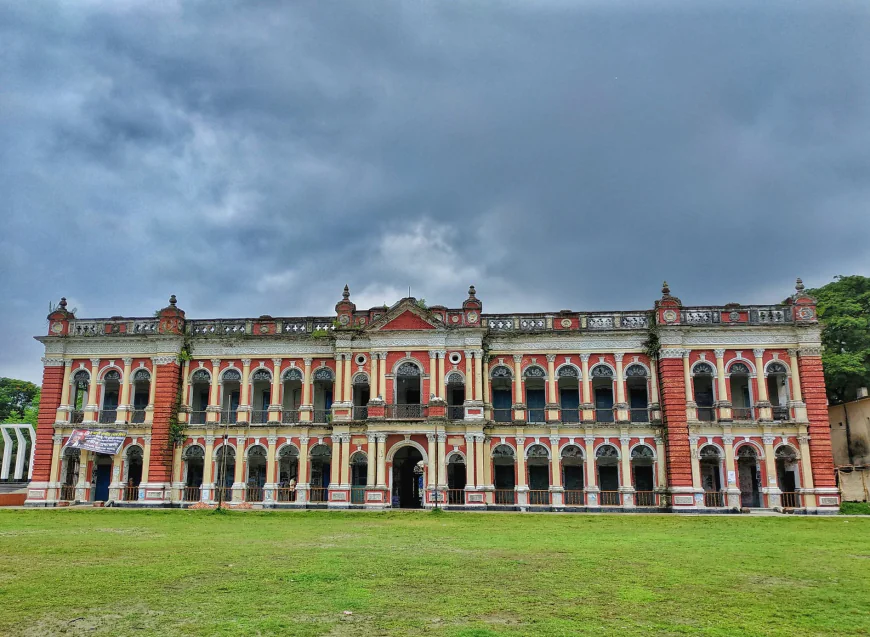
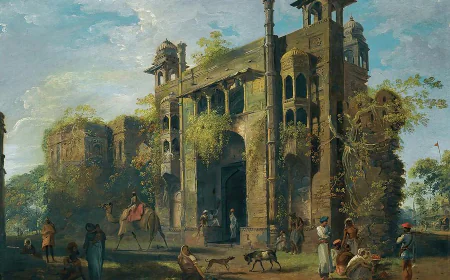
Murapara Zamindar Bari stands as a silent witness to archaeology, unique architectural design, and history and heritage. This historic zamindar house is a great attraction for travel enthusiasts across the country. A visit to the house offers insight into the lifestyle, customs, recreation and refined tastes of people in ancient times. In the lush green village of Murapara, the zamindar house still stands as a testament to time. The historic structure is very popular with tourists. As a result, countless travellers from different parts of the country visit throughout the year. At the same time, many tourists and visitors also come from abroad.
It is only a 30-minute journey from Dhaka. Located just 18 kilometres from the bustling capital city of Dhaka, the historic house stands slightly west of Rupganj Upazila Parishad complex in Narayanganj, on the eastern bank of the Shitalakshya River. Built in a serene, shaded environment filled with birdsong, the charming zamindar house attracts visitors with its tasteful construction style and decorative craftsmanship. It is said that the history, culture, civilisation and settlement of Rupganj developed around the zamindar house of Murapara in ancient times. Over generations, the traditional zamindar house was renovated and expanded by several zamindars at different times. It was founded by Babu Ramratan Banerjee. Later, several of his descendants renovated and expanded the palace.
Established in 1889 on about 62 bighas of land by Babu Ramratan Banerjee, the zamindar house was renovated several times. At different periods, his descendants extended the front and rear sections of the main building, excavated ponds and added upper floors to the structure. The massive two-storey zamindar house, built 179 years ago, contains 95 ornately decorated rooms. These include a temple, storehouse, kachari room, guest house, drawing room, stable, an elegant dance hall, and two ponds at the front and rear.
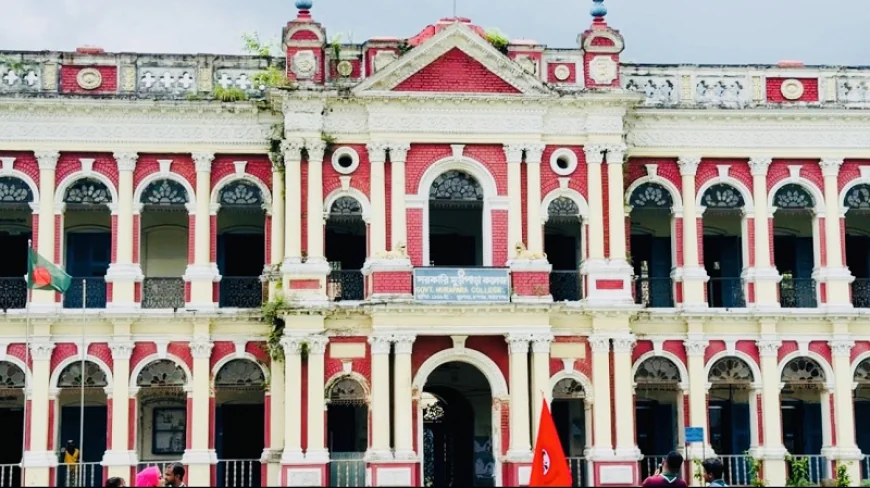
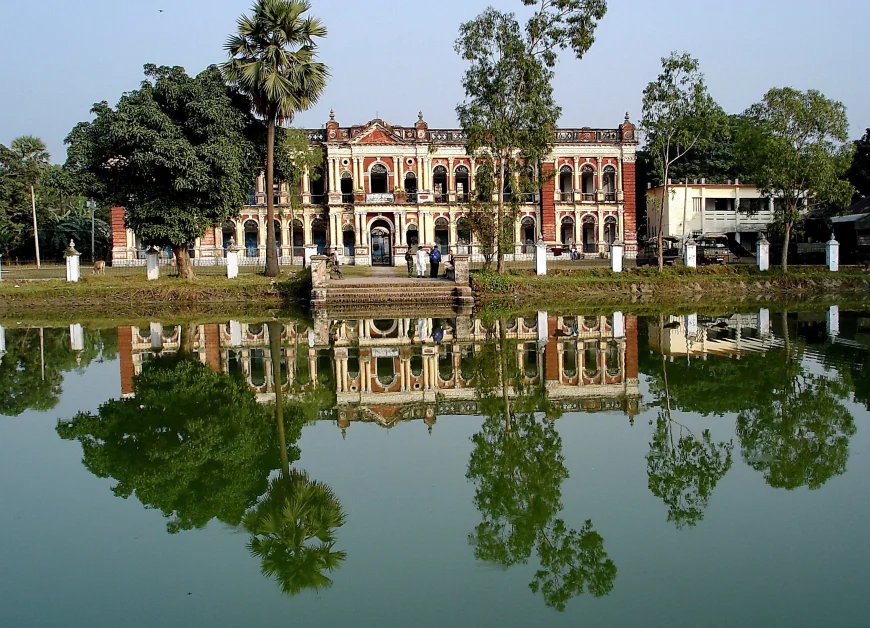
Visitors must pass through a grand main gate to enter inside. Within the inner quarters there are two more gates. Beyond the last gate lies a paved pond designated for the women’s bathing. The pond is enclosed by high walls on all sides. Entry here was strictly prohibited to outsiders. In front of the house there is another vast pond, surrounded on all sides by cast-iron grills with intricate designs along with four paved ghats on each side. It was primarily built to enhance the beauty of the house and for the bathing of male guests. A special feature of the front pond is that the rise and fall of its water level is connected to the Shitalakshya, as it is linked to the river underground.
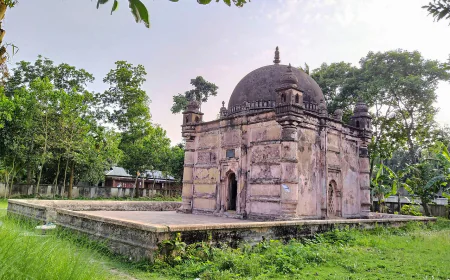
On the riverbank side in front of the zamindar house, beside the road, stand two temples, about 30 feet high. Next to the temples lies a calm and shaded mango grove. The trees are quite old, of uniform size and densely branched. Their branches spread out like umbrellas. There are countless trees. The base of nearly every mango tree has been paved. In addition, rows of casuarina trees stand at the entrance of the zamindar house. The huge gate at the entrance of the building gives an early impression of the grandeur of the zamindar house.
After the partition of the Indian subcontinent in 1947, all members of the zamindar family moved to Kolkata. The house then remained abandoned for some time. In 1948, the Government of Pakistan established a juvenile correction centre and a hospital there. Later, around 1966, the building was used to operate a school and college. In 1986, the Department of Archaeology of Bangladesh enlisted Murapara Zamindar Bari as an archaeological site. At present, a college has been established in Murapara Zamindar Bari, known as Murapara Government College. With the passage of time, the zamindar house now spreads the light of education. On the other hand, it remains lively from morning to night with the footsteps of tourists and visitors.
You may visit here on any day of the week. No entry fee is required to enter the unique and exquisite example of ancient architecture that is Murapara Zamindar Bari. It remains open to visitors at all times. However, as the rooms are used as classrooms for the college, entry into them is restricted. It is better to visit on a holiday, so that it does not disrupt the students’ lessons and you can explore the zamindar house fully. If you bring children along, they can also enjoy playing freely on the large green field of the college.
There is no need to worry about food. Murapara Bazaar is nearby, where there are hotels and restaurants. However, there are no residential hotels for overnight stays for travellers coming from far away. For this reason, it is best to plan a day trip. There is no designated place for visitors to keep their bags or belongings. Visitors have to carry them by hand or on their shoulders while touring.
Depending on the mode of transport, it takes only 30 to 40 minutes to reach the zamindar house from Dhaka. You can travel by bus, CNG or private car. From Sayedabad, Gulistan or Jatrabari in Dhaka, you need to get off at Rupshi Bus Stand or Bhulta. From there, take a CNG or rickshaw to the zamindar house. Alternatively, from Demra Staff Quarter, passing by Chupara and crossing the Shitalakshya River via the Majina Gazi Bridge, you will reach the zamindar house. On the other hand, you can take a BRTC bus operating from Kuril in the capital to Bhulta Gausia and get off at Bhulta. From there, take a CNG or rickshaw to Murapara Zamindar Bari.
- All the photos used in this article have been taken from Wikipedia
Read More: Why Bangladesh Struggles to Attract Tourists
Tourism Struggles Ahead of Ramadan in Bangladesh
Bangladesh–India–Tripura bus service resumes after 18-month suspension
How Political Unrest Crushed Bangladesh's Tourism & Aviation Industry
Why Bangladesh Struggles to Attract Tourists
A Year of Rapid Change in Bangladesh’s Aviation Industry
Some Heritage Sites and Monuments of Bangladesh
Nine Attractive and Scenic Places of Bangladesh
Narayanganj's Murapara Zamindar Bari: A Unique Example of Architectural Style
Bangladesh’s Aviation Drive Could Reshape Future of Tourism
Bangladesh-India Relations Show Signs of Recovery
New Bangladesh Govt Brings Light of Hope to Indian Tourism Sector
Bangladesh Resumes Visa Services in India
Bangladesh in the Eyes of an Indian Traveller
International Arbitration Board orders CAAB to Pay Tk1,650cr to ADC
Prime Minister Holds Meeting on Dhaka Airport’s Third Terminal
Old Dhaka’s Iftar: A Timeless Cuisine of Flavours and Heritage
New Airport Cargo Facility Lies Idle Amid Export Slowdown
Russia Unbound: Tours, Visas, and Travel Tips for Bangladeshi Nationals
Travel Alert Issued Following Killing of Cartel Leader in Mexico