

Why Bangladesh struggles to attract tourists
The country has vast mangrove forests, rolling tea gardens and the world's longest natural sea beach; yet many international travellers are not interested at all to visit Bangladesh

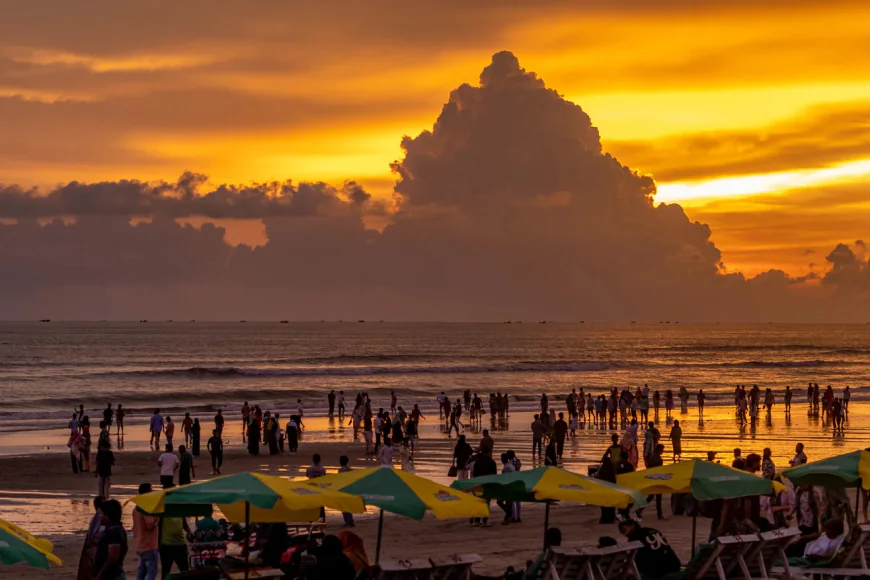
The country has vast mangrove forests, rolling tea gardens and the world's longest natural sea beach; yet many international travellers are not interested at all to visit Bangladesh. For them, Bangladesh still remains a blank space on the map.
According to the Bangladesh Tourism Board, the country welcomed just 650,000 foreign visitors in 2024 — far fewer than neighbouring India or Sri Lanka. Despite its natural beauty and the intensity of life in a country of more than 170 million people, Bangladesh has struggled to establish itself as a mainstream destination.
“I think there’s a subconscious association of the country with natural disasters,” says Jim O’Brien, director of Native Eye Travel, which has been operating in Bangladesh since 2017. “We only ever hear about the country for the wrong reasons.”
Tour operators say those perceptions overlook the diversity of the country and the authentic experiences many travellers now seek, according to a recent CNN report.
Fahad Ahmed, founder of Bengal Expedition Tours, encourages visitors to explore Dhaka, home to around 24 million people and one of the world’s most densely populated cities. Beyond the capital, he points to Sreemangal’s tea estates, Royal Bengal Tigers of the vast mangrove forests of the Sundarbans and Cox’s Bazar’s 75 miles of white sand, often described as the world’s longest natural sea beach.
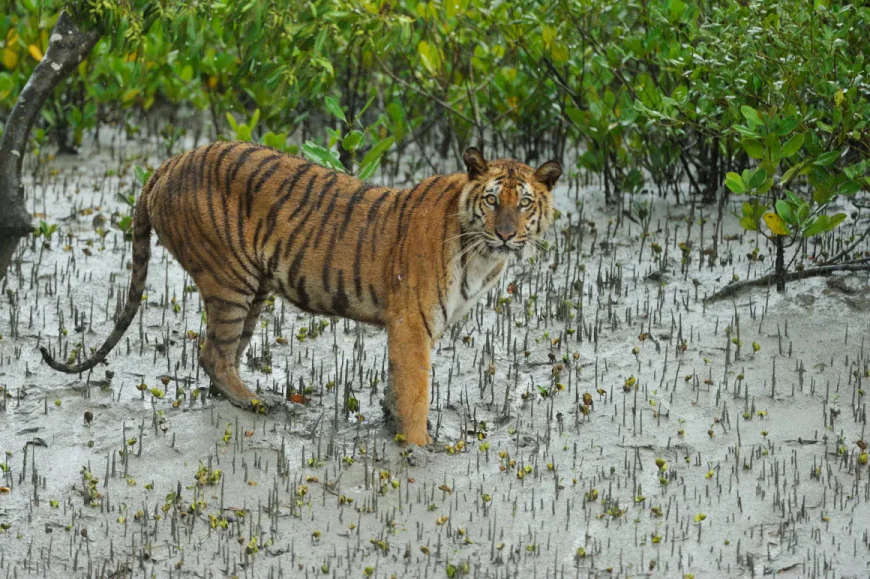
A Bengal tiger in the Sundarbans. Photo: Niladri Sarkar/Getty Images
“Travelers want to have local experiences; they want to see real local life in Bangladesh,” Ahmed says. “Tourism here is still developing, but there’s so much potential.”
With visas on arrival for most nationalities, new hotels opening and more international operators adding Bangladesh to their itineraries, he believes the country is becoming easier to visit — even if it remains difficult to market.
The negative and misunderstood image
Tourism experts, however, have pointed out that the negative and misunderstood image of Bangladesh among the foreigners is a root cause behind the country's tourism potentials remaining untapped.
Anand Patel, a British tourist, visited Bangladesh in November 2025 with Lupine Travel. It had not been high on his list, but he was keen to explore somewhere new.
“When I told people I was going there, one person basically said: ‘Why? People leave Bangladesh to come here!” he says.
“Bangladesh’s reputation in the West is one of a producer nation — especially textiles — and only makes the news when there are floods or uprisings. It’s a negative perspective. As a result, the country passes under the radar as a destination.”
After arriving in Dhaka, Patel travelled south to Barishal in the Ganges delta.
“Unlike others I have seen, this was not a tourist spectacle but was a very authentic local market, with small boats full of fruits and crops, farmers selling their produce and hawkers selling freshly made treats,” he recalls.
“The journey there on the boats was lovely, moving through the farms and forest by river, waving to the people on the bank. A really nice day out.”
Irish traveller Gary Joyce, who joined a tour at the same time, had long wanted to visit after living in neighbouring India.
“We stayed in the Old City,” he says of Dhaka. “So we were introduced to the street chaos from the start. My first impression was of a city that never sleeps. The sights and noises attack you from every angle. A great introduction.”
He visited shipbreaking yards, the abandoned former capital of Panam and travelled by ferry through the delta.
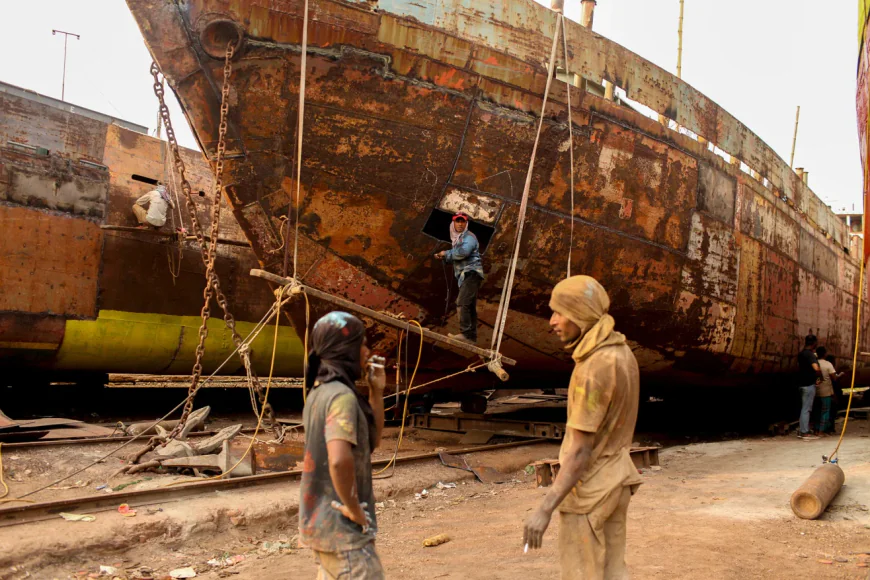
Workers dismantle decommissioned vessels at a shipbreaking yard on Buriganga River bank in Dhaka on May 13, 2025. Photo: MD Abu Sufian Jewel/NurPhoto/Getty Images
“Every aspect of the tour was a great experience,” he says. “For me, the highlights were the photographic opportunities, especially in the floating markets and Dhaka’s Old City.”
Like Patel, he believes Bangladesh is widely misunderstood.
“I think Bangladesh has had some bad press in the past,” he says. “But with great food, friendly people and plenty of great places to visit, it offers a lot to travelers who don’t like to sit around on a beach.”
Perception and reality
Kawsar Ahmed Milon, who runs Dhaka Tour Guides, says the country’s image problem remains its biggest barrier.
“People see Bangladesh as a third-world country, that it’s not an organized country and it’s not a good place to visit,” he says. “But when tourists come to Bangladesh, they have positive experiences. People are friendly and welcoming. Even if we are a poor country, we have a positive mentality.”
Bangladesh’s history has been marked by upheaval. It emerged from the partition of India in 1947, fought for independence from Pakistan in 1971 and has suffered devastating cyclones over recent decades. Poverty and environmental pressures remain major challenges.
Milon says some online content focuses on the country’s harshest realities.
“There are many bloggers and YouTubers,” he says. “Trying to make money from views by publishing the negative side of Bangladesh. They want to visit ‘Garbage City’ in Dhaka or ride on the roofs of trains.”

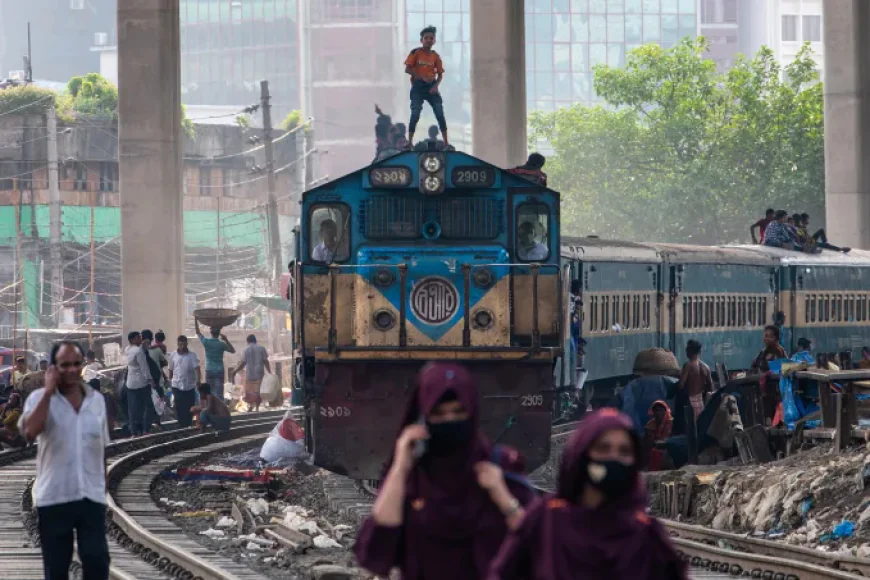
A boy rides on top of a train as it makes its way through the Kamalapur Railway Station in Dhaka. Photo: Syed Mahamudur Rahman/NurPhoto/Getty Images
Videos highlighting overcrowded transport systems — including illegal but widely practiced “train surfing” — are easy to find online. Milon says he encourages visitors to respect local laws and prefers to promote eco-tourism, rural homestays and nature.
However, Ahad Ahmed from Bengal Expedition Tours believes visits to non-traditional sights are essential if foreigners are to understand the country. While he does not condone riding atop trains, he includes textile markets — Bangladesh is the world’s second-largest garment exporter — and shipbuilding and breaking yards in Dhaka and Chattogram.
The US Department of Labour states that over 2.7 million Bangladeshi children aged 5-14 are engaged in underage work, often in the garment industry. Ahmed describes shipyard labor as dangerous and poorly paid and says tourism can help create alternatives.
“If tourism grows, our economy will grow,” Ahmed says. “People who don’t have jobs can work in tourism. If more people visit Bangladesh, more local people will benefit.”
Nature and instability
Beyond the capital, guides promote rural Bangladesh. The Sundarbans — a vast mangrove forest and UNESCO World Heritage Site — offers boat safaris in search of the rare Bengal tiger. In Sreemangal, community tourism projects encourage locals to open homestays and lead treks through tea estates.
Political instability, however, remains a concern. Dylan Harris, founder of Lupine Travel, says unrest can deter potential visitors.
“Every now and again, particularly around elections, there can be civil unrest,” he says.
“From our point of view, we can continue running tours during these times; the issues are often isolated and far away from anywhere on the tourist route. However, it does cause apprehension amongst some tourists, which is totally understandable.”
Travel advisories from Western governments warn against visiting certain areas and urge caution due to unrest and security risks.
O’Brien says such warnings do not deter his clients, who are experienced travellers seeking less conventional destinations and prepared for simpler infrastructure.
“We hope that more people will start to discover the charms of Bangladesh, but it’s hard to see it becoming as mainstream a destination as India or Sri Lanka,” he says.
“It is becoming a little more established on the itineraries of more intrepid travelers, though, who are prepared to see through some of the negatives and accept these as part of seeing a country untainted by mass tourism,” O’Brien adds.
Ahad Ahmed agrees — and suggests that may be no bad thing.
“If I give my honest opinion, we don’t want mass tourism,” he says, adding, "We want people who actually want to visit Bangladesh, who want to meet our people and see our countryside. If tourists arrive in the same numbers that visit Sri Lanka, then we’d lose our authenticity. The authentic Bangladesh would be gone.”
What's Your Reaction?
 Like
0
Like
0
 Dislike
0
Dislike
0
 Love
0
Love
0
 Funny
0
Funny
0
 Wow
0
Wow
0
 Sad
0
Sad
0
 Angry
0
Angry
0



Comments (0)