

Greece’s tourism sector in search of workers as summer season looms
In the countdown to the season getting into full swing, the search for staff to keep the industry afloat has assumed an unexpected urgency. Greece may be among Europe’s most popular destinations but workers are in short supply

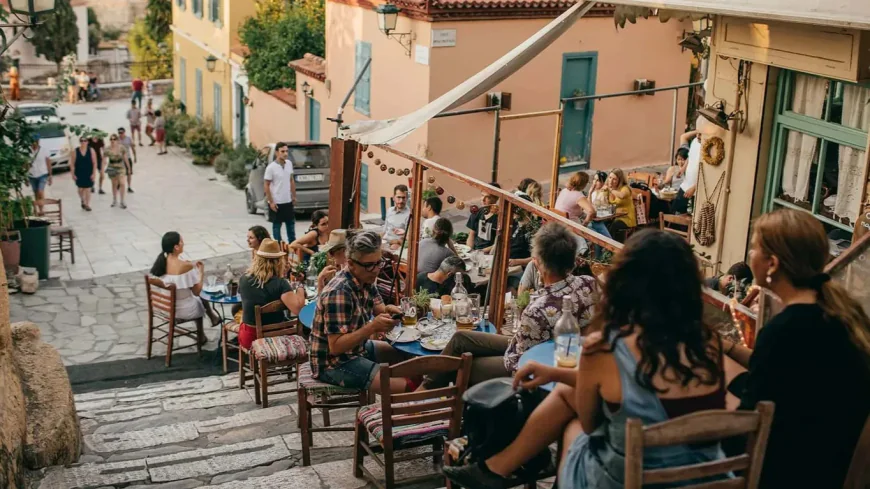
On the façade of the Karyatis taverna in a plaza lined with palm trees and garden plants beneath the Acropolis, the notice says it all: “Seeking staff, chefs, waiters, kitchen personnel.”
With record numbers of tourists set to visit Athens this summer, the restaurant’s owners are leaving nothing to chance. “It’s becoming harder and harder to find employees,” said Dimitris Stathokostopoulos, who runs the eatery with his brother. “Tourism is definitely on the rise, but these days Greeks prefer 9-to-5 office jobs that don’t require working nights or weekends.”
As the season edges towards full swing, the search for staff to keep the industry afloat has taken on unexpected urgency. Greece may be among Europe’s most popular destinations, but workers are in short supply, reports The Guardian.
Shortages are so acute that, just weeks before tourists arrive, an estimated 80,000 positions remain unfilled in the food and hotel sector — the backbone of an industry that accounts for 25% of GDP and serves as the engine of the Greek economy.
Stathokostopoulos is not alone in struggling to recruit staff to meet demand at what is expected to be the busiest time of the year.
Nationwide, hoteliers are racing against time to find front desk managers, cleaners, lifeguards, door staff, waiters and cooks. On major tourist islands such as Crete and Rhodes, reports of hotels poaching employees from rivals with promises of better pay and working conditions have surged.
“It’s partly a legacy of the [Covid-19] pandemic, which all of Europe has felt, but in Greece the problem is particularly acute,” said Giorgos Hotzoglou, president of the Panhellenic Federation of Workers in Food Service and Tourism (POEET). “What we’re seeing is an unprecedented shortage of qualified and experienced workers, especially in the hotel and food industry, following the exodus of employees during the lockdown. Many never returned. As a result, an estimated 80,000 jobs now need to be filled.”
For Hotzoglou, the sector’s seasonality lies at the heart of the problem. “Once the season is over, workers are entitled to only three months of unemployment benefit. With a cost-of-living crisis, how are they expected to survive for the rest of the year?”
Tourism is not the only sector hit by labour shortages. Construction and agriculture have also been affected by the scarcity in a country grappling not only with a sharp demographic decline but also still reeling from the exodus of more than 500,000 mostly high-skilled students and workers at the height of its near decade-long economic crisis.
In a bid to tackle the problem, partly under pressure from local MPs, the centre-right government has moved to legalise the status of about 30,000 undocumented migrants. It has also signed a series of bilateral agreements on “labour mobility” with third countries, including Egypt, Vietnam, Bangladesh, Georgia, India and Moldova.
“I’ve just received a recruitment offer from a company in Dubai that I’m considering,” said Stathokostopoulos. “A Bangladeshi is working in our kitchen and he’s excellent. It’s people from Asia and other parts of the world who are now applying for this type of work.”
Asylum seekers, until recently confined to refugee facilities, will take up jobs in northern Greece later this month after being trained by the Hellenic Hotel Association — a groundbreaking step in a country where the coastguard and other officials have been accused by human rights groups of illegal pushbacks to keep migrants at bay.
Since assuming office as migration minister in March, Makis Voridis, a former far-right student activist, has vowed to expel “illegal migrants”, tightening a government policy that adopts a “tough but fair” approach to immigration.
What's Your Reaction?
 Like
0
Like
0
 Dislike
0
Dislike
0
 Love
0
Love
0
 Funny
0
Funny
0
 Wow
0
Wow
0
 Sad
0
Sad
0
 Angry
0
Angry
0


Comments (0)