

Once Mughal-era Bakarkhani now Dhaka’s heritage
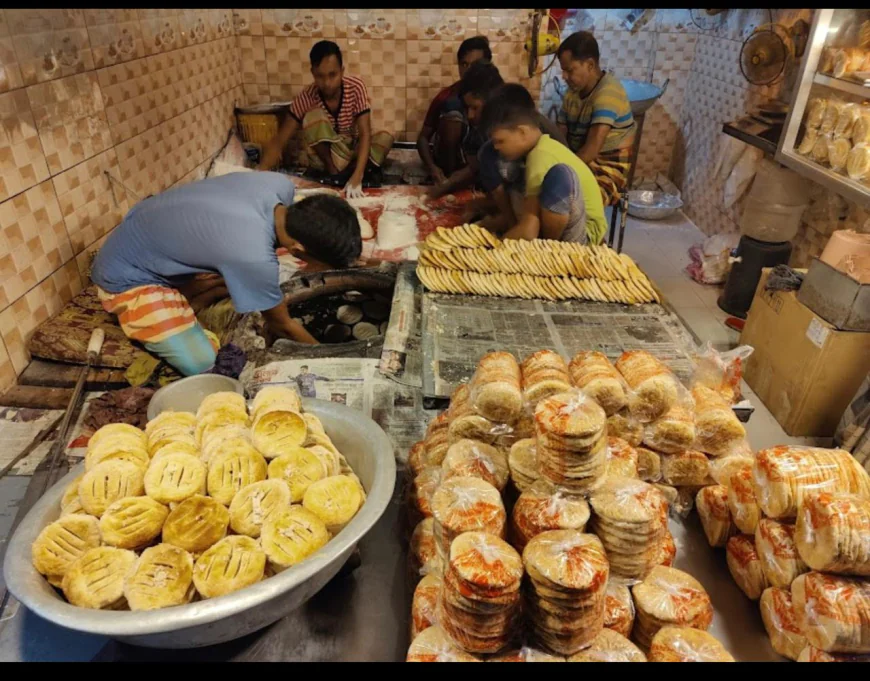
In the narrow lanes of Old Dhaka, where the aroma of spices fills the air, one flaky flatbread continues to hold a special place in local culture — Bakarkhani. Crispy on the outside and soft inside, the Mughal-era bread is not only a popular breakfast item but also a symbol of tradition, pride and heritage.
Once served in royal courts, Bakarkhani has travelled through centuries to become an iconic part of Dhaka’s culinary identity, reports state news agency BSS.
In Old Dhaka, serving Bakarkhani to guests is seen as more than simple hospitality — it is considered part of the city’s cultural heritage. Behind the famous bread also lies a tragic tale of love and loss.
Historical accounts suggest that Bakarkhani originated during the Mughal era, possibly in the 17th century, in Murshidabad in the Indian subcontinent.
It was once regarded as a royal delicacy among the Nawabs. According to popular legend, the bread was named during the reign of Nawab Murshid Quli Khan, the first Nawab of Bangla. The story is linked to the tragic romance of his adopted son, Mirza Agha Baker Khan.
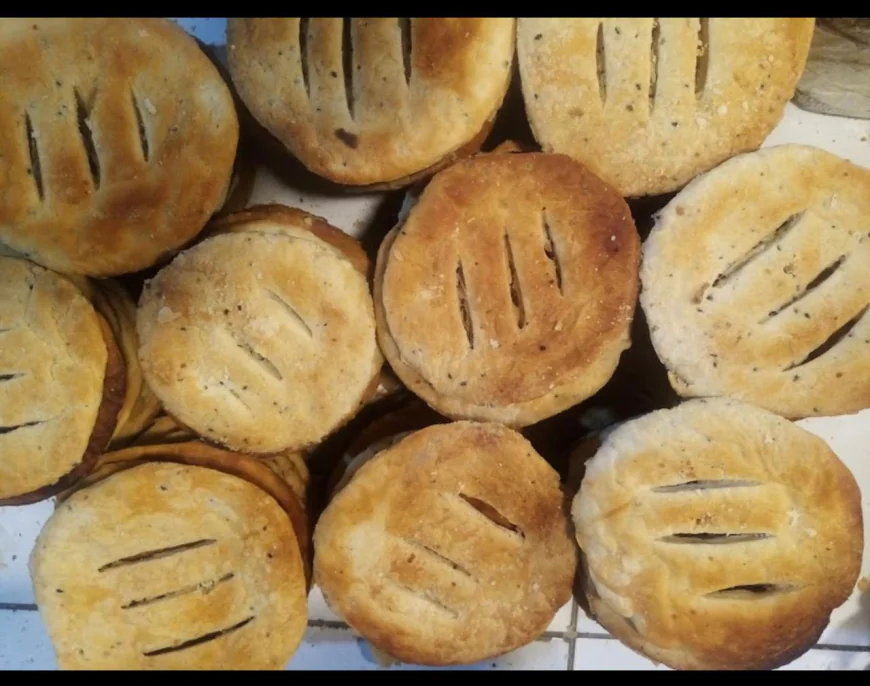
Once served in royal courts, Bakarkhani has travelled through centuries to become an iconic part of Dhaka’s culinary identity. Photo: BSS
Agha Baker Khan, a military commander of Persian origin, fell in love with a talented dancer named Khani, who performed at the Nawabs’ court in Arambagh, Dhaka.
Khani was widely admired for her singing and dancing talents, and Baker Khan reportedly fell in love with her during one of her performances.
However, a local man named Zainul opposed their relationship. According to the legend, Zainul later abducted Khani, enraging Baker Khan, who then set out to kill him. Rumours later spread that Baker Khan had murdered Zainul. As a result, Nawab Murshid Quli Khan sentenced his adopted son to death and ordered him to be imprisoned in a tiger’s cage.
While in captivity and thinking of his beloved Khani, Baker Khan is said to have created a special type of bread — what is now known as Bakarkhani.
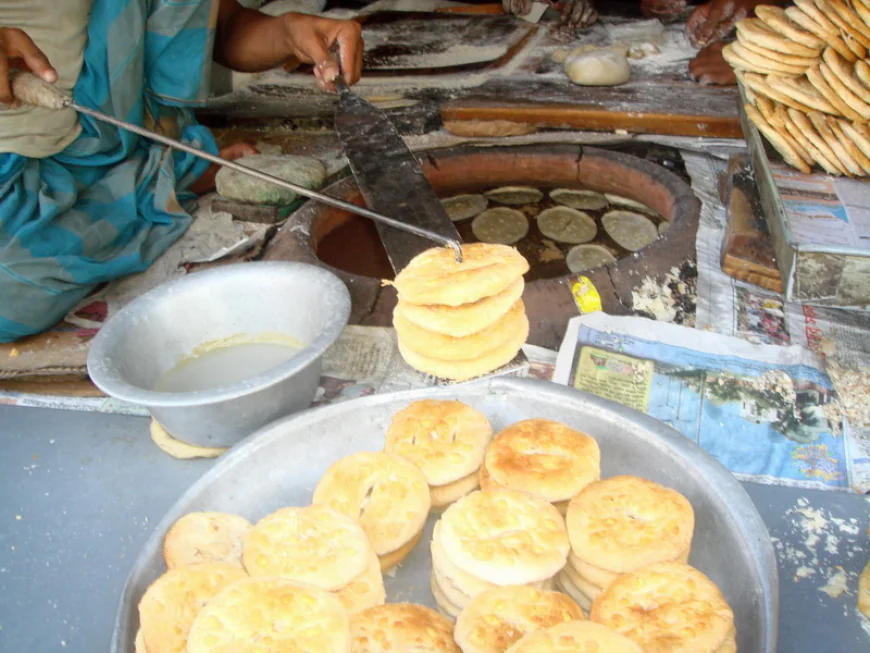
A man prepares Bakarkhani at his stall in Old Dhaka. Photo: Wikimedia Commons
According to the story, the names Baker and Khani were combined to form the name Bakarkhani, which later evolved into its current pronunciation.
Residents of Old Dhaka sometimes jokingly call Bakarkhani “Suka Ruti” or dry bread. Though used humorously, the nickname reflects the playful character and humour of the people of Old Dhaka.
Some believe the name came from landlord Agha Baker Khan, while others say the bread earned the nickname because of its dry texture.
Bakarkhani makers in Old Dhaka say the bread is prepared using flour, ghee, sugar, milk, oil and salt. Spices such as cinnamon, cardamom and black cumin are often added for extra flavour.
The ingredients are mixed thoroughly, kneaded carefully and baked slowly so that the outer layer becomes crisp while the inside remains soft.
Today, several varieties of Bakarkhani are available in the market, including cheese, salted, ghee-flavoured, sweet and nut-filled versions. They are sold individually as well as by weight.
A visit to different parts of the capital shows that Bakarkhani is widely available not only in Old Dhaka but also in areas such as Nazirabazar, Haji Alauddin Road, Narinda, Banglabazar, Lakshmibazar and the Judge Court area, as well as Tejgaon, Mirpur, Khilgaon and Shantinagar.
Although Bakarkhani was traditionally baked in clay ovens, modern ovens are now commonly used.
Nazim Ahmed, a resident of Old Dhaka, told BSS, “Bakarkhani is an inseparable part of our lives. We eat it at breakfast and again in the evening with sweets. Breakfast feels incomplete without Bakarkhani and tea.”
He added, “During my childhood, I could buy one for four ana. Now prices have gone up, along with demand and the number of shops.”
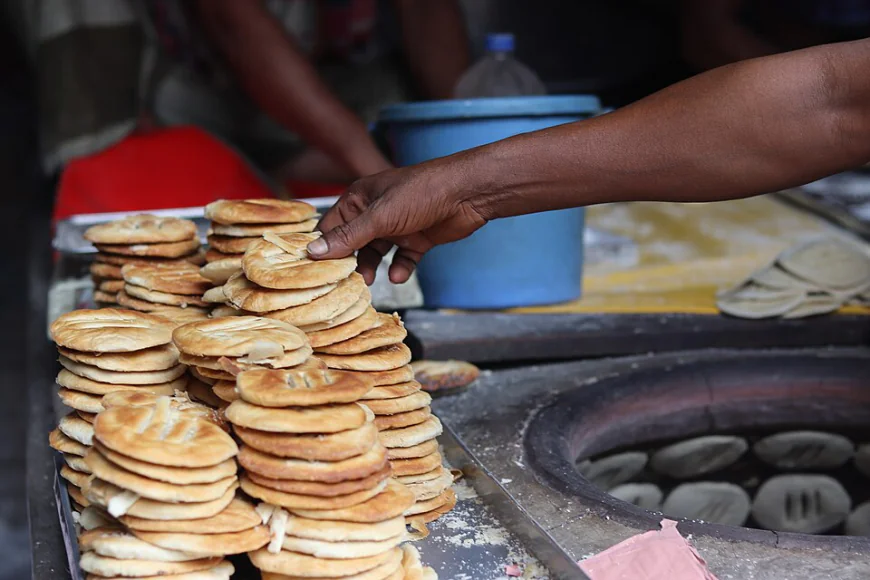
In Old Dhaka, offering Bakarkhani to guests is more than hospitality, it's a gesture of heritage. Photo: Wasiul Bahar/Wikimedia Commons
Another customer, Mohammad Moniruzzaman, said, “Bakarkhani is not greasy, so it is considered healthy. Our fathers and grandfathers ate it, and we continue the tradition. Having it with tea in the morning or with sweets in the evening remains a family custom.”
Sarafat Mia, a well-known Bakarkhani maker at Bismillah Bakarkhani in Narinda, said, “We prepare and sell Bakarkhani from morning until midnight. People from all walks of life visit our shop. Every day we use around one and a half to two maunds of flour to make the bread. Almost every variety of Bakarkhani is available here. Alhamdulillah, business is good.”
He added, “Bakarkhani is not just a bread. It carries the history, tradition and flavour of Old Dhaka, passed down through generations.”
What's Your Reaction?
 Like
0
Like
0
 Dislike
0
Dislike
0
 Love
0
Love
0
 Funny
0
Funny
0
 Wow
0
Wow
0
 Sad
0
Sad
0
 Angry
0
Angry
0
Comments (0)