

A promising eco-tourism centre nears completion in Sundarbans
From the Sharankhola Range headquarters jetty, it takes only about 50 minutes by engine-powered trawler to reach Ali Banda, and from there about an hour and a half to reach Supati Wildlife Sanctuary


The Forest Division has taken major initiatives to renovate various tourist spots to attract both local and foreign visitors in the upcoming tourism season.
Tourists are mainly keen to visit these spots to enjoy wildlife and the beauty of nature in an eco-friendly setting, along with improved infrastructure at the East Forest Division in the Sundarbans, the world’s largest mangrove forest.
The Ali Banda Eco-Tourism Centre in the Sharankhola Range of the eastern Sundarbans has emerged as a promising destination alongside other tourist spots.
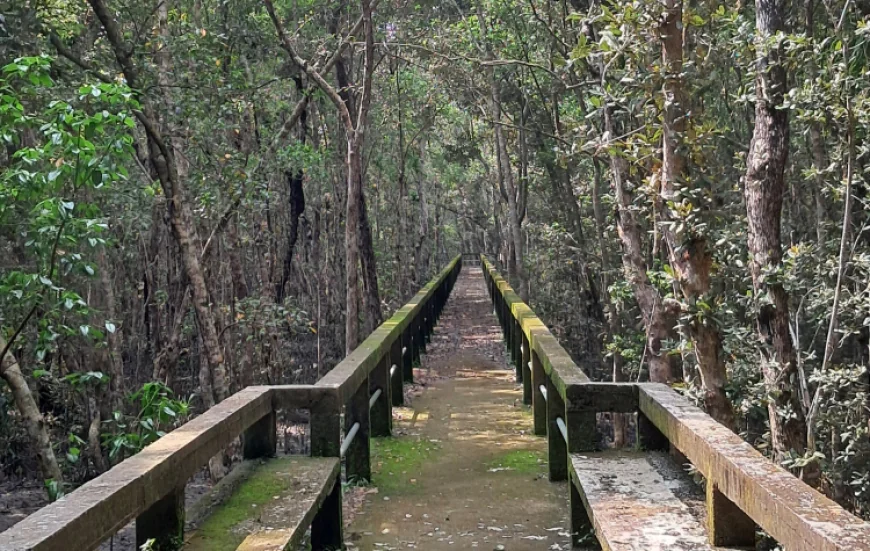
A pathway inside the Ali Banda Eco-Tourism Centre in the Sharankhola Range of the eastern Sundarbans. Photo: BSS
For travellers looking to explore the Sundarbans at lower cost and within a short time, the Ali Banda Eco-Tourism Centre, along with the Supati Wildlife Sanctuary, can be an attractive option, according to the Eastern Forest Division.
During a day tour, visitors can take in the natural beauty of the Sundarbans, the vast Baleshwar River at the mouth of the Bay of Bengal, and watch fishermen catching hilsa and other sea fish.
From the Sharankhola Range headquarters jetty, it takes only about 50 minutes by engine-powered trawler to reach Ali Banda, and from there about an hour and a half to reach Supati Wildlife Sanctuary.
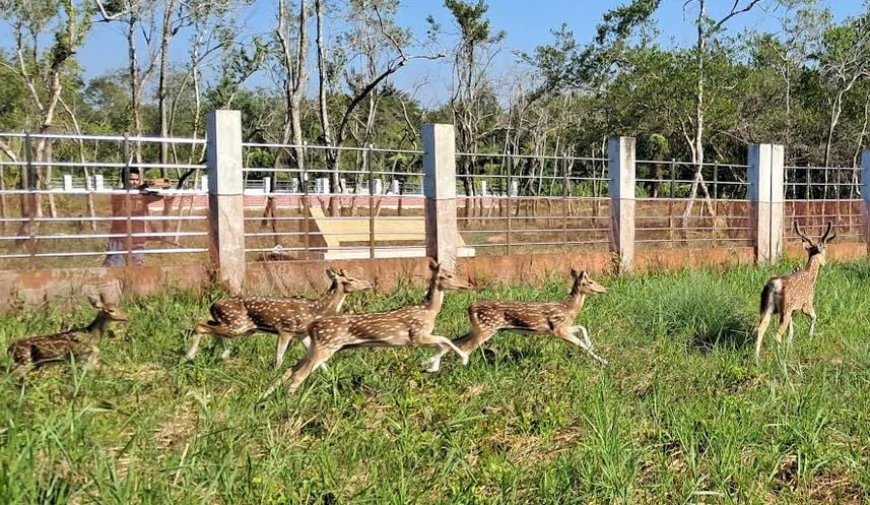
Deer run at Ali Banda Eco-Tourism Centre, located under the Sharankhola Range of the Sundarbans, world’s largest mangrove forest. Photo: BSS
A 50-foot-high watchtower has been built at Ali Banda, allowing tourists to enjoy panoramic views of the Sundarbans.
Additionally, a one-kilometre-long foot trail has been constructed for safe forest walks. Facilities such as public toilets, a round-shaped hut (Gol Ghar), a souvenir shop, a ticket counter, a concrete jetty, paved roads, two ponds for crocodiles, and a fenced enclosure with a shed for deer have also been established. Due to its proximity to human settlements, Ali Banda has quickly become a focal point for tourists.
Forest officials said tourists can easily make a short day trip to Ali Banda in the Sundarbans from Dhaka and other parts of the country.
According to the Forest Department, in the near future, tourist access to deeper Sundarbans spots such as Kotka, Kochikhali, Hiron Point, and Dublar Char will be restricted.
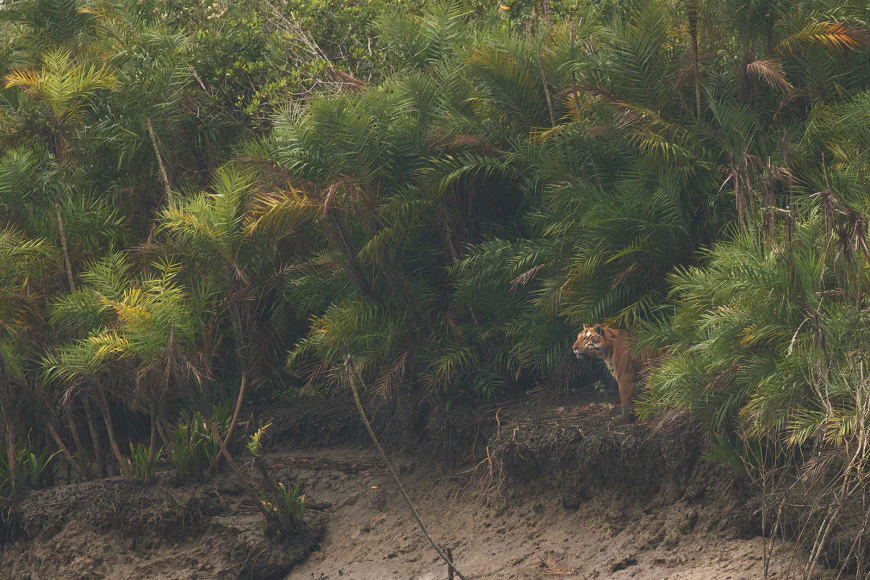
A tiger looks out from a forest of mangrove date palms in the Sundarbans. Photo: Kingshuk Mondal/Wikipedia
As part of this plan, the forest authorities have launched a project to establish eco-tourism centres near human settlements.
Under the four-year project, eco-tourism centres have been developed at Ali Banda in the Sharankhola Range, Dhan Sagar in the Chandpai Range, and Harbaria and Andharmanik. Harbaria and Andharmanik are already fully operational.
Nazmul Alam, a Sundarbans tour operator from Sharankhola, said that once the Ali Banda Eco-Tourism Centre is fully launched, it will draw a large influx of tourists.
He noted that visitors from Dhaka and other parts of the country will be able to travel to this area of the Sundarbans at minimal cost and in less time, making it more affordable than visiting other tourist spots in the region.
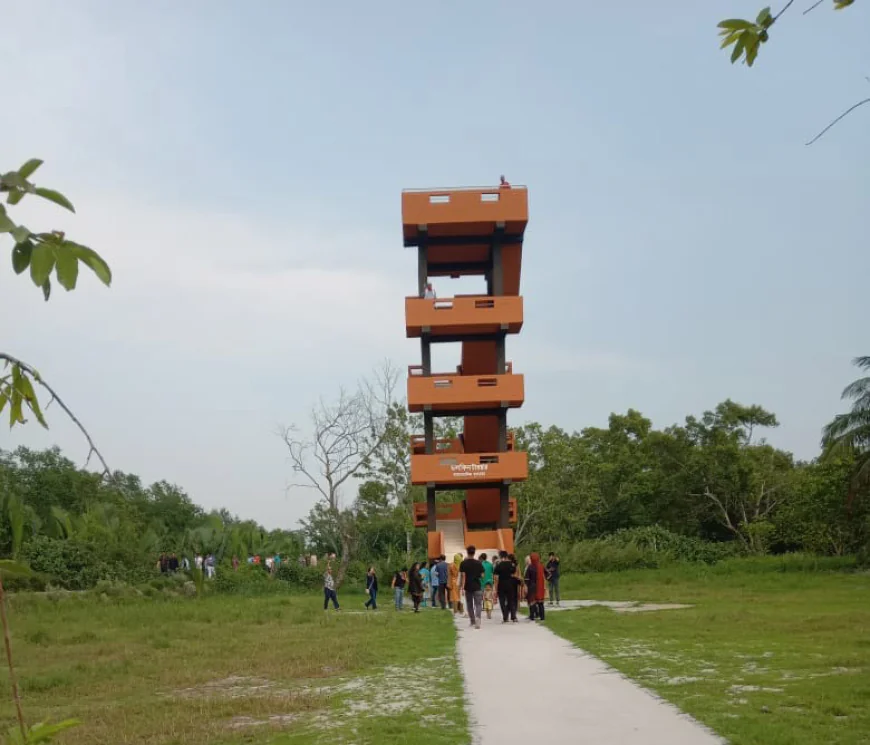
The watch tower at the Andharmanik Ecotourism Centre in the Sundarbans of Bangladesh, offers a unique experience to explore the world’s largest mangrove forest. Photo: Wikipedia
Md Rezaul Karim Chowdhury, Divisional Forest Officer (DFO) of the Eastern Sundarbans Forest Division in Bagerhat, said construction at the Ali Banda Eco-Tourism Centre is now in its final stages.
A staff barrack for forest guards has already been built, and guards have been deployed. Preparations are underway to release deer into the fenced enclosure and crocodiles into the ponds.
The DFO said the eco-tourism centre will soon be fully open to visitors.
The Sundarbans, a World Heritage Site, is known for its rich diversity of flora and fauna, including the Royal Bengal Tiger, the rare Irrawaddy and Ganges dolphins, and various species of birds and animals.
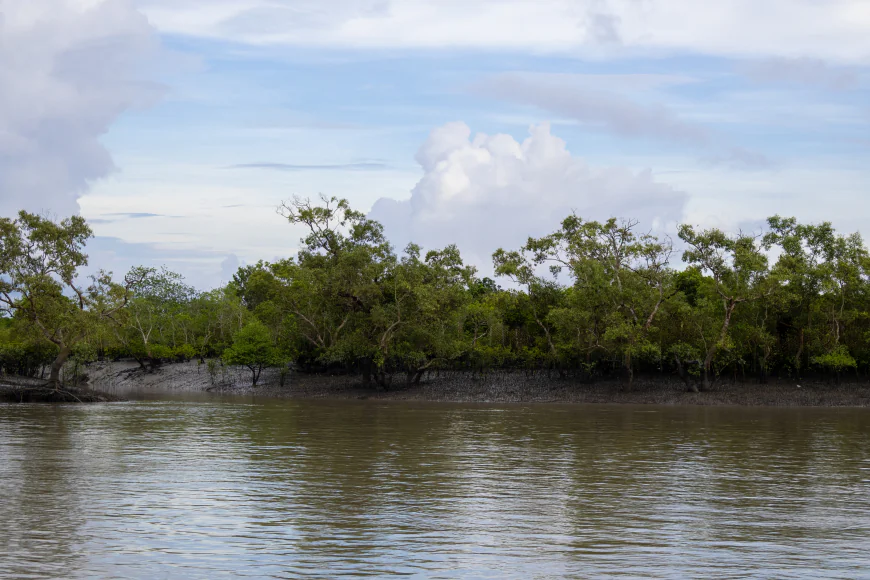
Sundarban Mudflats during low tide. Photo: Kingshuk Mondal/Wikipedia
Tourists also visit other forest spots such as Karamjal, Harbaria, and Hiron Point to enjoy nature and wildlife.
To attract more tourists, various eye-catching structures and facilities will be developed at the Ali Banda Eco-Tourism Centre, he added.
Contacted, Professor Abdul Kadir, executive director of Sundarban Academy, said it is good news for nature lovers as well as tourists that the Forest Division is developing a promising tourism spot at the Ali Banda Eco-Tourism Centre.
He also emphasised the need to develop other civic facilities, including luxury transport, resorts or cottages, seafood options, and to ensure tourist security centred around the tourism centre.
What's Your Reaction?
 Like
0
Like
0
 Dislike
0
Dislike
0
 Love
0
Love
0
 Funny
0
Funny
0
 Wow
0
Wow
0
 Sad
0
Sad
0
 Angry
0
Angry
0

Comments (0)