Rakhine water festival draws tourists to Cox’s Bazar
Three-day Jalkeli celebration blends culture, colour and coastal tourism
 ATT Correspondent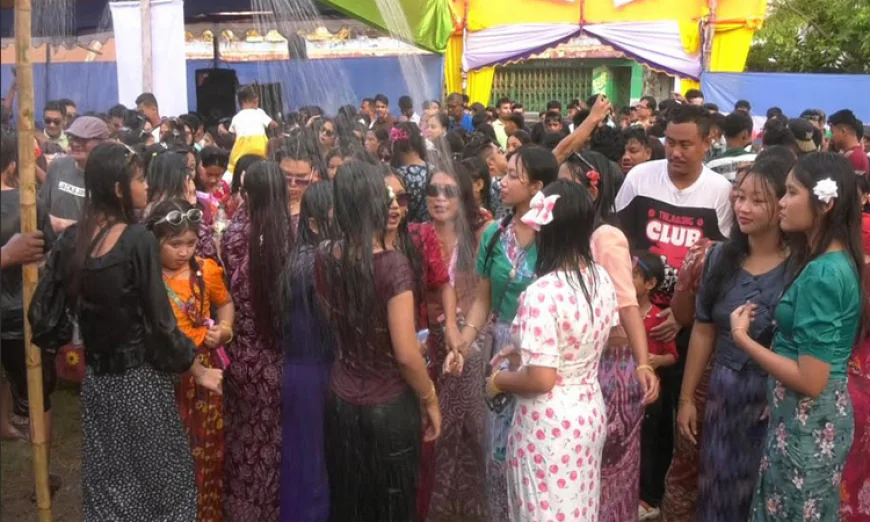
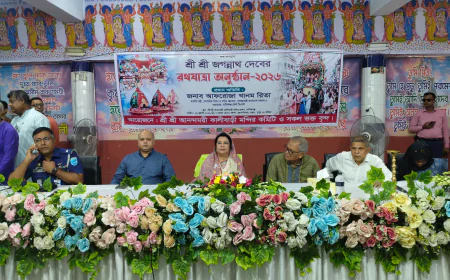
The traditional Jalkeli festival of the Rakhine community has begun in Cox’s Bazar, turning the coastal destination into a lively hub of culture, colour and tourism as visitors gather to witness one of the region’s most distinctive celebrations.
Marking the Rakhine New Year 1388, the three-day water festival, locally known as Sangrain, started on Friday, drawing both local visitors and domestic and international tourists eager to experience the unique cultural heritage of the Rakhine community, reports BSS.
Culture meets coastal tourism
Known as the largest festival of the Rakhine community in Cox’s Bazar, Jalkeli blends traditional rituals with festive joy. Children, youths and elders take part in dancing, singing and splashing water on each other, creating a joyful and visually striking atmosphere that strongly appeals to visitors.
Groups carrying musical instruments move from one decorated pavilion to another, adding rhythm and movement to the celebration. Each venue is adorned with flowers and colourful paper, while large containers of water are placed at the centre for the symbolic water-splashing rituals.
The festival has spread across key areas of the town, including Kyang Para, Tekpara, Burmese School Road and Chawkbazar, while more than fifty pavilions have been set up across the district, including Maheshkhali, Teknaf, Chakaria and Ramu.
A deeper cultural experience
The festival begins with religious rituals at Buddhist monasteries on Chaitra Sankranti, the last day of the Bengali year. Participants visit monasteries in processions, carrying symbolic items such as earthen pots and Kalpataru, before joining the water festivities.
Mongchen Hla Rakhine, central president of the Rakhine Buddhist Welfare Association, said the water-splashing ritual symbolises purification.
“The belief is that this auspicious water washes away the sorrows and shortcomings of the past year,” he said, adding that traditional performances will continue alongside the water festival until Sunday.
Boost to local tourism
Officials say the festival has become an important attraction for Cox’s Bazar’s tourism sector, offering visitors more than just beach experiences.
Md A Mannan, Deputy Commissioner of the district, said the festival reflects Bangladesh’s long-standing tradition of communal harmony.
“Participation by both the Rakhine community and local residents has turned it into a universal celebration,” he said, noting that enhanced security measures have been put in place to ensure a safe and smooth event.
Beyond the beach
As temperatures rise, the refreshing nature of the water festival adds to its appeal, giving tourists a chance to engage directly with local culture while enjoying the coastal environment.
With vibrant rituals, inclusive participation and a festive spirit, the Jalkeli festival is increasingly positioning Cox’s Bazar not just as a beach destination, but as a centre for cultural tourism in Bangladesh.