Panchagarh’s unique ‘Rocks Museum’ draws tourists with artefacts
Established in 1997 on the campus of Panchagarh Government Women’s College, the museum offers a distinctive insight into Bangladesh’s geological history and ancient artefacts
 ATT Desk Report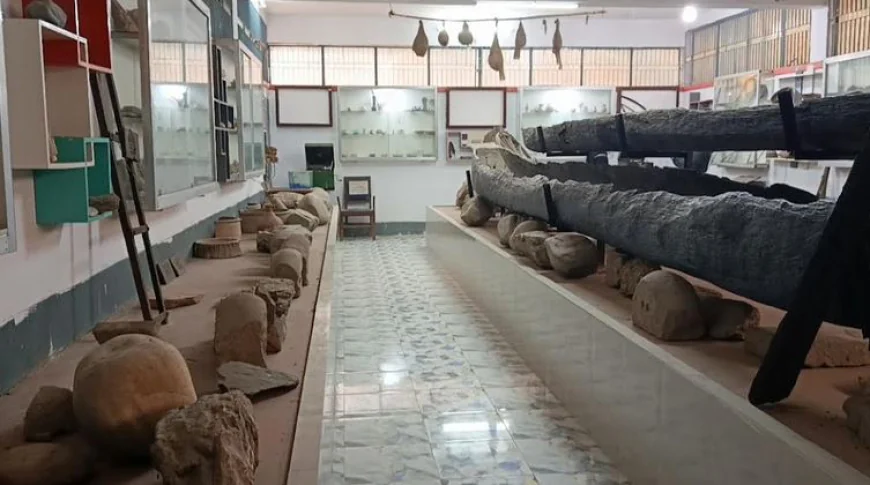
The northern border district of Panchagarh, known for its natural beauty and historical sites, is seeing a rise in tourism as winter sets in. Among its key attractions, the country’s only ‘Panchagarh Rocks Museum’ has emerged as a major draw for both local and international visitors.
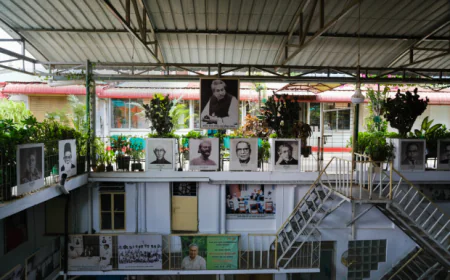
Established in 1997 on the campus of Panchagarh Government Women’s College, the museum offers a distinctive insight into Bangladesh’s geological history and ancient artefacts. What began as a single-room initiative by then principal Dr Nazmul Haque has since developed into an important centre for tourists, students and researchers.

The museum houses a wide collection of rocks and minerals, each labelled with details of its origin and characteristics. These include igneous and sedimentary rocks, different types of gravel, silica, yellow and dark yellow sand, glass sand, mineral sand, limestone, silt, potter’s clay and hard rock samples.
At the entrance to Panchagarh Government Women’s College, visitors are greeted by an outdoor display of large stones, arranged in a circular pattern. Some are estimated to be 20 to 25 years old, with each stone bearing a nameplate and brief description.
Inside, the gallery features volcanic and sedimentary rocks, wavy flat stones, limestone, hard rocks and indigenous tools. The collection also includes fossilised wood recovered from riverbeds and underground, as well as brick and stone sculptures and terracotta designs believed to be around 2,000 years old.
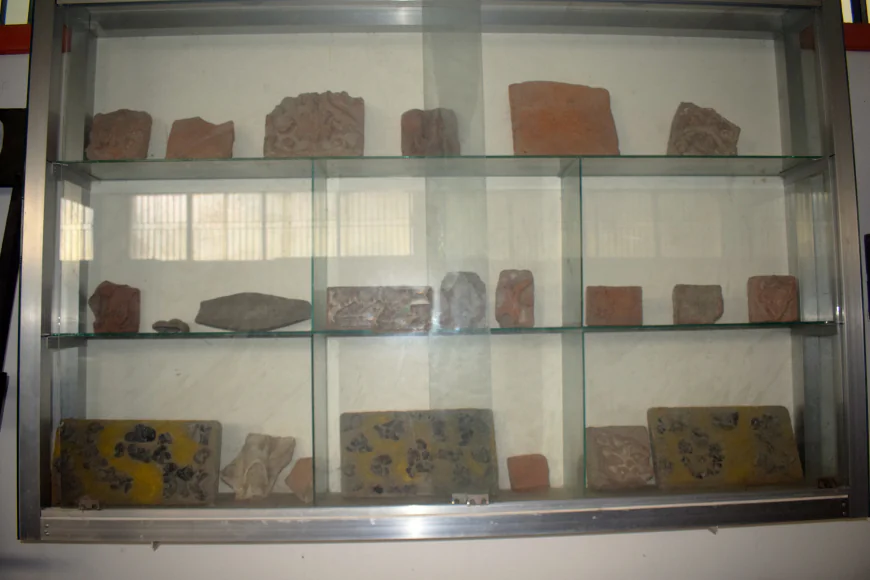
The gallery of the museum features volcanic and sedimentary rocks, wavy flat stones, limestone, hard rocks and indigenous tools. Photo: Dolon Prova/Wikipedia
One of the main attractions is a traditional dinghy estimated to be around 1,000 years old. The 25-foot boat, carved from a single sal tree, was discovered in 1999 at a depth of eight feet in the Mahanater Ghat area of the Chawai River in Amarkhana union of Sadar upazila. It is believed to have been used by indigenous communities in ancient times.
The outdoor section also displays large samples of sandstone, granite, quartzite, basalt, shell and silicified wood. These vary in shape and form, with some bearing symbolic markings.
During the current winter season, the museum has been attracting a steady flow of visitors. Many tourists combine their trip with visits to Banglabandha Land Port, Zero Point and the tea gardens of Tetulia.
Sadia Sanjida, a former student of Dhaka University, said after visiting with her family on Tuesday: “I had heard about the Rocks Museum for a long time. It was wonderful to see it in person and learn about its history. I’m impressed that such a significant collection exists in our country.”
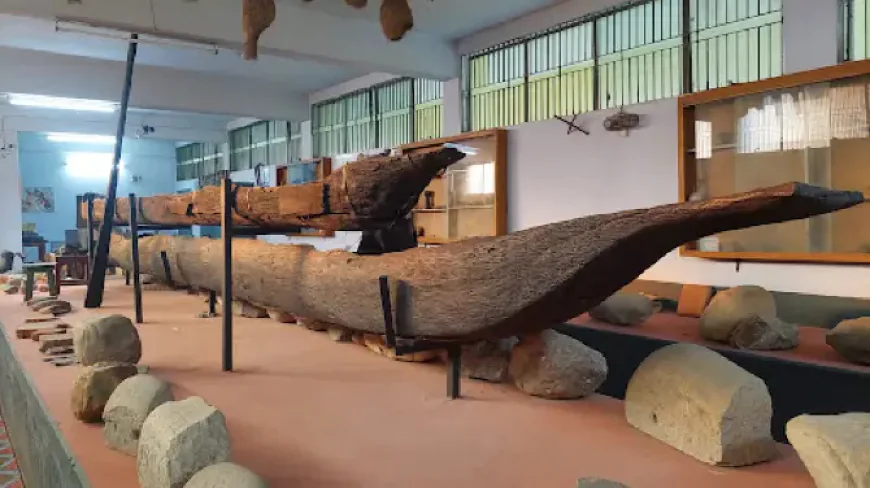
Petrified Wood and Fossilized Rocks, Granite, Quartzite Shell, Lime Stone, Sits, Hard Rock, Basalt, Silica, Nice, Clay-Rock etc. have been keep in the Rocks museum for display. These are almost 60 pieces of rocks from different age sized by 3-4 inches to 10 feet. Photo: Offroad Bangladesh
Naz Sultana Bithi, a teacher at Hakimpur Women’s College in Dinajpur, said: “I brought my child here and was amazed by the stones recovered from underground. It is a valuable experience for children to see such collections.”
Mufassir Rihan, who travelled from Dhaka, said: “I am interested in historical artefacts. I became curious after seeing information about the museum on YouTube, which is why I came. I learned a great deal about ancient objects, including the stones.”
Golam Kibria, head of the Geography and Environment Department at Panchagarh Government Women’s College, highlighted the museum’s significance. “Dr Nazmul Haque established the Rocks Museum using artefacts collected from various locations. It plays an important role in understanding land formation, geographical features, and in preserving heritage and anthropological materials,” he said.
Ahsan Habib Pradhan, head of the Statistics Department at the college, described the museum as a landmark for visitors to Panchagarh. “It is closely linked to the district’s history and heritage and contains numerous archaeological artefacts. Proper preservation will further enhance the district’s reputation,” he added.