

AirAsia places milestone order for 150 A220s
The A220 complements AirAsia’s existing Airbus fleet and will play a key role in advancing the Group’s network and growth

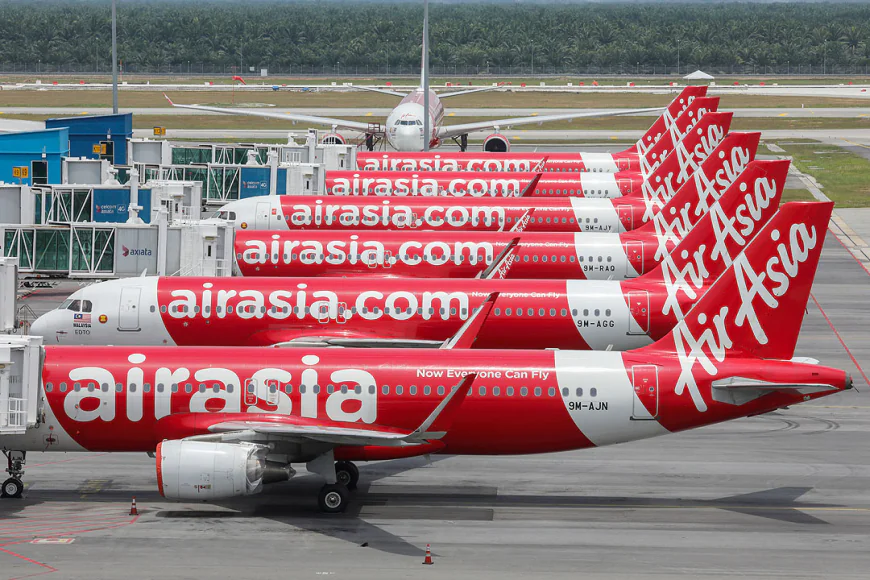
Malaysia’s AirAsia has placed an order for 150 latest generation A220-300 aircraft. The purchase agreement is the largest single firm order placed for the A220 and propels the programme beyond the 1,000 firm order milestone, underscoring the aircraft's global market appeal, publishes Airbus in a press release.
The contract was announced at a ceremony at the Airbus facility in Mirabel attended by Tan Sri Tony Fernandes, Chief Executive Officer of Capital A and Advisor to AirAsia Group and Lars Wagner, Chief Executive Officer Commercial Aircraft at Airbus. The event took place in the presence of Mark Carney, Prime Minister of Canada and Christine Frechette, Premier of Quebec.
The purchase agreement makes AirAsia a new customer for the A220.
The A220 complements AirAsia’s existing Airbus fleet and will play a key role in advancing the Group’s network and growth. The aircraft will service destinations across ASEAN and into Central Asia, freeing up larger aircraft to fly longer routes.
“The A220 will provide an optimal platform for AirAsia, combining low operating costs with the range that will enable the carrier to open new routes across Asia and beyond,” said Lars Wagner, CEO Commercial Aircraft at Airbus. “Airbus and AirAsia teams have been working tirelessly to reach this landmark agreement, which is fully aligned with the airline’s new network strategy.”
Combining the longest range, lowest fuel consumption and widest cabin in its class, the A220 is the most modern airliner in its size category, carrying between 100 to 160 passengers on flights of up to 3,600 nautical miles (6,700 km). At the end of March 2026, 501 A220s had been delivered to 25 operators worldwide.
As with all Airbus aircraft, the A220 is already able to operate with up to 50% Sustainable Aviation Fuel. Airbus aims for all its aircraft to be capable of operating with up to 100% SAF by 2030.
What's Your Reaction?
 Like
0
Like
0
 Dislike
0
Dislike
0
 Love
0
Love
0
 Funny
0
Funny
0
 Wow
0
Wow
0
 Sad
0
Sad
0
 Angry
0
Angry
0

Comments (0)