

Is US-Israel war on Iran legal
Symptoms are already visible, through the various developments on multiple fronts where the war has already expanded, that this war is going to change the existing world order for good
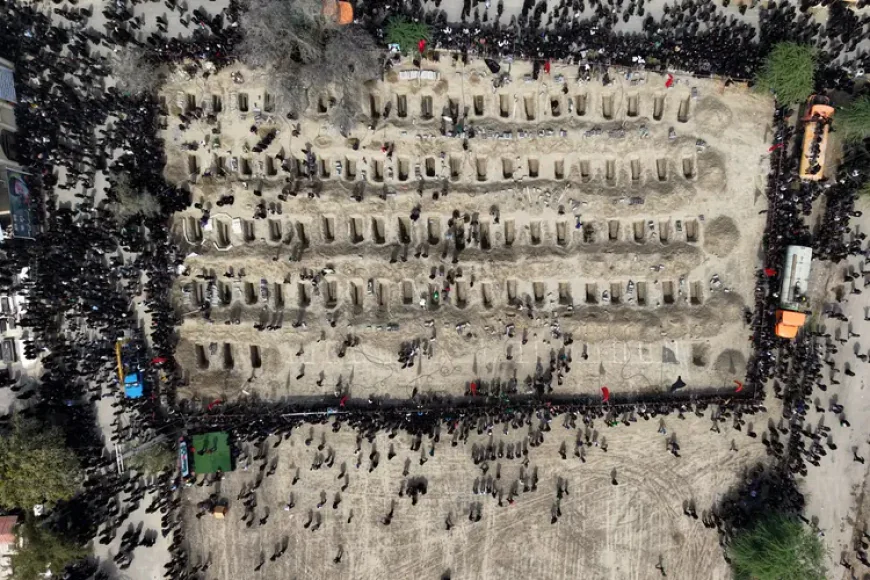
The US-Israel's agressive war on Iran, which started on February 28 last, has already impacted the world economy severely damaging and disrupting global trade and communication and skyrocketing the oil prices all across the world, in addition to the killings of hundreds of innocent civilians, mostly women and children.
Symptoms are already visible, through the various developments on multiple fronts where the war has already expanded, that this war is going to change the existing world order for good. After this war, America won't be the insane boss of the planet anymore, destroying one after another. A new world order would emerge after this war.
The United States of America in accomplice with the world's only 'lunatic state' of Israel jointly attacked Islamic republic of Iran (a country with 3,000 years of documented history, a grandeur civilization with contribution to multiple sectors of knowledge and science,.And these contributions are. considered among the universally-acclaimed achievements of the mankind -- on 28 February last, apparently with the intention of destroying the country cutting into pieces; as the previous track record of both of the criminal countries testify.
They carried out the attacks on multiple Iranian cities at a time, but simultaneously, they -- especially the US which was dragged into the war just because the settler colonial project of Israel, wants so -- made the mistake of underestimating the power, both defensive and offensive, of the enemy, the primary and biggest blunder of a war.
The developments of the last one month prove how devastating the consequences of underestimating the enemy can be. At present , four weeks after the beginning of the unjust, illegal and aggressive war, a spectre of deaths, in guise of chronic ambulance-and-fire-service sirens, is haunting the cities of Gulf countries and Israel, and all the US bases in middleastern countries circling Iran: as wave after wave of Iranian drone and missile attacks, supported by China-provided real-time satellite image.
On 28 February, like numerous previous times, the US-Israel axis directly violated the UN Charter and the Geneva Convention simultaneously, launching a war, in the name of an airstrike campaign "Operation Epic Fury", against Middle-Eastern state of Iran.
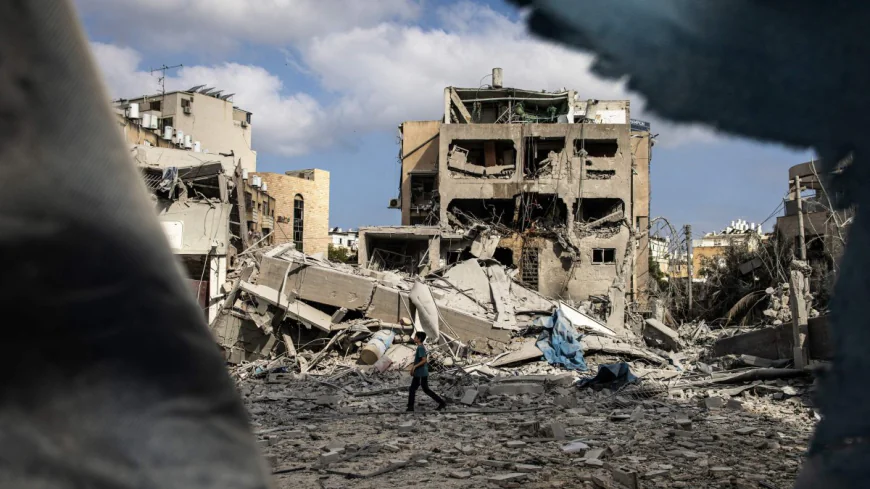
A young boy walks through the debrisat the site of an Iranian missile strike in Bnei Brak, east of Tel Aviv. Photo: AFP
But what the duo did was that they miscalculated Iran's military advancement and capacity, as well as the determination of soldiers, the precision striking power of Iranian missiles and support of the people for the government. They miscalculated all of these. However, the USA knew it itself. Many war analysts and veterans repeatedly warned against starting a war against Iran, arguing that it's Israel's war, not America's, and victory is impossible considering Iran's geographical variety and military capacity. But, the overwhelming feeling of being the world's biggest military power got the upper hand, brushing off the opinions and suggestions of the rational and reasonable voices of the war veterans and experts, leading to a brutally devastating war which could have been easily avoided.
On the very first day of the systematically brutal bombardment campaign on civilian targets, in the name of 'military operation', Israel killed Iran's supreme leader Ayatollah Ali Khameni and the USA bombarded to death 165 innocent schoolgirls, crossing the red line, or making the biggest mistake, at the very beginning. Needless to say, the US set up a textbook example of war crimes through the willingly and intentionally conducted precision strike on a primary school in Minab, Iran.
After the US-Israel killed Khamenei, other Iranian officials, and hundreds of civilians in several cities, including Tehran, subsequent attacks damaged military bases, government facilities, schools, hospitals, and cultural heritage sites, including a UNESCO world heritage site.
It took only several hours for Iran to launch the retaliatory attacks, as it had been preparing for this day for the last several decades.
In retaliation, Iran launched hundreds of drones and ballistic missiles at targets in Israel and at five US military bases in Bahrain, Jordan, Kuwait, Qatar, Saudi Arabia, and the United Arab Emirates. A drone struck Britain's Akrotiri military base on Cyprus, and missiles were shot down over Turkey.
Other strikes hit civilian infrastructures in Azerbaijan, Kurdistan of Turkey and Oman. Iran denied striking Azerbaijan, Oman, and Turkey, saying they were false-flag attacks. Two ballistic missiles were reportedly launched at the Diego Garcia military base on the Chagos Islands, which Iran also denied.
Speaking to Al Jazeera on 2 March, Iran’s Foreign Minister, Abbas Araghchi, stated that Iran has “no limits” in defending itself, adding that all US-Israeli military assets in the region are considered legitimate targets. “We are not attacking our brothers in the Persian Gulf; we are attacking US bases,” he explained.
On the same day, Iran’s Security Chief, Ali Larijani, reiterated that Iran is targeting US assets in the region, not regional states. In a separate post on X, Larijani said Iranian missiles and drones have already hurt Americans and Israelis, but they will “hurt more” in the coming hours and days.
An IRGC advisor, speaking on Iran’s national television, stated that the country has prepared for a prolonged war.
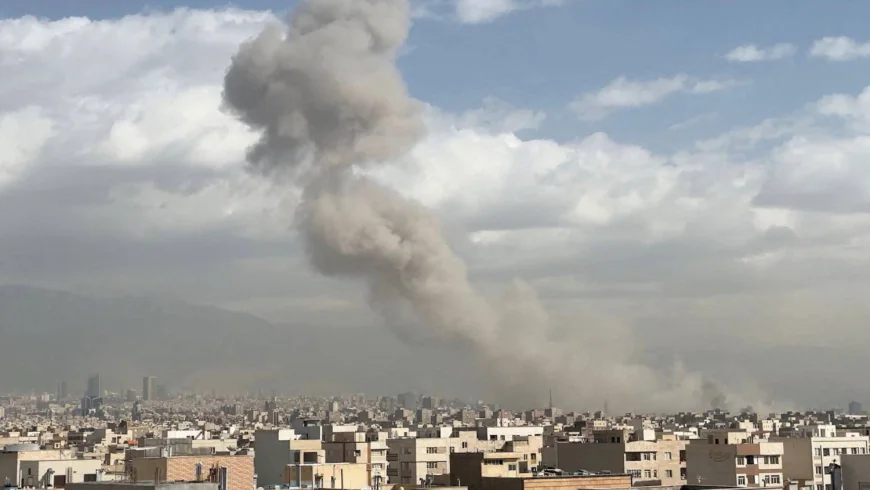
Smoke rises in Iran following an explosion, after Israel launched a preemptive attack against Iran on 28 February, 2026. Photo: Reuters
Warnings fall on deaf ears
For the last two months before the start of the war, when US was amassing its military power in or around Persian Gulf, Iran had been repeatedly warning US and Israel that "this time, it will not the same', apparently referring to the last year’s 12-day war in June when Israel and US started bombarding Iran, targeting the country’s key military personnel and scientists in the middle of an ongoing negotiations over Iran’s nuclear programme. The evil axis of Israel and the US even killed the negotiators.
So, before the start of the war forcibly inflicted on Iran on February 28 last, the Iranians made it clear that the retaliation would be different if the same thing happened again. They sincerely warned that this time, the retaliation would not be measured and proportionate like last year.
The senior Iranian officials categorically said this time, it will be all-out war if you make a tiny, single move or mistake.
It is worth mentioning that during the 12-day war between the same two parties seven months ago in June 2025, within a week of beginning the conflict, Israel started pressing the USA for a ceasefire, failing to bear the brunt of Iran's systemically increasing retaliatory missile attacks anymore.
All senior Iranian officials, including supreme leader Ayatollah Ali Khameni, foreign minister Abbas Araghchi and Chief Negotiator Ali Larijani, also conveyed the same message that this time, the retaliation wouldn't be the same. “Six months ago, when we attacked your (US) military base, we contacted you two hours before to inform that we are going to fire missiles towards your base, in retaliation for killing our scientists and senior generals, but as we don't want any escalation, we are informing you earlier to avoid casualties, paving the way to ceasefire," said the Iranians.
“But this time it will be different, this time we won't contact you in advance, this time it will be all-out war if you make the same mistake of attacking during negotiations ongoing, the retaliation will be beyond imagination," they warned repeatedly, during the two months of preparation before the start of the ongoing US-Israel war on Iran.
Starting from Supreme Leader Ayatollah Ali Khamenei to President Masoud Pezeshkian to foreign minister Abbas Araghchi --- all of them, in addition to other top Iranian officials, repeatedly made the same warning to US and Israel, but in vain. The duo didn't pay heed seriously to what Iran had warned of sincerely. Instead, they chose the wrong way of ignoring the United Nations and existing international laws, opting for exercising muscle power. As a result, during the whole last month, all US bases, including CENTCOM, in the Middle East, Israel and all entities linked to US interests in Gulf countries, are bearing the brunt of Iran's promised retaliation as a consequences of the option Israel and the US made.
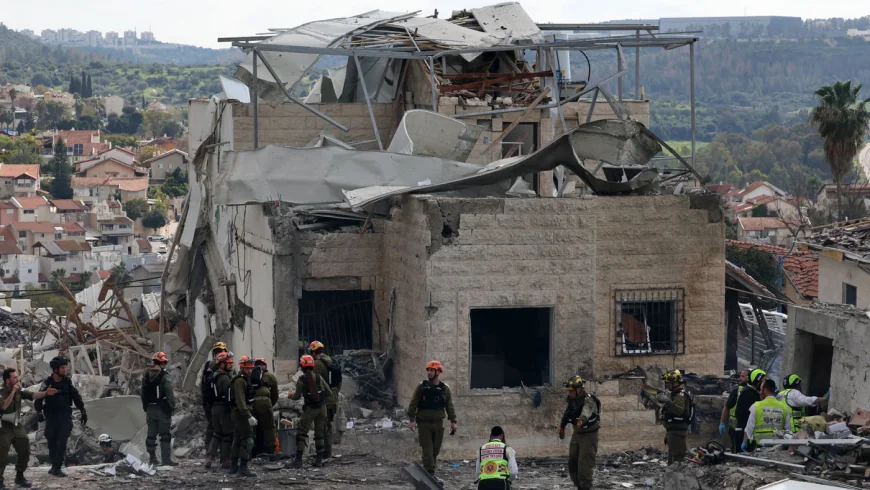
Damaged buildings in Tel Aviv following missile attack from Iran on Israel. Photo: middle-east-online.com
Premediated retaliations surprise US-Israel
It is worth mentioning that Iran responded within several hours after the US-Israel attack on several Iranian cities started one month ago, on 28 February, and the retaliation of Iran, Operation True Promise 4, has spared and is sparing none.
According to Iran’s IRGC, infrastructures, including US air and drone bases at Victory, Arifjan and Al-Kharj, were targeted in the initial phase. US and Israeli forces, along with Komala sites in Arad, Naqab, Tel Aviv, Erbil, the Fifth Fleet and Al Dhafra, were also struck with precision attacks yesterday. As a result, smoke, explosions and wreckage of multi-million-dollar aircraft were seen, laying bare the scale of the strikes and undermining attempts by regional media to play them down.
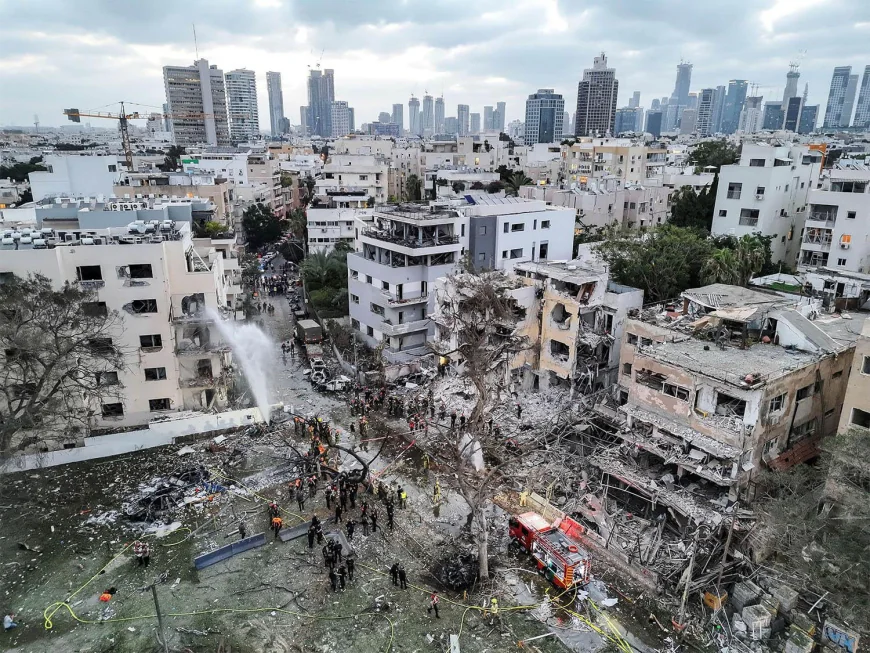
A drone view of the scene of a fatal Iranian strike in Beit Shemesh, Israel, March 1. At least 9 people are confirmed to have died from this attack. Photo: Reuters/Ilan Rosenberg
Is the attack on Iran legal?
Under the UN Charter, the Geneva Conventions and customary international law, parties to an armed conflict must distinguish between military and civilian targets and must not inflict civilian harm disproportionate to the anticipated military gain. Both Israel and the US have a long and chequered record of alleged war crimes in armed conflicts.
“No legal framework, international or domestic, can justify this US-Israeli war of aggression against Iran. This war is plainly illegal and must be stopped,” said Omar Shakir, Executive Director of Democracy for the Arab World Now (DAWN), a US-based non-profit organisation seeking to reform US policy in the Middle East and hold human rights abusers to account.
While Article 51 of the UN Charter guarantees the right of UN member states to individual or collective self-defence, that right applies only if an armed attack occurs against a member state and permits only proportionate measures necessary to respond.
The US and Israeli decision to go to war flies in the face of jus ad bellum, the body of international law governing when a state may lawfully use force against another. Under Article 2(4) of the UN Charter, all member states are prohibited from using force against the territorial integrity or political independence of another state.
There are only two clear exceptions: self-defence under Article 51 or authorisation by the UN Security Council under Chapter VII. Neither applies in this case. Article 51 allows self-defence only “if an armed attack occurs”, and Iran had not attacked the United States.
Even under the doctrine of anticipatory self-defence, the war falls short of legality. Customary international law’s Caroline doctrine requires a necessity that is “instant, overwhelming, leaving no choice of means and no moment for deliberation”.
A weeks-long military build-up, coupled with three rounds of talks that the Omani mediator described as a breakthrough the day before the strike, fails to meet that threshold. No Chapter VII resolution authorised this war. The United States has initiated a war of aggression, which UN General Assembly Resolution 3314 defines as “a crime against international peace” and which the Nuremberg Tribunal, set up by the United States itself, called “the supreme international crime”.
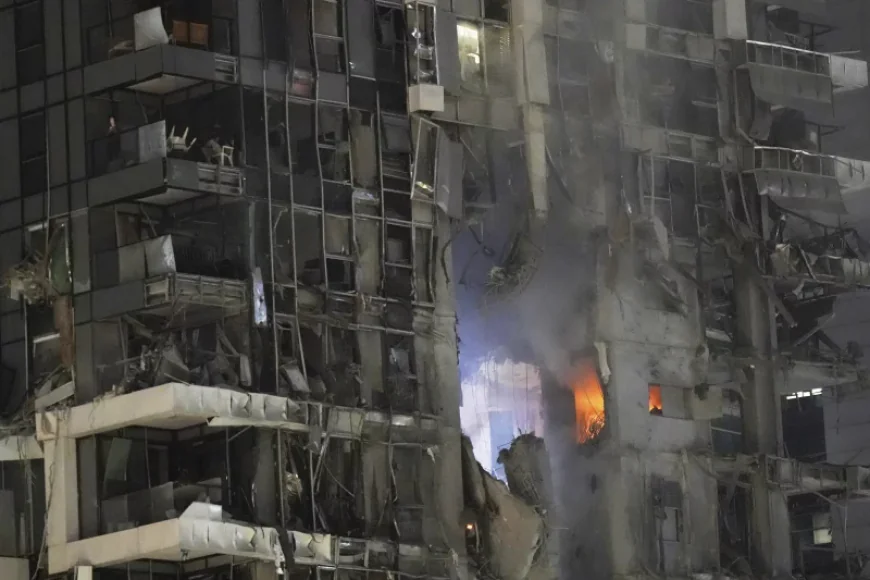
Fire and smoke rises from a destroyed building that was hit by a missile fired from Iran, in Tel Aviv, Israel on June 13. Photo: Tomer Appelbaum/AP
Violation of UN Charter, Geneva Conventions
“Let us be clear about what happened this weekend, because history has a habit of being rewritten,” said Sahar Aziz, a Distinguished Professor at Rutgers Law School. “The United States and Israel unilaterally attacked a sovereign nation without legal justification under international law. Seeking regime change is not a lawful basis to start a war. If it were, any country could claim justification simply because it opposes another government. Selective application of international law makes the world a far more dangerous place.”
US and Israeli strikes also appear to breach the core principles of jus in bello, the body of law governing how wars must be fought, regardless of whether the decision to go to war was lawful. Under the Geneva Conventions and customary international law, parties must distinguish between military and civilian targets and must not cause civilian harm disproportionate to the expected military advantage. Both Israel and the US have a long record of alleged war crimes in the conflict.
Fire and smoke rises from a destroyed building that was hit by a missile fired from Iran, in Tel Aviv, Israel on June 13. Photo: Tomer Appelbaum/AP
Children targeted deliberately
In southern Iran, a strike on the Shajareh Tayyebeh girls’ primary school in Minab, Hormozgan Province, killed 165 children and teachers. It was not immediately clear whether US or Israeli forces were responsible.
Additional Protocol I to the Geneva Conventions, Article 52(3), explicitly classifies schools as civilian objects; the burden lies on the attacking party to prove military use, and no such evidence has been presented.
Hours later, in Lamerd, Fars Province, a missile struck the city’s main sports hall while dozens of teenagers were inside for regular volleyball, basketball and gymnastics sessions. Local officials confirmed at least 18 civilians killed, most of them children. The governor of Lamerd said US and Israeli forces fired missiles at the hall while students were playing.
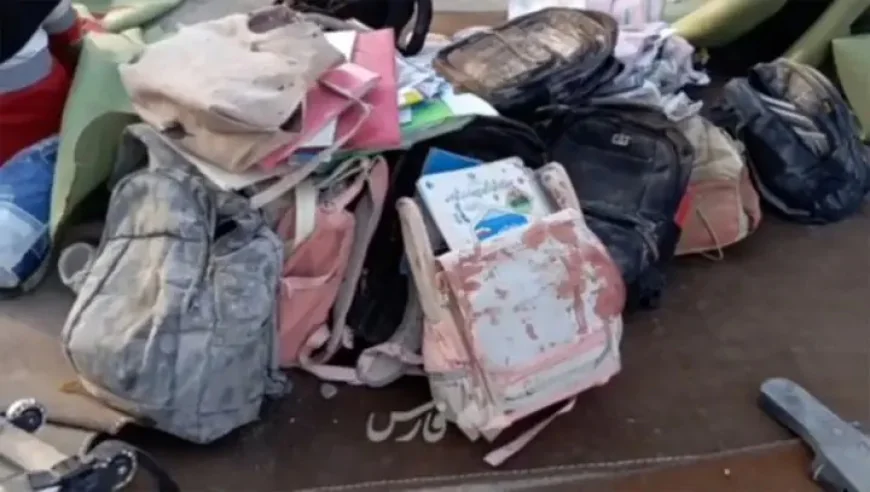
Blood-stained school bags of the schoolgirls killed by an US airstrike on a primary school on 28 February, 2026, in Minab, Iran. Photo: Reuters
The debauchery called ‘pre-emptive strike’
Despite the Trump administration’s half-hearted attempt to cite an imminent threat as justification for a pre-emptive strike, Iran had not attacked the United States. Pentagon briefers told congressional staff on 1 March 2026 that Iran was not planning to strike US forces or bases in the region unless Israel attacked first, directly undermining the White House’s claim that Tehran posed an imminent threat.
Hours before the strike, the United States was engaged in direct negotiations with Iran, and the Omani foreign minister described a diplomatic breakthrough. There was no attack to respond to and no emergency that could not have been taken to Congress. Offering yet another justification, Trump told The Washington Post on Saturday, 28 February, that “freedom” for the Iranian people was his primary concern in launching the war.
“Foreign powers launching an illegal war, however, is no way to support Iranians’ aspirations for freedom and democracy,” Shakir said, adding: “Congress does not need to pass a resolution to establish that this war is unlawful. The law already makes that clear. Under Section 5(c) of the War Powers Resolution, Congress may direct the withdrawal of forces at any time by concurrent resolution.”
The moot point is: Will the Congress of the USA exercise its power ordering withdrawal of forces from the Middle East?
What's Your Reaction?
 Like
0
Like
0
 Dislike
0
Dislike
0
 Love
0
Love
0
 Funny
0
Funny
0
 Wow
0
Wow
0
 Sad
0
Sad
0
 Angry
0
Angry
0

I am a journalist




Comments (0)