Buriganga boatmen struggle amid slow tourist flow
Many of the river’s traditional boatmen are facing a difficult reality, with fewer passengers and declining incomes
 ATT Correspondent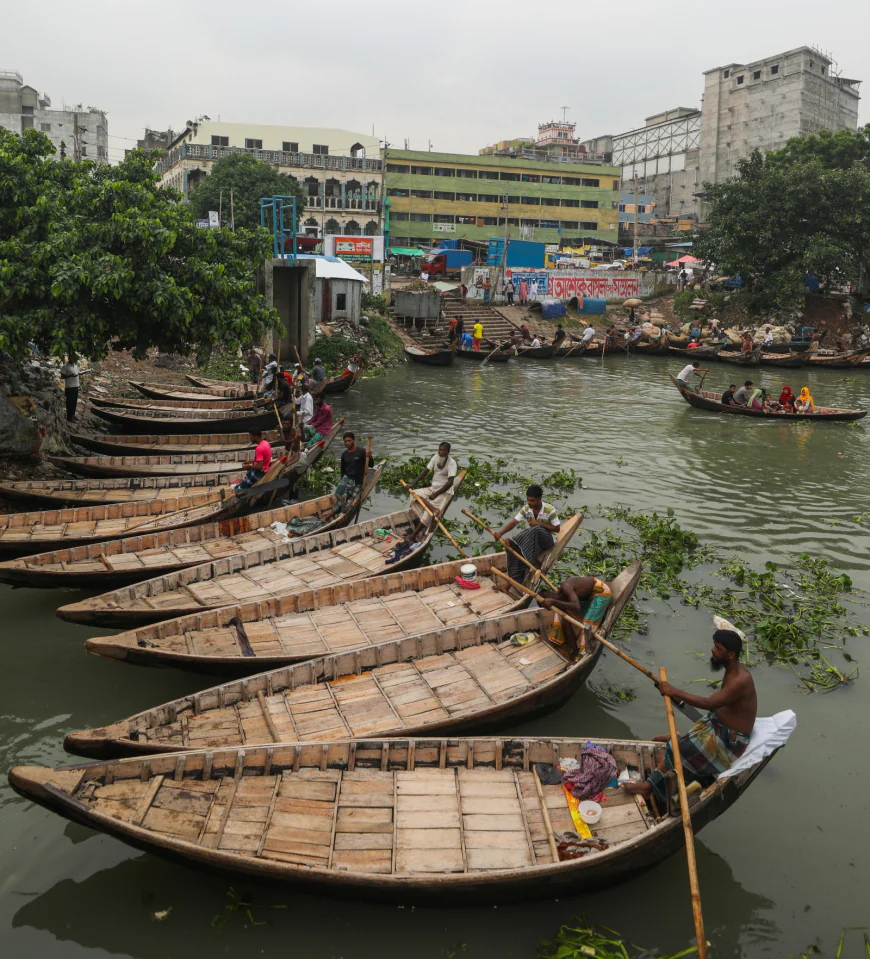
Along the banks of the Buriganga River, life moves at a slower pace than the city it borders. While Dhaka’s streets remain crowded and fast-moving, many of the river’s traditional boatmen are facing a difficult reality, with fewer passengers and declining incomes.
At Sadarghat, rows of wooden boats remain tied along the riverbank, their operators waiting for customers. Once a busy hub of daily crossings and leisure trips, the area now sees long periods of inactivity, especially during off-peak hours.
Boatmen say the decline in tourist and leisure visitors has become more noticeable in recent months. Many people who once came to the river for short rides or relaxation are no longer visiting, leaving operators with limited opportunities to earn.
“On some days, we hardly get any passengers,” said Mosharaf Hossain, a boatman working on the river. “We wait from morning until evening, but the number of visitors has dropped significantly.”
In the past, manually operated boats played a major role in river transport, carrying people, goods and offering short trips. However, with the expansion of motorised boats and changing travel patterns, demand for traditional rowboats has steadily declined.
Despite these challenges, many boatmen continue to work under difficult conditions. With fares as low as Tk 10 per crossing, daily earnings often fail to cover basic expenses such as boat rent and food. On days of bad weather or low demand, some return home without any income.
The impact extends beyond transport services. Small vendors and workers along the riverbank also report reduced business, indicating a wider slowdown in river-based economic activity.
Even so, the connection between the boatmen and the river remains strong. For many, it is not just a job but a way of life shaped by generations. From early morning until evening, they continue working, hoping for better days.
Analysts say the situation highlights the need for structured tourism development along the Buriganga. With proper planning, including organised boat rides and recreational activities, the river could attract more visitors and help revive local livelihoods.
For now, the boatmen continue to wait, watching the river flow and hoping that passengers will return.