Spring, Valentine’s Day Bring Colour, Music
Falgun and Valentile's Day bring colour, music and a sense of renewal among culturally minded Bangladeshis as they celebrate the day with passion and enthusiasm
 ATT Desk Report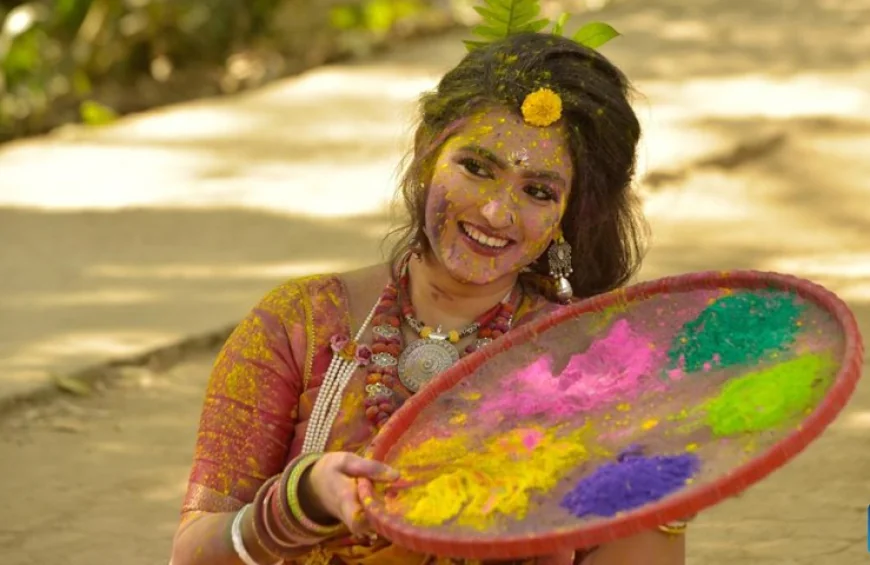
Pahela Falgun, the first month of spring and the eleventh month of the Bangla calendar, arrived on Saturday, 14 February, bringing colour, music and a sense of renewal among culturally minded Bangladeshis. The day coincided with Valentine’s Day.
Traditionally, Bangladeshis used to celebrate the first day of spring, Pahela Falgun, on 13 February, but the Bangla Academy revised the calendar in 2020 to align with the Gregorian system, shifting the festival to February 14.
Now, people celebrate both occasions, combining love, affection and the vibrant spirit of spring. The people of the country welcomed Falgun yesterday amid much fanfare and festivity as a celebration of nature, culture and the enduring spirit of the Bengali people—a perfect blend of joy, colour and reflection.
Pahela Falgun has become a major cultural event, particularly embraced by young people. After the harshness of winter, nature awakens: fresh leaves sprout, flower buds bloom, birds fill the air with song and the breeze carries a gentle floral fragrance.
This revival is mirrored in the human spirit, inspiring celebration and festivity across the country.
The tradition of celebrating Pahela Falgun began in the Bengali year 1401, and since then, the Jatiya Basanta Utsab Udjapan Parishad has held regular festivities on the Bakultala premises of the Faculty of Fine Art at Dhaka University.
Over time, institutions such as the Bangladesh Shilpakala Academy and various organisations, businesses and schools also joined in, making 14 February a nationwide celebration.
Formally organised in 1991 by the fine arts faculty, Pahela Falgun is now celebrated as the Spring Festival. People dress in shades of yellow and orange, and enjoy music, poetry and art, welcoming the season with joy and creativity.
Beyond its cultural significance, Falgun carries historical and political meaning. The red hues of shimul and krishnachura flowers recall the sacrifices of the martyrs of February 1952—Rafiq, Safiq, Barkat, and Salam—who gave their lives for the Bangla language. Their blood-stained path ultimately led to Bangladesh’s independence, making Falgun not only a month of beauty and renewal, but also one of remembrance and resilience.
Read More: Why Bangladesh Struggles to Attract Tourists
Tourism Struggles Ahead of Ramadan in Bangladesh
Bangladesh–India–Tripura bus service resumes after 18-month suspension
How Political Unrest Crushed Bangladesh's Tourism & Aviation Industry
Why Bangladesh Struggles to Attract Tourists
A Year of Rapid Change in Bangladesh’s Aviation Industry
Some Heritage Sites and Monuments of Bangladesh
Nine Attractive and Scenic Places of Bangladesh
Narayanganj's Murapara Zamindar Bari: A Unique Example of Architectural Style
Bangladesh’s Aviation Drive Could Reshape Future of Tourism
Bangladesh-India Relations Show Signs of Recovery
New Bangladesh Govt Brings Light of Hope to Indian Tourism Sector
Bangladesh Resumes Visa Services in India
Bangladesh in the Eyes of an Indian Traveller
International Arbitration Board orders CAAB to Pay Tk1,650cr to ADC
Prime Minister Holds Meeting on Dhaka Airport’s Third Terminal
Old Dhaka’s Iftar: A Timeless Cuisine of Flavours and Heritage
New Airport Cargo Facility Lies Idle Amid Export Slowdown
Russia Unbound: Tours, Visas, and Travel Tips for Bangladeshi Nationals
Travel Alert Issued Following Killing of Cartel Leader in Mexico