

Ratargul Swamp Forest offers livelihoods for locals
Many locals earn a living by operating boats that carry visitors through the forest, while others run small businesses catering to tourists

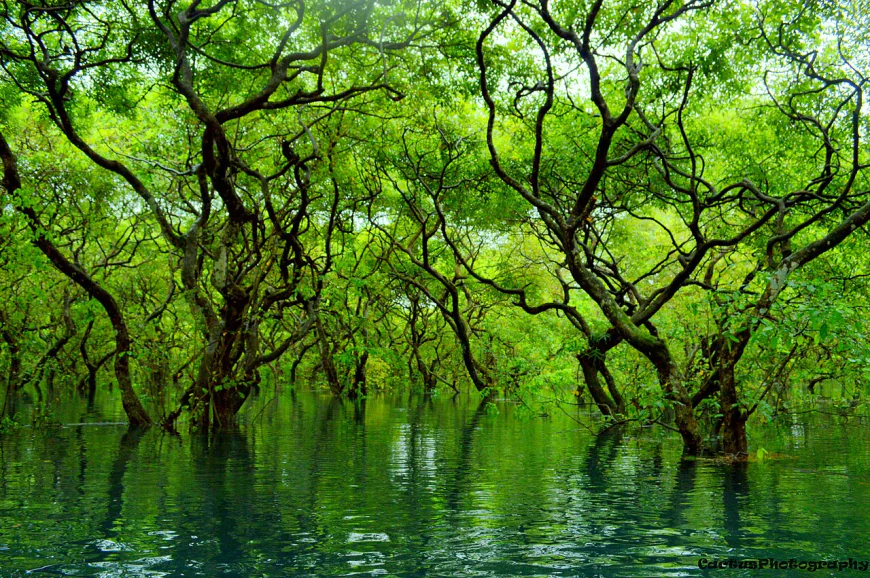
Residents of villages surrounding the Ratargul Swamp Forest rely heavily on the freshwater swamp forest for their livelihoods, as hundreds of tourists visit the area to enjoy its scenic beauty.
Many locals earn a living by operating boats that carry visitors through the forest, while others run small businesses catering to tourists.
Raju Miah, a boatman from Aulatuk village near the forest, said he operates a tourist boat from Motor Ghat and earns about Tk 200 per trip.
During the peak tourist season, he can make six to eight trips a day, compared with only two trips during the off-season, he said.
Raju added that around 45 boats operate from Motor Ghat alone. “We depend on tourists. If they do not come, we will face serious difficulties,” he said.
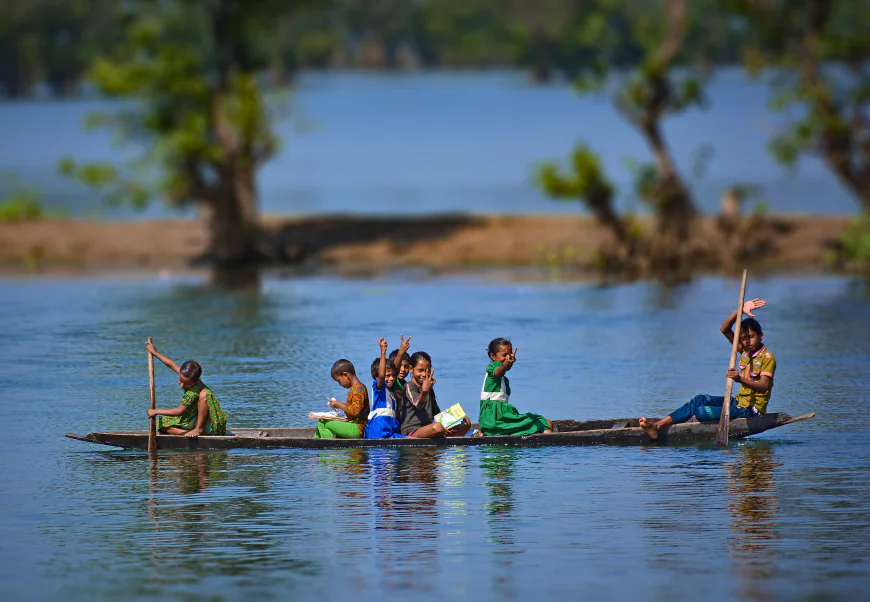
Children in a boat on the Shari-Goyain River in Ratargul Swamp Forest. Photo: Wikipedia/Abdul Momin
Local residents said people from around 10 nearby villages depend on the forest for their livelihood.
Boatmen said roughly 200 boats operate daily from three points — Ratargul Ghat, Motor Ghat and Chiringgi Ghat.
Quyyum, a shopkeeper at Motor Ghat, said his small business largely depends on tourist arrivals.
Meanwhile, Mohammad Masum, who visited the forest with his family from Narayanganj, said it was their first trip to Ratargul, which he described as a very popular tourist destination.
“We are very happy enjoying the beauty of the swamp forest,” he said.
The Ratargul Swamp Forest is located along the Gowain River in Fatehpur Union of Gowainghat upazila in Sylhet.
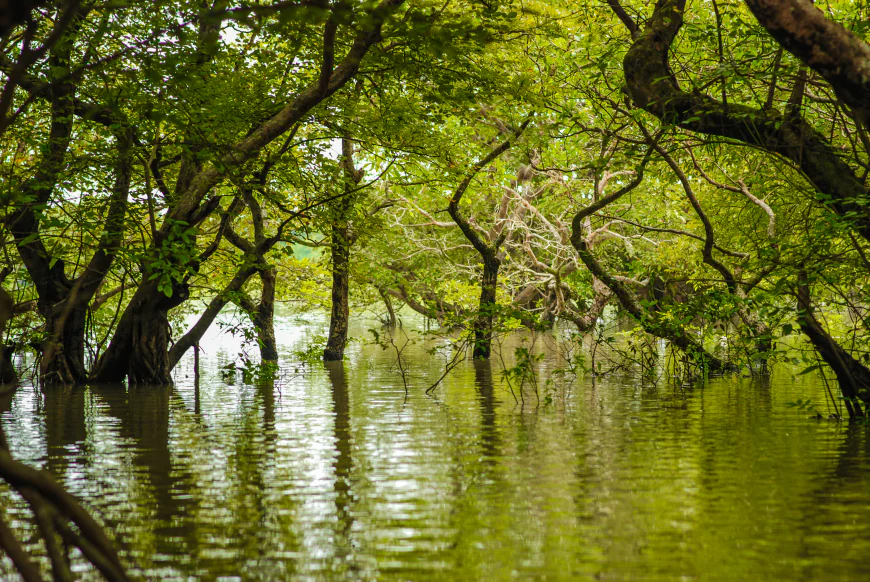
Dalbergia reniformis tree in Ratargul Swamp Forest. Photo: Wikipedia/Towkir Ahmad
Ratargul was once considered the only swamp forest in Bangladesh and is still regarded as one of the few freshwater swamp forests in the world.
According to the Bangladesh Forest Department, the forest covers around 3,325 acres, of which 504 acres were declared a wildlife sanctuary in 2015.
The evergreen forest lies beside the Goain River and is connected to the Chengir Khal channel. Most of the trees found here are Dalbergia reniformis, locally known as koroch trees.
During the rainy season, the forest is typically submerged under 20 to 30 feet of water, while for the rest of the year the water level remains around 10 feet deep.
Read More: Ottoman culinary traditions continue to shape iftar meals across South Asia
405 Bangladeshis return from Dubai on US-Bangla’s second special flight
A US F-15 fighter jet crashes in Kuwait
Two Bangladeshi expatriates killed and seven injured in Middle East conflict
US suspends immigrant visas for Bangladeshi citizens, effective from January 21
Airspace closures cancel 102 flights in 3 days at HSIA
More ME flights axed as misery deepens for stranded passengers
Govt to reopen closed airports before building new ones
Bangladesh in the Eyes of an Indian Traveller
Busting Myths: What It's Like to Travel Across Bangladesh
Why Bangladesh Struggles to Attract Tourists
Bandarban: The Paradise of Nature
How Political Unrest Crushed Bangladesh's Tourism & Aviation Industry
Some Heritage Sites and Monuments of Bangladesh
What's Your Reaction?
 Like
0
Like
0
 Dislike
0
Dislike
0
 Love
0
Love
0
 Funny
0
Funny
0
 Wow
0
Wow
0
 Sad
0
Sad
0
 Angry
0
Angry
0




Comments (0)