The sunflower tourism of Raozan
Spread across low-lying fields in all 14 unions of Raozan, these sunflower gardens have become a popular tourist spot . A centre of attraction for hundreds of people from far and near.
 Anwar Hossain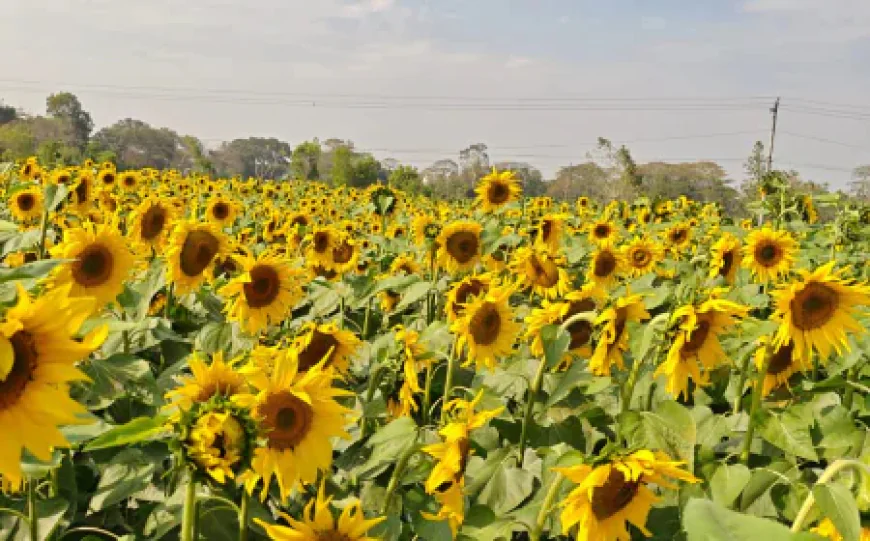
As winter fades into spring, vast stretches of yellow blossoms have transformed Raozan Upazila into breathtaking scenery of gold. From far and wide, the blooming sunflower fields bear a resemblance to giant carpets unfurled across the countryside. Up close, thousands of radiant sunflowers lift their faces to the sun, creating a scene that feels almost cinematic.
vibrant petals glowing under open skies, bees humming gently from bloom to bloom, and a quiet, sweet fragrance drifting through the air. Spread across low-lying fields in all 14 unions of Raozan, these sunflower gardens have become one of the season’s most charming rural attractions. What was once ordinary farmland turned into a visual spectacle, drawing nature lovers, photographers and day-trippers from surrounding areas.
In the afternoons, the fields come alive. Families stroll between rows of blossoms, children run along narrow earthen paths, and groups of friends pose for photos against the golden backdrop. Smartphones click constantly as visitors capture selfies and panoramic shots, many of which soon find their way onto social media platforms like Facebook and Instagram.
The appeal lies not only in the color but in the calm. Away from the bustle of city life, Raozan’s sunflower fields offer a serene countryside retreat — a place where time seems to slow down and nature takes centre stage.
While sunflowers can be found throughout the upazila this season, visitors will find particularly dense extends in unions such as Dabua, Haldia, East Guzra and West Guzra. Each area offers slightly different landscapes — some fields bordered by water bodies, others framed by distant village homes and open skies.
Among the cultivators contributing to this golden transformation is local farmer Ranjit Chowdhury, who has planted nearly two acres of sunflowers in Kundeshwari Beel. His thriving field stands as a testament to how agriculture and aesthetics can be beautifully combined.
Beyond their visual charm, these fields also represent a growing agricultural shift. According to local agricultural officials, around 14 hectares of land in Raozan have been brought under sunflower cultivation this year. The harvest is expected to yield approximately 60 metric tons of seeds, producing between 20 and 30 metric tons of oil.
With rising awareness about the health benefits of sunflower oil, interest in its cultivation has steadily increased. Compared to last year’s 13 hectares, this season marks a noticeable expansion — and with it an unexpected boost in rural tourism.
As the sunflower gardens gain popularity as seasonal attractions, local authorities are urging visitors to enjoy themselves responsibly. The blooms may look inviting, but they are also a farmer’s livelihood. Admiring the flowers without plucking or trampling them ensures that both visitors and cultivators can continue to benefit from this blossoming success.
Read More: Biman crew stranded in Dubai brought back by US-Bangla
A US F-15 fighter jet crashes in Kuwait
Two Bangladeshi expatriates killed and seven injured in Middle East conflict
US suspends immigrant visas for Bangladeshi citizens, effective from January 21
Airspace closures cancel 102 flights in 3 days at HSIA
More ME flights axed as misery deepens for stranded passengers
Govt to reopen closed airports before building new ones
Bangladesh in the Eyes of an Indian Traveller
Busting Myths: What It's Like to Travel Across Bangladesh
Why Bangladesh Struggles to Attract Tourists
Bandarban: The Paradise of Nature
How Political Unrest Crushed Bangladesh's Tourism & Aviation Industry
Some Heritage Sites and Monuments of Bangladesh