

Rajshahi, a role model of cleanliness, education, heritage
The city has reinvented itself as the “Cleanest City of Bangladesh”

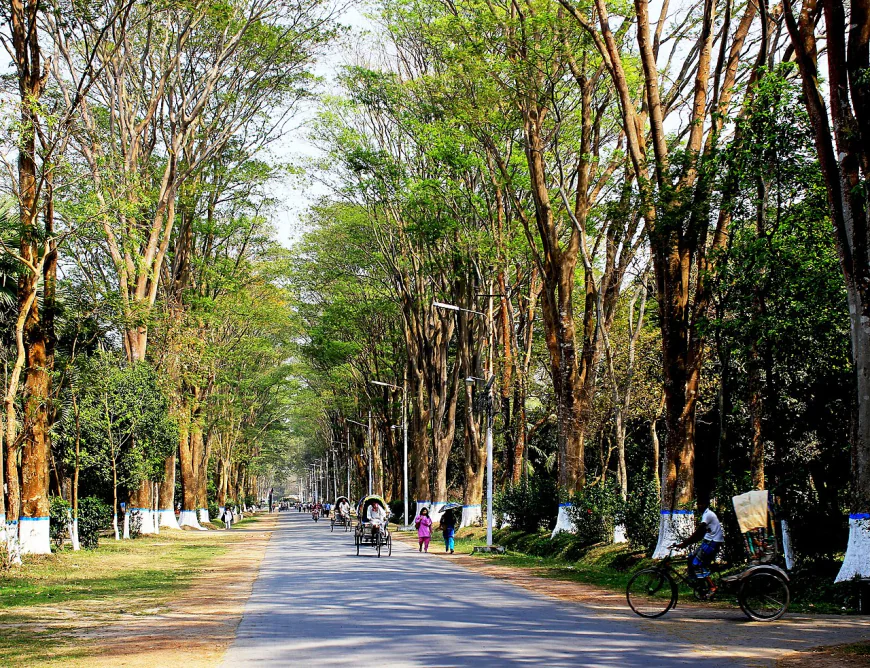
Rajshahi, the famous Silk City located on the banks of the Padma River, has transformed into one of the most liveable and progressive metropolises in north-western Bangladesh. Known as the educational capital of the country's north, this historic city now glows equally for its clean environment, prestigious institutions and deep cultural roots.
Rajshahi has long been recognised as a premier educational city. It is home to the University of Rajshahi, whose sprawling, lush-green campus is considered one of the most beautiful in South Asia. Beyond this flagship institution, the city boasts the age-old Rajshahi College, Rajshahi Medical College and Rajshahi University of Engineering & Technology (RUET).
Perhaps Rajshahi's most celebrated achievement in recent years is its environmental transformation. Once plagued by dust and pollution, the city has reinvented itself as the “Cleanest City of Bangladesh” through visionary municipal management. It is notably the country's first city to fully embrace vehicle compressed natural gas (CNG) and mandatory rickshaw licenses, drastically reducing air pollution.
Amidst its modern strides, Rajshahi has preserved its historical soul. The city was a thriving hub during the Mughal era, serving as a center for the silk trade—a legacy that continues today. The iconic Bara Kuthi, a 300-year-old Dutch trading house, stands stoically by the river as a testament to the colonial era.
What's Your Reaction?
 Like
0
Like
0
 Dislike
0
Dislike
0
 Love
0
Love
0
 Funny
0
Funny
0
 Wow
0
Wow
0
 Sad
0
Sad
0
 Angry
0
Angry
0

Comments (0)