How Bureaucratic Arrogance, Unheeded Warnings Cost CAAB Tk1,500cr
Why Bangladesh’s aviation regulator faces a Tk 1,500 crore penalty over Terminal 3 at Dhaka Airport. Inside the CAAB–ADC dispute and arbitration decision.
 The Editors Desk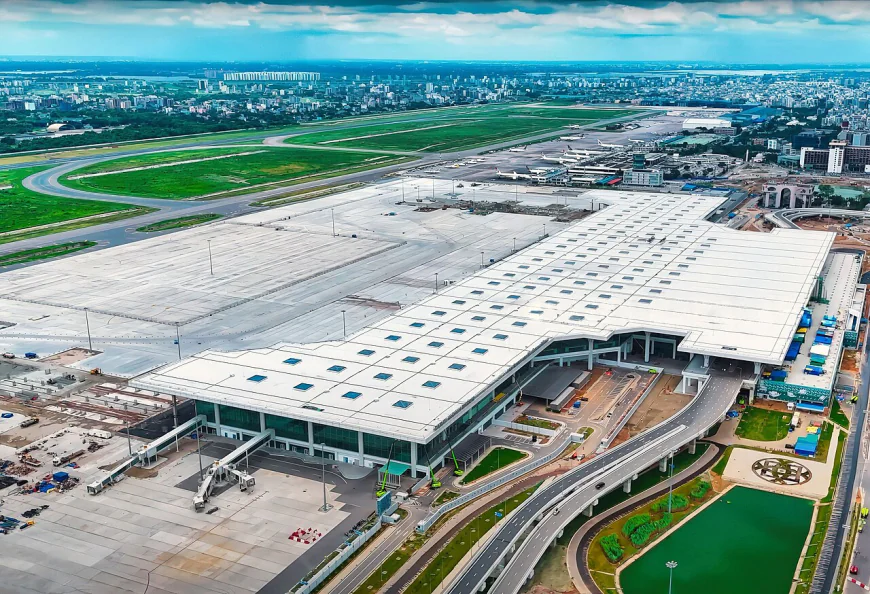
The Third Terminal (T3) at Hazrat Shahjalal International Airport was destined to be a crown jewel of superb infrastructure in Bangladesh—a testament to what this nation could achieve on the global stage. However, behind its polished floors and unlit baggage carousels, it has quietly become a monument to bureaucratic incompetence.
Last week, the International Dispute Board ordered the Civil Aviation Authority of Bangladesh (CAAB) to pay over Tk 1,500 crore to the Aviation Dhaka Consortium (ADC) that comprises Mitsubishi Corporation and Fujita Corporation of Japan, and Samsung C&T Corporation of Korea. Publicly, officials concerned have brushed this off as a standard contractual disagreement, hiding behind vague "audit objections".
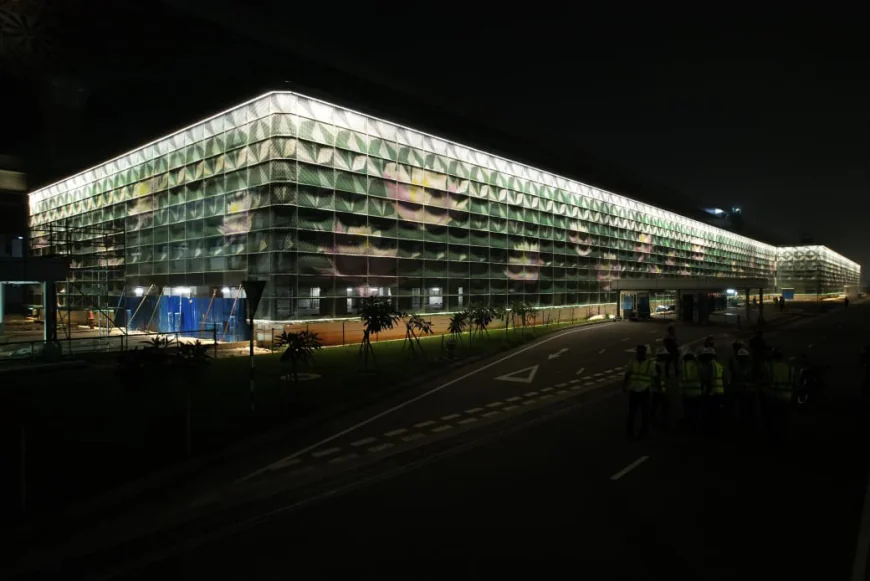
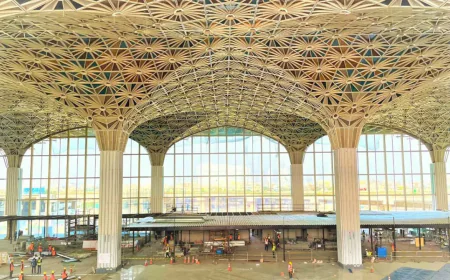
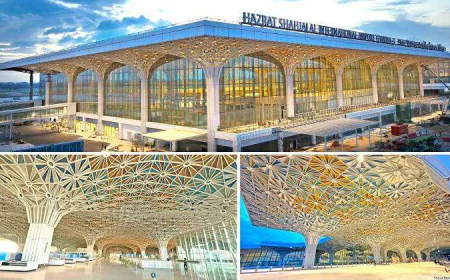
A view of the third terminal of Hazrat Shahjalal International Airport. Photo: ATT
However, a long investigation by the Aviation & Tourism Times (ATT), corroborated by confidential documents and high-level consortium insiders, reveals a far more disturbing truth. This was not a legal inevitability. It was a self-inflicted financial haemorrhage caused by the sheer arrogance of the local aviation leadership—a disaster that could have been entirely avoided for a fraction of the cost.
The original sin: A success punished
To understand the magnitude of this failure, we must first look at how the crisis began. Ironically, it started with a success. Despite the global ravages of the Covid-19 pandemic and the Russia-Ukraine war, the ADC completed the physical construction of Terminal 3 in early 2024. This culminated in the much-celebrated "soft inauguration".
The logical next step was a seamless handover and the government was supposed to hire a third-party operator to take the reins. But they failed to do so. "As a proper handling and operating company was never appointed, we were forced to act as caretakers," an ADC insider admitted to the ATT seeking anonymity. "We had to maintain a multi-billion-dollar terminal for years—work that was entirely outside the scope of our initial contract. We were bleeding operational costs just to keep the facility from degrading."
The solution offered
By mid-2025, the situation had become untenable. ADC approached the interim government with a straightforward and highly reasonable exit strategy. They requested the settlement of their pending certified bills, alongside with compensation for the massive, uncontracted maintenance expenses they had shouldered since 2024. Once settled, they would officially hand over the terminal.
All ADC demanded was a 5% additional fee on top of the initial contract value to cover these extended maintenance costs and walk away amicably.
How did CAAB and the Ministry of Civil Aviation and Tourism (MoCAT) respond to this diplomatic solution? They slammed the door.
According to multiple sources within the consortium, instead of honoring the payments CAAB leveled baseless accusations of overcharging against ADC. They trapped the consortium's rightful dues in a labyrinthine, indefinite "audit" stage.
"We tried multiple times to solve this quietly, without going to the International Chamber of Commerce (ICC) or forming a Dispute Board," a highly placed source from ADC told the ATT. "The highest-level officials at CAAB and MoCAT were directly involved.” They had even brought in diplomatic channels, including the Korean Embassy to explain the severity of the situation. But no heed was paid andthe depth of this crisis was simply ignored.
Diplomatic Deafness
The stonewalling triggered a diplomatic crisis. Ambassadors representing the consortium's home countries wrote urgent letters to the-then aviation adviser, warning that failure to formally take over the facility and pay certified dues was pushing the contractor toward legal remedies. They explicitly cautioned that this would severely damage Bangladesh's global standing and deter future foreign direct investment (FDI). Yet, the CAAB leadership remained paralysed by indecision and hubris; treating foreign diplomatic warnings with the same disregard they showed the contractor.
The DB hammer penalty
When leadership refuses to acknowledge reality, international arbitration forces it upon them. After all amicable attempts failed, the international Dispute Board, comprising adjudicators from Malaysia, the UK and Germany, was formed.
Their verdict is a catastrophic blow to the national exchequer. As CAAB refused to settle for the requested 5%, the DB announced an award that effectively forces Bangladesh to pay almost 15% extra of the initial contract value. The actual Summary of Decision document, obtained exclusively by the ATT, strips away any ambiguity.
The board mandates CAAB to pay out crippling sums which is largely in foreign currency, during an acute dollar crisis: For interim payment certificates (IPCs 48, 52-54): Over JPY 5.8 billion and BDT 2.7 billion. For the release of retention money: Over JPY 6 billion and BDT 4 billion. Again, for financing charges (late fees up to 31 October 2025): JPY 222 million and BDT 299 million.
By ignoring a 5% settlement, the domestic aviation authorities have effectively slapped the Bangladeshi taxpayer with a 10% penalty for bureaucratic arrogance.
Leadership crisis
This Tk 1,500+ crore blunder brings to the fore the very fabric of the local aviation leadership. The T3 dispute is not merely an administrative oversight; it is a glaring indictment of officials at CAAB and MoCAT who failed to acknowledge the sincerity of a foreign partner. They alienated embassies, gambled with public funds and dragged the nation's reputation for FDI through the mud.
Bangladesh now possesses a world-class terminal that sits empty and is chained down by a world-class legal disaster. If Bangladesh is ever to truly conquer the skies; we must first clean house on the ground. The officials who allowed a 5% amicable settlement to balloon into a Tk 1,500+ crore international humiliation must be held accountable.
Read More: Why Bangladesh Struggles to Attract Tourists
Tourism Struggles Ahead of Ramadan in Bangladesh
How Political Unrest Crushed Bangladesh's Tourism & Aviation Industry
Why Bangladesh Struggles to Attract Tourists
A Year of Rapid Change in Bangladesh’s Aviation Industry
Some Heritage Sites and Monuments of Bangladesh
Nine Attractive and Scenic Places of Bangladesh
Narayanganj's Murapara Zamindar Bari: A Unique Example of Architectural Style