

Flight cancellations: Airlines incur major financial losses
The ongoing war between US-Israel and Iran has created unprecedented turbulence in Middle Eastern airspace, leaving thousands of passengers among uncertainty about reaching their destinations while domestic and international airlines are also staring at significant financial losses

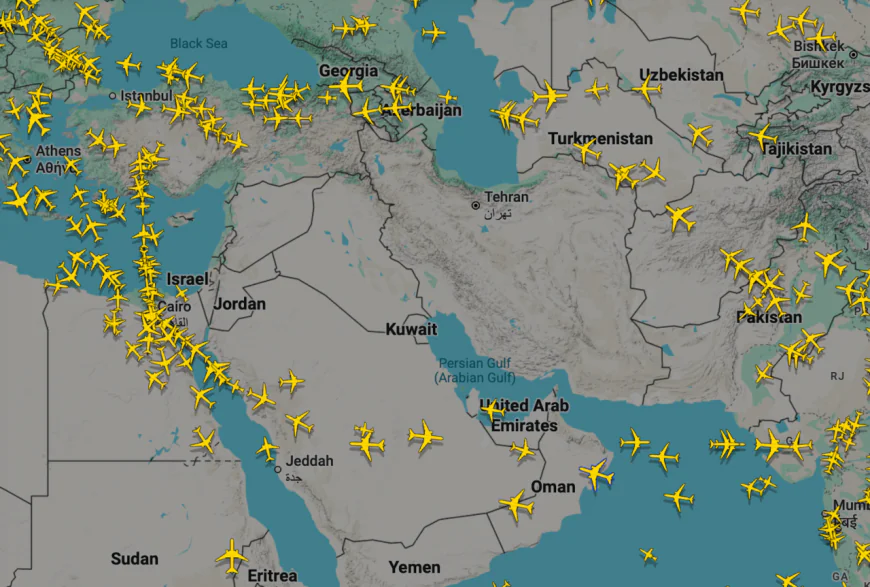
The ongoing war between US-Israel and Iran has created unprecedented turbulence in Middle Eastern airspace, leaving both passengers and airline companies at a loss.
As a result, while thousands of passengers are now uncertain about reaching their destinations, domestic and international airlines are also staring at significant financial losses. In particular, Biman Bangladesh Airlines and US-Bangla Airlines fear they could face a major financial setback if the situation drags on.
300 flights cancelled in nine days
The Civil Aviation Authority of Bangladesh (CAAB) said that since February 28, seven Middle Eastern countries—Iran, Iraq, Kuwait, the United Arab Emirates, Bahrain, Qatar and Jordan—have closed their airspace. As a result, 34 flights were cancelled at Hazrat Shahjalal International Airport on Thursday (March 5) alone. In the past six days, a total of 210 international flights have been cancelled.
CAAB Public Relations Officer Kawsar Mahmud said the number of cancelled flights has been rising steadily in recent days. Of the 34 flights cancelled on Thursday, 10 belonged to Air Arabia, four each to Emirates, Flydubai and Qatar Airways, and two to US-Bangla Airlines.
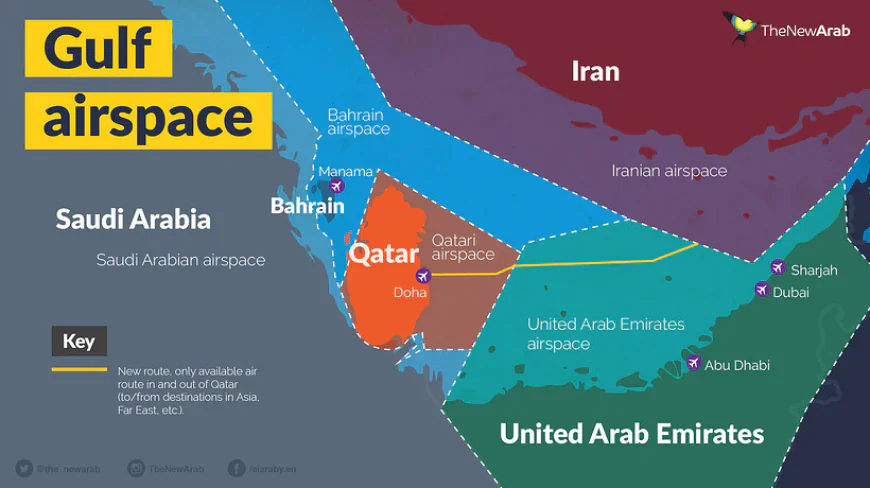
The image shows the only available air route in and out of Qatar to and from various destinations across the globe. Photo: The New Arab
A major blow during Ramadan
Usually, thousands of expatriate Bangladeshis return home from the Middle East during Ramadan and ahead of Eid. During this period, flights typically operate at full capacity, making it the peak season for airline business.
Biman Bangladesh Airlines spokesperson Bosra Islam told the Aviation and Tourism Times (ATT), “At a time when business should be booming, we are being forced to cancel flights one after another. If the situation does not improve quickly, it could snowball into a major financial crisis for us.”
Kamrul Islam, General Manager (Public Relations) of US-Bangla Airlines, told ATT that the airline has so far cancelled 24 flights, creating a difficult situation for the company.
“During Ramadan, thousands of expatriates usually return home with us. But under the current circumstances, that is simply not happening,” he said. “If the situation is not resolved quickly, we will inevitably face heavy financial losses.”
However, he added that it is too early to estimate the exact scale of the losses until the situation returns to normal.
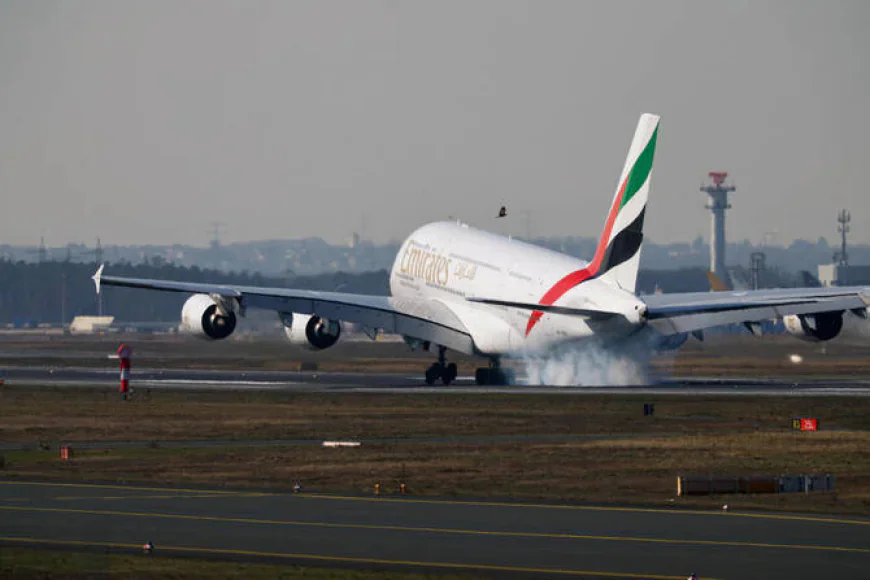
An Emirates plane with German tourists evacuated from the Middle East arrives from Dubai, amid the U.S.-Israeli conflict with Iran, at the airport in Frankfurt, Germany, March 3, 2026. Photo: REUTERS/Kai Pfaffenbach
Fears of ticket prices doubling or tripling
Experts believe that if the conflict does not subside soon, its impact could be far-reaching. In that case, airfares may rise two to three times their current levels.
Aviation expert Kazi Wahidul Alam told ATT that if the situation does not stabilise within the next week, it could spiral into a serious crisis. According to him, “Once conditions improve, fares on various routes may increase as airlines try to recoup their losses.”
Kazi Wahidul Alam also said it is difficult to determine the exact scale of losses for airlines at this stage. He believes airlines will be able to provide clearer estimates once the situation calms down. However, he noted that substantial financial losses for the airlines appear almost inevitable.
At the same time, he expressed concern for expatriates stranded abroad. “Bringing back those who are stuck overseas will be a major challenge,” he said.
Stakeholders say uncertainty will persist until tensions in the skies ease. For now, airlines are closely monitoring the situation while placing the highest priority on ensuring passenger safety.
Read More: ME conflict forces cancellation of 300 flights in 9 days: CAAB
Middle East routes resume gradually: CAAB
Malnicherra tea garden emerging as a key tourism destination
Mughal-era marvel Ghaghra Khan Bari Jame Mosque in Sherpur
Tourism sector faces uncertainty amid escalating Middle East conflict
Ottoman culinary traditions continue to shape iftar meals across South Asia
405 Bangladeshis return from Dubai on US-Bangla’s second special flight
US suspends immigrant visas for Bangladeshi citizens, effective from January 21
Govt to reopen closed airports before building new ones
Bangladesh in the Eyes of an Indian Traveller
Busting Myths: What It's Like to Travel Across Bangladesh
Why Bangladesh Struggles to Attract Tourists
Bandarban: The Paradise of Nature
How Political Unrest Crushed Bangladesh's Tourism & Aviation Industry
Some Heritage Sites and Monuments of Bangladesh
What's Your Reaction?
 Like
0
Like
0
 Dislike
0
Dislike
0
 Love
0
Love
0
 Funny
0
Funny
0
 Wow
0
Wow
0
 Sad
0
Sad
0
 Angry
0
Angry
0




Comments (0)