

Thousands of flights cancelled as Iran conflict disrupts global air travel
Key transit airports in Dubai and Abu Dhabi in the United Arab Emirates, as well as Doha in Qatar, were closed or operating under severe restrictions as much of the region’s airspace remained shut

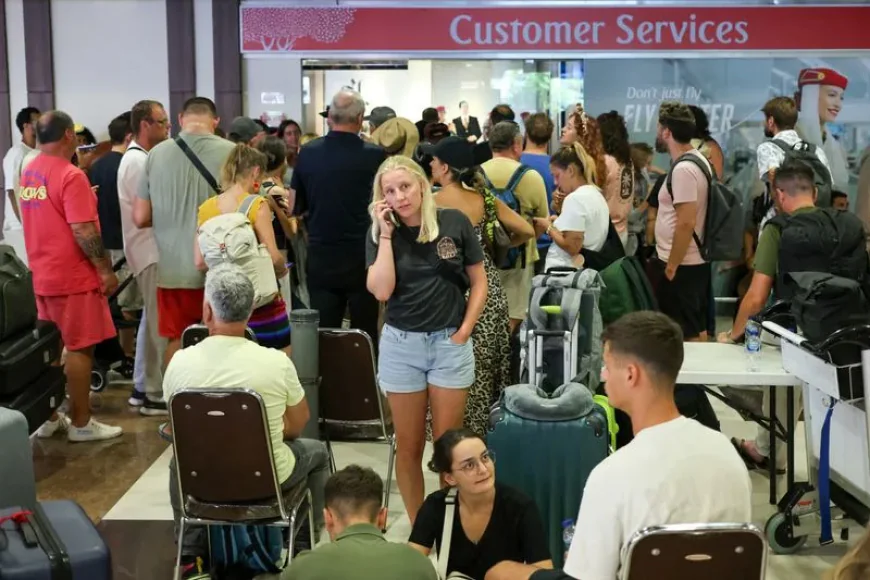
Global air travel remained severely disrupted on Sunday as the conflict in Iran forced the closure of major Middle Eastern airports, including Dubai International Airport — the world’s busiest international hub — for a second consecutive day, marking one of the most significant shocks to aviation in recent years.
Key transit airports in Dubai and Abu Dhabi in the United Arab Emirates, as well as Doha in Qatar, were closed or operating under severe restrictions as much of the region’s airspace remained shut. The closures followed US and Israeli strikes that reportedly killed Iran’s Supreme Leader, Ali Khamenei.
The impact extended far beyond the Middle East, with tens of thousands of passengers stranded in cities including Bali, Kathmandu and Frankfurt.
Israel said it had launched a fresh wave of strikes on Iran on Sunday. Explosions were reported for a second day near Dubai and over Doha after Iran carried out retaliatory air attacks against neighbouring Gulf states.
Dubai International Airport reportedly sustained damage during the Iranian attacks, while airports in Abu Dhabi and Kuwait City were also affected.
Data from flight-tracking services showed widespread disruption. FlightAware reported thousands of cancelled or delayed flights across the Middle East.
Emirates, the world’s largest international airline, suspended all operations to and from its Dubai hub until Monday. Qatar Airways also halted all services, saying it would provide a further update on Monday. Germany’s Lufthansa extended its suspension of flights to the region until 8 March.
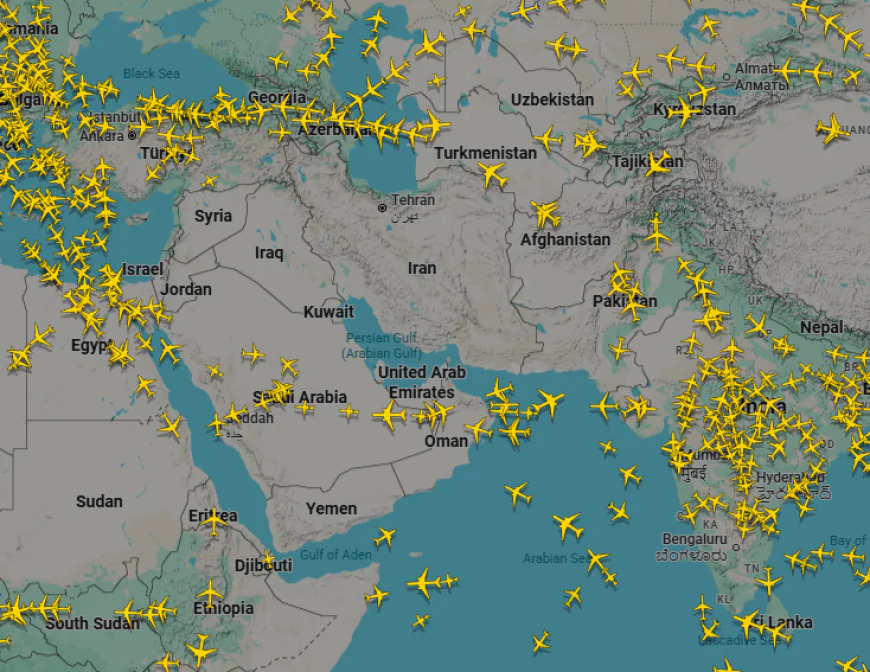
Skies over Iran, Iraq, Kuwait were empty on Sunday morning, Flightradar24 map shows. Courtesy: Reuters
Airspace over Iran, Iraq, Kuwait, Israel, Bahrain, the UAE and Qatar appeared virtually empty on maps published by Flightradar24.
Flightradar24 said a new pilot bulletin had extended the closure of Iranian airspace until at least 0830 GMT on 3 March. However, airline sources said there was no clear indication of how long the disruption linked to the conflict would continue.
Shockwaves beyond the Middle East
Although airlines in the region have grown accustomed to periodic disruption in recent years, analysts said the closure of airspace for more than 24 hours — along with the shutdown of the three main Gulf transit hubs — was unprecedented.
The Gulf region is also a key junction for global air cargo, placing additional strain on international trade routes already under pressure from maritime disruption.
Airline executives said the scattering of aircraft and crew across different countries had made it more difficult to resume normal operations once airspace reopens.
Carriers are also facing rising fuel costs after Brent crude jumped 10 per cent to around $80 a barrel on Sunday, with some analysts warning prices could climb towards $100.
Bertrand Grabowski, an aviation adviser, said the most immediate impact for airlines would come through higher oil prices, which would inevitably push up operating costs.
Airport closures triggered disruption worldwide.
At Frankfurt Airport on Sunday morning, an Australia-bound passenger from Bochum was attempting to rebook after her flight to Dubai was cancelled, reporting that airline hotlines were overwhelmed.
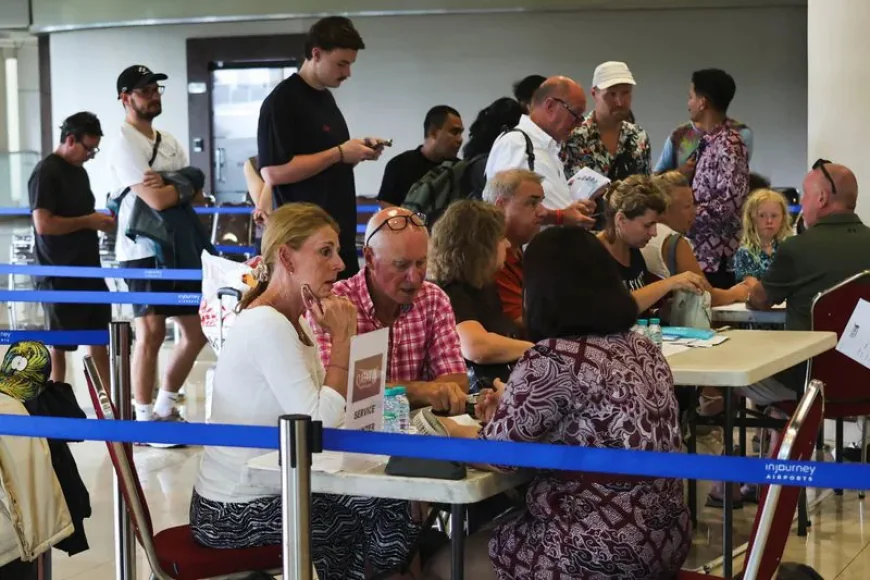
Stranded passengers report to Qatar Airways customer service at I Gusti Ngurah Rai International Airport at Kuta, in Bali of Indonesia on March 1, 2026. Photo: Reuters
In Bali, long queues formed at I Gusti Ngurah Rai International Airport as passengers waited to speak to airline staff. Travellers were also seen sitting beside their luggage at Hazrat Shahjalal International Airport, while departure boards at Tribhuvan International Airport displayed a growing list of cancellations.
According to aviation analytics firm Cirium, around 4,000 flights had been scheduled to land in the region on Sunday. The UAE’s civil aviation authority said it had assisted approximately 20,200 travellers on Saturday.
Dubai and neighbouring Doha serve as critical crossroads for east–west air travel, connecting Europe and Asia through tightly scheduled networks of long-haul flights. With these hubs out of operation, aircraft and crews were left stranded in different parts of the world, disrupting airline schedules on a global scale.
Airlines across Europe, Asia and the Middle East cancelled or rerouted services to avoid restricted airspace, lengthening journey times and increasing fuel consumption.
The disruption has been compounded by the loss of Iranian and Iraqi overflight routes, which had become more important after the Russia–Ukraine war forced airlines to avoid the airspace of both countries.
Ian Petchenik of Flightradar24 warned that the narrowing of available flight corridors was increasing operational risk. He added that any escalation of tensions between Pakistan and Afghanistan — potentially leading to further airspace closures — would have serious consequences for travel between Europe and Asia.
Highlighting the scale of the disruption, Air India cancelled flights on Sunday from Delhi, Mumbai and Amritsar to major cities in Europe and North America.
Read More: Airspace closures cancel 102 flights in 3 days at HSIA
More ME flights axed as misery deepens for stranded passengers
Airspaces close across ME following Iran-Israel strikes
Govt to reopen closed airports before building new ones
Bangladesh in the Eyes of an Indian Traveller
Busting Myths: What It's Like to Travel Across Bangladesh
Busting Myths: What It's Like to Travel Across Bangladesh
Why Bangladesh Struggles to Attract Tourists
Bandarban: The Paradise of Nature
Bangladesh–India–Tripura bus service resumes after 18-month suspension
How Political Unrest Crushed Bangladesh's Tourism & Aviation Industry
Why Bangladesh Struggles to Attract Tourists
Some Heritage Sites and Monuments of Bangladesh
Nine Attractive and Scenic Places of Bangladesh
Bangladesh-India Relations Show Signs of Recovery
Bangladesh Resumes Visa Services in India
What's Your Reaction?
 Like
0
Like
0
 Dislike
0
Dislike
0
 Love
0
Love
0
 Funny
0
Funny
0
 Wow
0
Wow
0
 Sad
0
Sad
0
 Angry
0
Angry
0


Comments (0)