

Air travel turmoil: 4.4m seats lost in Middle East crisis
More than 23,000 flights have been cancelled since February 28 following widespread airspace closures across several countries in the region

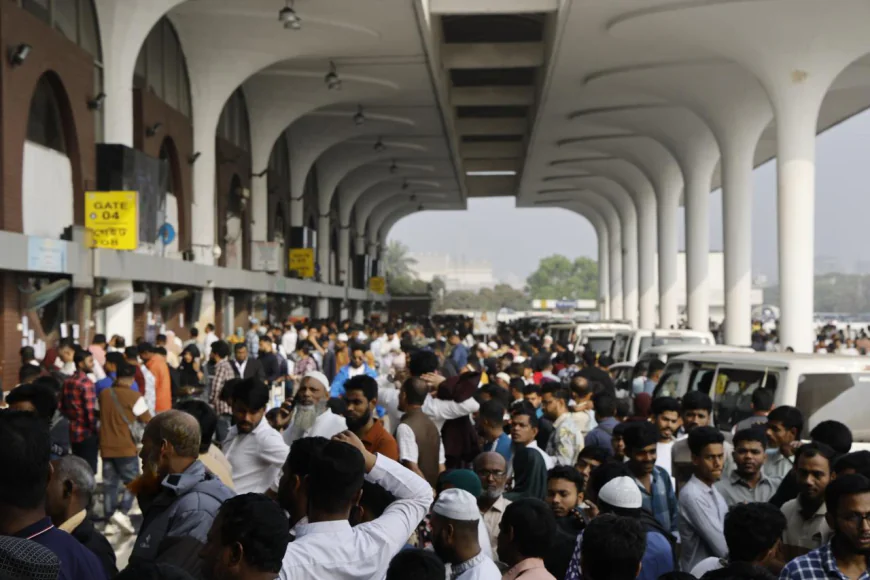
Air travel across the Middle East has been thrown into turmoil as escalating regional tensions have forced airlines to cancel thousands of flights, wiping out an estimated 4.4 million passenger seats and disrupting travel plans for millions.
According to aviation analytics firm Cirium, more than 23,000 flights have been cancelled since February 28 following widespread airspace closures across several countries in the region. Of roughly 36,000 flights scheduled to operate to and from the Middle East during that period, more than half were grounded.
Airspace restrictions in Iran, Israel, Iraq, Qatar, Bahrain, Kuwait and Syria have effectively halted large parts of regional air traffic. Partial restrictions have also affected flight operations in the United Arab Emirates and Saudi Arabia, forcing airlines to reroute aircraft or suspend services.
Major aviation hubs including Dubai International Airport, Abu Dhabi International Airport and Hamad International Airport in Doha have seen significant schedule changes as carriers adjust routes and deal with congestion caused by detours.
Between Feb. 28 and March 5 alone, seven airports across the region cancelled more than 15,000 flights, affecting over 1.5 million passengers, according to an analysis by Fitch Ratings.
Airlines are facing both lost revenue and rising operational costs. When flights are cancelled, carriers lose ticket income, while longer detours around closed airspace increase fuel consumption and extend flight times.
Airlines may also incur additional costs for technical stops, crew overtime, accommodation and airport handling.
Passengers affected by the disruption may receive limited compensation because the cancellations stem from geopolitical conflict beyond airlines’ control, meaning carriers are generally not liable in the same way they would be for operational failures.
The aviation crisis could also ripple through the broader travel industry. Research by Oxford Economics estimates that international arrivals to the Middle East could fall between 11% and 27% in 2026 depending on how long the conflict continues. That would translate into 23 million to 38 million fewer visitors and a potential loss of $34 billion to $56 billion in tourism spending.
Economists say the Gulf Cooperation Council economies could see the biggest drop in visitor numbers because they attract a large share of regional tourism. The United Arab Emirates and Saudi Arabia are particularly exposed due to their heavy reliance on aviation links.
Despite the disruption, analysts say air travel in the region often rebounds quickly once airspace restrictions are lifted. The Middle East remains a critical global aviation crossroads linking Europe, Asia and long-haul markets worldwide.
Read More: Biman crew stranded in Dubai brought back by US-Bangla
A US F-15 fighter jet crashes in Kuwait
Two Bangladeshi expatriates killed and seven injured in Middle East conflict
US suspends immigrant visas for Bangladeshi citizens, effective from January 21
Airspace closures cancel 102 flights in 3 days at HSIA
More ME flights axed as misery deepens for stranded passengers
Govt to reopen closed airports before building new ones
Bangladesh in the Eyes of an Indian Traveller
Busting Myths: What It's Like to Travel Across Bangladesh
Why Bangladesh Struggles to Attract Tourists
Bandarban: The Paradise of Nature
How Political Unrest Crushed Bangladesh's Tourism & Aviation Industry
Some Heritage Sites and Monuments of Bangladesh
What's Your Reaction?
 Like
0
Like
0
 Dislike
0
Dislike
0
 Love
0
Love
0
 Funny
0
Funny
0
 Wow
0
Wow
0
 Sad
0
Sad
0
 Angry
0
Angry
0




Comments (0)