

Bio-disaster: Rise in turtle deaths in Cox’s Bazar raises alarm
Citing local officials and researchers, a local media outlet reported on Wednesday that at least 70 dead turtles have washed ashore over the past two months alone, most of them egg-bearing females.

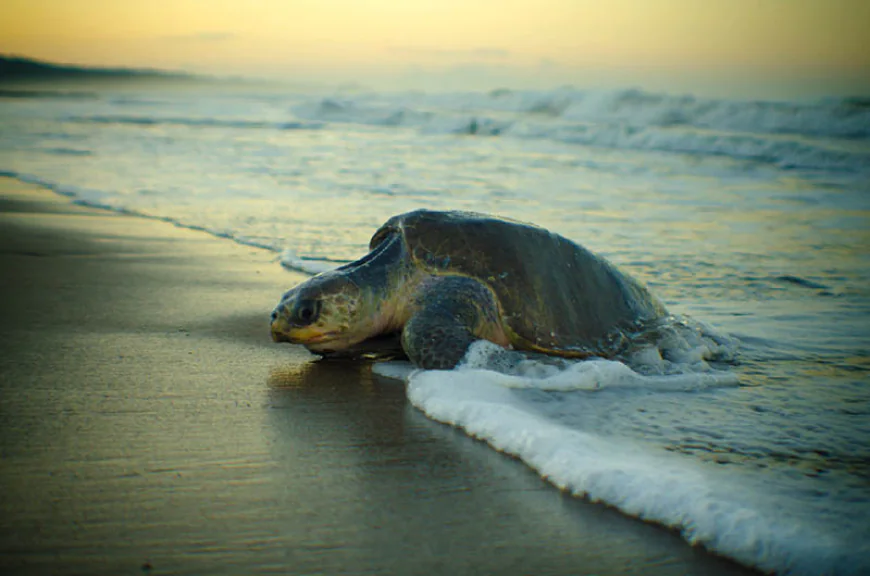
A remorseless rise in the mortality of sea turtles along the Cox’s Bazar coastline has triggered an environmental crisis, leaving conservationists and government authorities pushing for answers.
Latest official data reveals a grim milestone for the region’s biodiversity: turtle fatalities in 2025 have nearly tripled compared to the previous year.
Citing local officials and researchers, a local media outlet reported on Wednesday that at least 70 dead turtles have washed ashore over the past two months alone, most of them egg-bearing females.
The deaths match the peak nesting season, suggesting many perished before they could lay their eggs. Visible injuries indicate many were struck by boat propellers or trapped in fishing nets, according to them.
Mohammad Abdul Kaiyum, a researcher at the Radiant Research and Education Centre, told the media that 60-70 dead turtles had been recorded along the coast in the past two months, with the highest numbers found near Sonadia Island, Cox's Bazar beach, Teknaf and Saint Martin's Island.
Last year, more than 200 bodies recovered.
“Entanglement in nets during the egg-laying season or severe injuries from trawler strikes are the main causes of death,” he explained.
Fishermen have acknowledged the problem.
“Sometimes their fins are cut off to free them from the nets. They become weak and die after coming ashore,” said local fisherman Shahjalal while talking to the media. Another fisherman reported seeing more than 100 dead turtles floating offshore in the past week alone.
In addition to fishing-related hazards, marine plastic pollution has surfaced as a significant and lethal threat to the region’s sea life. This crisis was highlighted by a recent incident where at least 20 Olive Ridley turtles were discovered dead on the beach, trapped in plastic debris that had washed ashore.
The grim discovery prompted an immediate response from the community; hundreds of residents and volunteers mobilised to rescue the injured, bury the deceased turtles and return surviving ones to the ocean.
According to Shahriar Caesar Rahman, a leading turtle and tortoise expert with the Creative Conservation Alliance, most of the dead turtles were at least 30 years old. “Turtles often get trapped in gigantic waste patches floating in the sea and eventually die of suffocation. This seems to be a similar case.”
Over a 12-day period, the coastline between Nazirtek Point to Himchhari Point was covered with an estimated 100 tonnes of rubbish, including plastic bottles, ropes, fishing nets and buoys. Local authorities and green activists were rushing to clear it up.
The government’s environmental department has opened an enquiry to determine the origin of the litter, believing it may have both domestic and foreign roots.
Khondaker Mahmud Pasha, deputy director of the Department of Environment in Cox’s Bazar, called the spike “deeply concerning”. “Marine turtles are vital for maintaining the natural balance of the sea,” he asserted.
In response, the authorities plan to establish several hatcheries in the 2026-27 fiscal year at Sonadia Island to protect eggs. At least two sites in Dakkhinpara, Pashchimpara and Purbopara have been identified for safe incubation, with guard recruitment also underway.
Earlier, the government took an unprecedented step of closing Saint Martin’s Island to tourists for nine consecutive months starting from 01 February 2026 with an eye to protecting biodiversity, including sea turtles. Tourist vessels have been prohibited from operating to the coral island, with authorities citing environmental risks and excessive tourist pressure as factors.
During the closure, lights on the beach at night, loud noises, and any harm to sea turtles, birds, corals and other marine life will be strictly prohibited.
Meanwhile, conservationists have called for stricter enforcement, mobile courts, awareness campaigns for fishermen and coordinated action to reverse the alarming trend. Researchers emphasise that sea turtles help maintain biodiversity by controlling jellyfish and supporting fish stocks, ultimately benefiting fishermen themselves.
What's Your Reaction?
 Like
0
Like
0
 Dislike
0
Dislike
0
 Love
0
Love
0
 Funny
0
Funny
0
 Wow
0
Wow
0
 Sad
0
Sad
0
 Angry
0
Angry
0



Comments (0)