Tk3,666cr road plan to boost tourism in hill tracts
Govt’s first ECNEC meeting likely to approve project on April 6; 288km network to open remote hill destinations to travellers
 Anindya Arif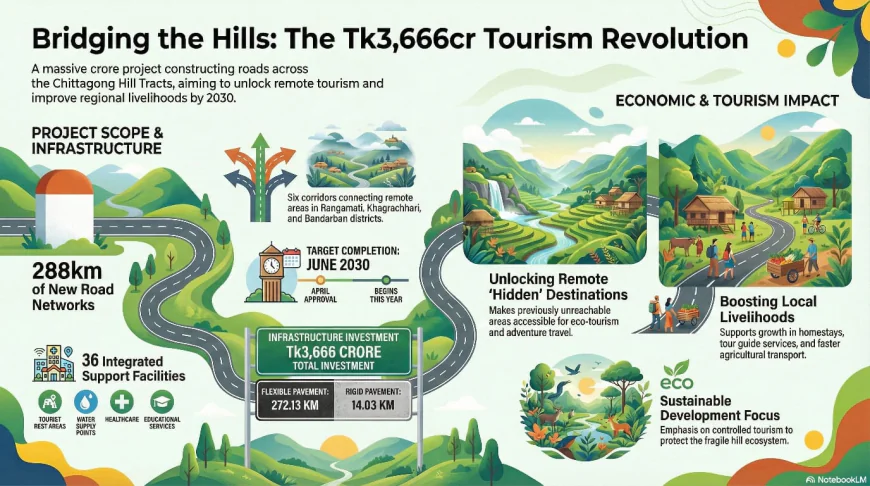
The government’s first meeting of the Executive Committee of the National Economic Council is expected to approve a major infrastructure project on April 6 that could reshape tourism in Bangladesh’s hill regions.
The Tk3,666 crore road development plan, set to be placed before the meeting, aims to significantly improve connectivity across remote areas and unlock new tourism potential, a senior planning official told the Aviation and Tourism Times.
The proposed “Border Roads Construction Project - Phase II,” to be implemented by the Roads and Highways Department, involves the construction of 288 kilometres of roads across the three hill districts—Rangamati, Khagrachhari and Bandarban—with a completion target of June 2030, he added.
Opening the doors to hidden destinations
Here’s the reality—large parts of the Chittagong Hill Tracts remain inaccessible for much of the year due to poor connectivity, according to the project proposal.
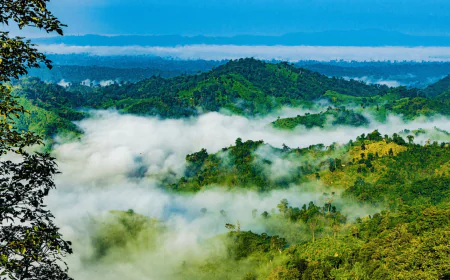
Surrounded by hills, rivers and dense forests, these areas boast remarkable natural beauty, yet reaching them remains an uphill task, it added.
Officials say the new road network is set to change that.
The six planned road corridors—Naraichhari-Lakshyachhara, Bairagipara-Betling, Majhipara-Ghashkapachhara, Karlachhara-Borkordia, Thalipara-Chaithongpara, and Fatarajira-Likri—will connect remote areas that have so far remained off the beaten track.
“This project will make previously unreachable hill destinations accessible, creating new opportunities for eco-tourism and adventure travel,” a concerned official said.
Tourism, economy and local livelihoods
Beyond connectivity, the project is expected to have a direct impact on the local economy. Improved road access will allow tourists to reach remote areas more easily, enable faster transportation of local agricultural products to markets, and support the growth of small businesses, including homestays and tour guide services.
Officials believe this could gradually transform the region into a structured tourism zone, attracting both domestic and international visitors.
“Reliable connectivity will unlock investment in tourism infrastructure, from resorts to local enterprises,” another official said.
Infrastructure beyond roads
The initiative goes beyond simply constructing roads. It includes the development of 36 supporting facilities, such as tourist rest areas, water supply points, and essential healthcare and educational services.
Engineers will also undertake complex construction work to address the challenging hill terrain, including 272.13 kilometres of flexible pavement and 14.03 kilometres of rigid pavement.
Strategic and sustainable development
Authorities have described the project as a “holistic intervention”—not only aimed at boosting tourism, but also at strengthening security, the economy, and regional development.
The Chattogram Hill Tracts share around 540 kilometres of international borders, making improved road connectivity crucial for both civilian movement and security operations.
What this effectively means is that tourism could become a major driver of change in the region, if managed properly.
Experts stress that controlled and sustainable tourism will be essential to ensure that increased development does not harm the fragile hill ecosystem.
If approved, the project is expected to begin this year, marking one of the largest tourism-focused infrastructure investments in Bangladesh’s hill districts.