

Electric aviation turning into immediate priority
The industry faces significant challenges despite optimistic forecasts
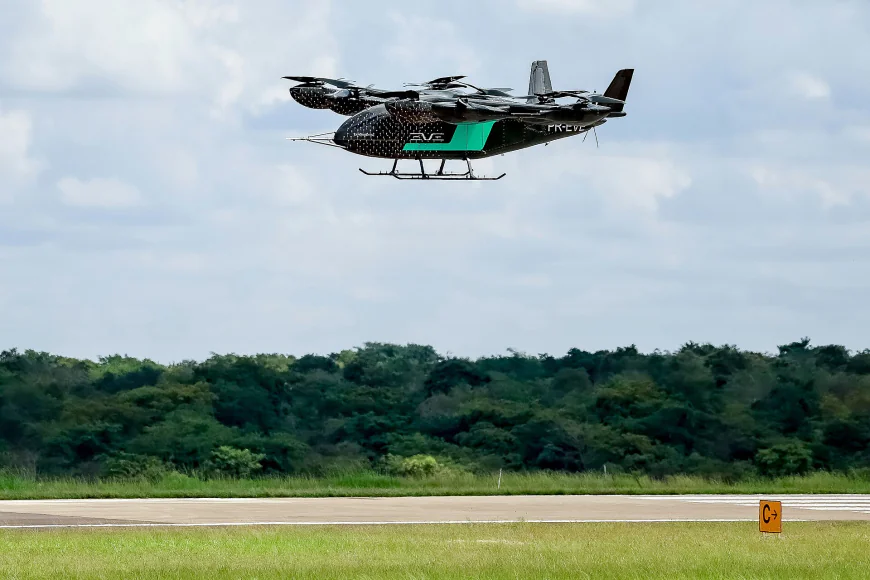
The aviation world is undergoing a massive change in electric aircraft development, thanks to technological advances amid an increasing demand for sustainable solutions amid jet fuel crisis exacerbated by the ongoing Middle East conflict.
However, this force for innovation occurs against a backdrop of this acute geopolitical instability. The near-total blockade of the Strait of Hormuz, a critical chokepoint for global energy supplies, has slashed Europe’s jet fuel imports, as it historically relies on the Middle East for up to 75% of its supply.
This supply shock has caused global jet fuel prices to more than double in a matter of weeks, rushing from approximately $90 to over $200 per barrel, thereby forcing airlines to cut flights and dramatically increasing operational costs.
The aviation sector is, therefore, going through a foundational transformation, moving electric propulsion technologies from prototype concepts toward certified commercial systems. The global electric aircraft market was valued at $8.05 billion in 2025 and is projected to reach $9.33 billion in 2026, with forecasts indicating growth to $24.43 billion by 2032 at a compound annual growth rate (CAGR) of 17.18%.
What are electric planes?
Electric planes are powered by electricity instead of aviation fuel. There are many ways that electricity can be delivered to a plane, including its batteries. Electric motors typically drive propellers or turbines that allow a plane to fly. Planes, conventionally, have a massive environmental impact. Electric planes have great potential to help cut down on the environmental cost by creating fewer emissions.
How does it work?
Simply put, electric planes use batteries to power an electric motor. The motor turns the electric power into mechanical energy. Electric batteries have a charge that powers the motor, which spins when magnetic forces pull on the rotor.
Multi-billion-dollar market
Alongside fixed-wing electric aircraft, the eVTOL (Electric Vertical Take-Off and Landing) segment — often referred to as "flying taxis" or air taxis — is experiencing explosive growth. The eVTOL aircraft market was valued at $0.76 billion in 2024, surging 226.5% in China alone to $32 billion by early 2025. This segment is projected to reach $17.34 billion by 2035, advancing to a 35.3% CAGR through 2030.
This rapid growth is driven primarily by urban congestion and the increasing demand for fast, point-to-point zero-emission transport in megacities worldwide.
Techno-infrastructural challenges
Despite optimistic forecasts, the industry faces significant challenges. Battery weight and energy density remain the primary technical bottlenecks, hindering the commercial viability of all-electric passenger flights for longer ranges.
However, material science is advancing to meet these challenges. The Austrian Institute of Technology (AIT), for instance, has made significant progress with structural solid-state batteries, which serve as both an energy store and an integral part of the aircraft's load-bearing structure, effectively doubling specific energy density.
Beyond hardware, the industry is focused on building the necessary ecosystem. Regulators such as the US Federal Aviation Administration and the European Union Aviation Safety Agency are working to establish certification pathways for this new class of aircraft. In the US, the 2024 Reauthorisation Act included provisions specifically designed to expedite these processes. As manufacturers move towards certification, the competitive dynamic in the industry is also shifting, with a growing focus on the "software-defined aircraft" and modular subsystems.
Sustainable aviation future
The industry is now shifting from isolated technological demonstrations towards integrated ecosystems. In 2026, the conversation is no longer just about whether electric aircraft can fly, but about how quickly the charging infrastructure, airspace management rules and public acceptance will catch up to make them a common feature of our cities.
As battery density improves and manufacturing scales up, the "range anxiety" associated with these aircraft is expected to gradually become a non-issue.
The Hormuz blockade has served as a brutal stress test for the jet fuel-dependent aviation model, which is simply failing. Consequently, the future of electric aircraft is no longer just a matter of environmentalism; it is a matter of economic and geopolitical resilience. The crisis is turning electric aviation from a "future solution" into an immediate priority.
What's Your Reaction?
 Like
0
Like
0
 Dislike
0
Dislike
0
 Love
0
Love
0
 Funny
0
Funny
0
 Wow
0
Wow
0
 Sad
0
Sad
0
 Angry
0
Angry
0

Dr Mohammad Ferdous Khan appears to be a multifaceted and evolving professional, balancing academic, creative, and media-oriented pursuits. He has done his PhD from University of Dhaka in 2025 entitled “Reflection of Social Relations in Advertising Art of Post Independent Bangladesh". His research papers appear in different journals home and abroad.




Comments (0)