
Airbus A380: The tale of a superjumbo’s fall
A380 proved to be a giant product that the market ultimately did not want

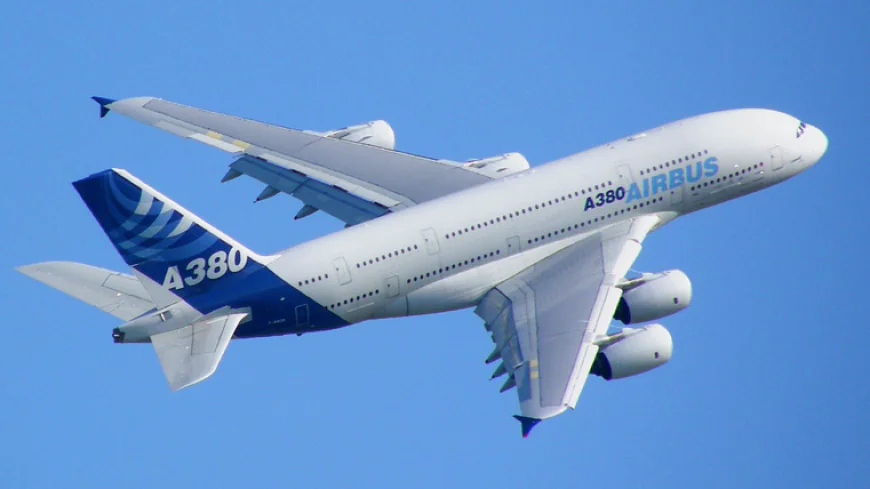
Airbus A380, the world’s largest passenger airliner, has a story that is both remarkable and sobering. Often called the "Superjumbo" or "King of the Skies," it was perceived as an engineering marvel meant to challenge Boeing’s long-standing dominance. However, just over 15 years after its debut, production ended—a sudden fall for a plane that was once the pride of European aviation.
An undeniable engineering feat
From a technical standpoint, the A380 is nothing short of a marvel. Its sheer scale is breathtaking—the double-deck quadjet can carry up to 853 passengers in a single-class formation and offers a range of approximately 15,000 kilometres. It was designed to offer unparalleled comfort, with some airlines equipping their cabins with features like onboard lounges and first-class suites.
The production of the A380 was a huge European collaborative effort. Wings were manufactured in the United Kingdom, the fuselage in Germany, the tail section in Spain, and final assembly took place in Toulouse, France. Each aircraft required around 3,500 personnel to build and carried a staggering price tag.
The "Too Large" reality
Despite its impressive credentials, the A380 proved to be a product ahead of its time that the market ultimately did not want. The primary issue was its size. The A380 was so large that many airports worldwide had to invest heavily in upgrading runways, taxiways and gates to accommodate it, limiting the number of destinations it could serve.
More critically, Airbus miscalculated the future of the aviation market. The company predicted a “hub-and-spoke” model, where passengers would fly on superjumbos to major hubs before connecting to smaller cities. Instead, the industry shifted toward "point-to-point" operations using smaller, more fuel-efficient twin-engine aircraft like the Boeing 787, which offered greater flexibility and lower operating costs. As Airbus's own CEO later admitted, "We saw the industry has moved in a different direction, and the A380 was ahead of its time."
An uncertain legacy
The A380's decline was slow and painful. For years, the program was sustained almost single-handedly by Emirates Airlines, which ordered 123 aircraft, accounting for more than half of all sales. When Emirates reduced its order in 2019, Airbus had no choice but to announce the end of production, which concluded in 2021.
While the A380 was a surprising engineering achievement, it was ultimately a commercial failure. Only 251 aircraft were built, far fewer than 1,200 Airbus had hoped to sell. Today, the A380's legacy remains divided: it is a technical masterpiece, but also a cautionary tale about the risks of betting on a vision of the future that never came to pass.
What's Your Reaction?
 Like
0
Like
0
 Dislike
0
Dislike
0
 Love
0
Love
0
 Funny
0
Funny
0
 Wow
0
Wow
0
 Sad
0
Sad
0
 Angry
0
Angry
0


Comments (0)