

Ratargul Swamp Forest wonders wanderers
This layman’s guide helps travellers go and visit this lone freshwater wetland ecosystem, enjoy scenery and relish accommodation, bed and breakfast.

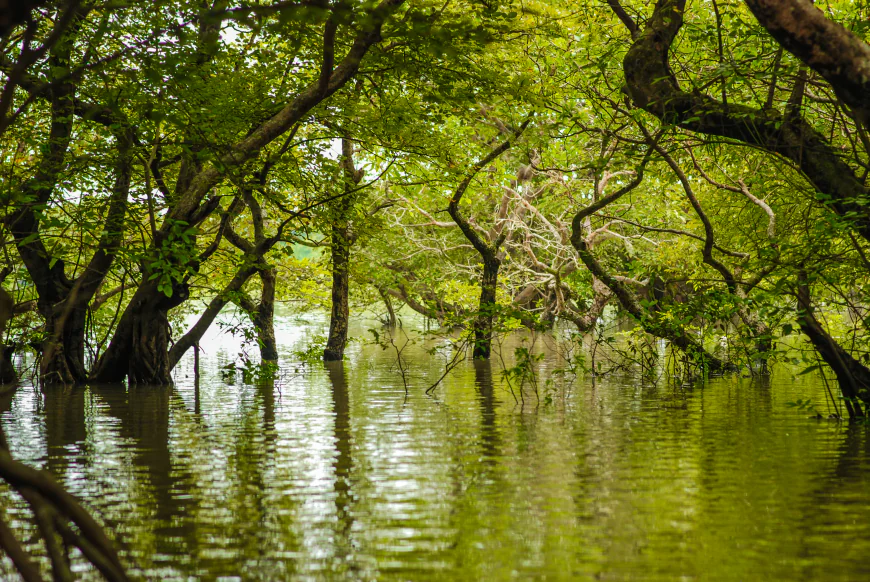
Mysterious freshwater paradise Ratargul Swamp Forest stands as one of the most enchanting natural wonders in Bangladesh—a unique wetland ecosystem in eastern Sylhet district where trees rise directly from crystal-clear waters, creating an ethereal landscape that fascinates every visitor who ventures into its emerald, green embrace.
Geographical location
Situated in Gowainghat upazila, approximately 26 kilometre off Sylhet city, Ratargul is the country’s only freshwater swamp forest and one of the few remaining in the Indian subcontinent. Spread across 3,325 acres, with the core forest area covering about 504 acres, this unique ecosystem lies on the banks of the Chengir Khal, a tributary of the mighty Surma.
Unlike the Sundarbans’ saltwater mangroves, Ratargul thrives in freshwater, making it ecologically distinct and critically important for biodiversity conservation. The forest remains submerged under 20-30 feet of water during monsoon months, transforming into a surreal underwater wonderland.
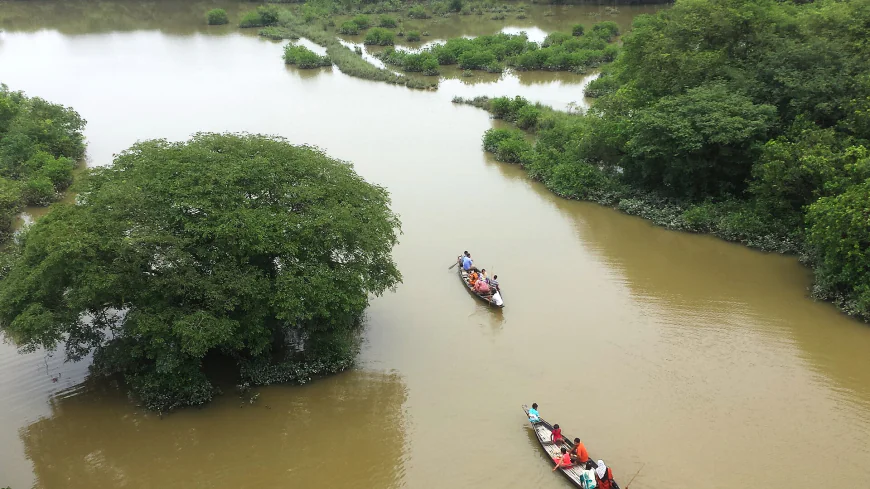
View of the swamp forest from the watchtower. Photo: Wikipedia
Floating forest experience
Visitors approaching Ratargul by boat—the only way to explore Ratargul forest—witness an extraordinary sight: trees of various species rising majestically from placid waters. The forest floor, visible through the transparent water during dry months, reveals a hidden world of aquatic plants and small fish darting between submerged roots.
The dominant tree species include Hijal, Koroch, and Barun, their trunks often wrapped in thick layers of moss and epiphytes, creating an almost prehistoric atmosphere. During monsoon, when water levels peak, boats glide between trees as if floating through a magical realm suspended between sky and water.
Biodiversity haven
Ratargul serves as a critical habitat for diverse wildlife. Birdwatchers flock to spot species, including kingfishers, egrets, herons and the occasional rare migratory visitor. The forest shelters monkeys, snakes, frogs and numerous fish species that thrive in its nutrient-rich waters.
During winter months, the forest becomes particularly vibrant as migratory birds arrive, filling the air with calls and adding splashes of colour to the green-and-blue landscape. The ecosystem’s health directly supports local fishing communities who depend on its aquatic resources.
Best times to visit
While Ratargul enthralls year-round, each season offers a distinct experience. The monsoon (June to October) presents the forest at its most dramatically, with boats navigating through partially underwater trees and water reaching peak levels. The dry season (November to May) reveals more of the forest floor and offers easier wildlife spotting, though the magic of floating among treetops diminishes.
The ideal visiting period is during the post-monsoon months of October and November, when water remains high, but weather turns pleasant. Early mornings, when mist hovers over the water, provide the most atmospheric experience and best photography opportunities.
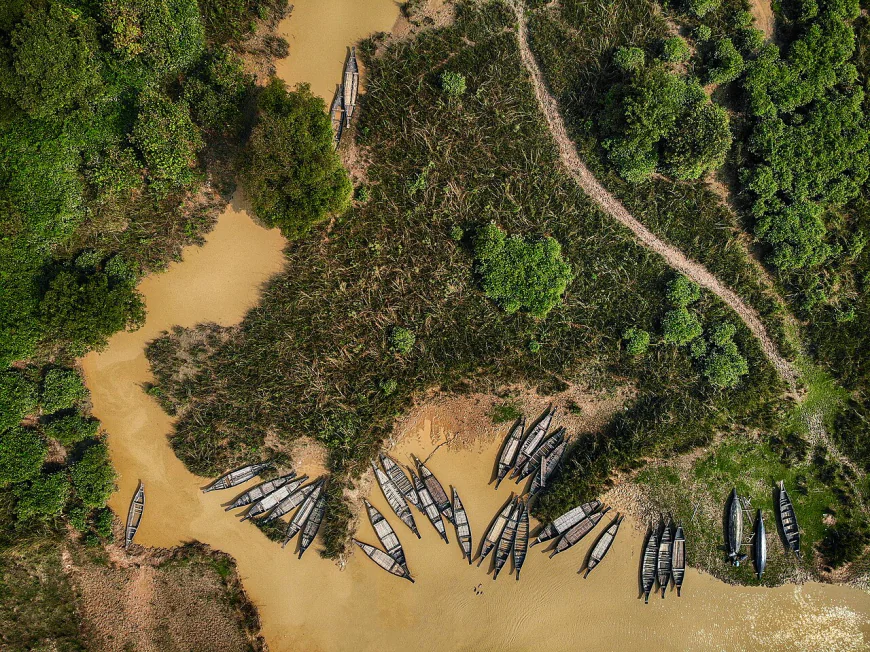
Tourists travelling on a boat in the forest. Photo: Wikipedia
Route to Ratargul
From Sylhet city, visitors travel by bus or private car to Gowainghat or Fatehpur, then hire local country boats for the journey into the forest. Boat hiring costs typically range from Tk 1,000 to Tk 2,500 depending on duration and group size.
Basic facilities including restrooms and small food stalls are available at the entry point, though visitors are advised to carry drinking water and snacks. The Forest Department maintains watchtowers and walking trails in non-submerged areas, allowing land-based exploration during dry periods.
Visitor experience
“The moment our boat entered Ratargul, everything changed, the air cooled, the sounds softened, and we felt transported to another world,” recalls a Dhaka-based traveller, who visited last winter. “Watching kingfishers dive between trees rising from still water felt like stepping into a fantasy novel.”
For many visitors, the highlight is simply floating in silence, surrounded by nature’s untouched beauty. The forest’s tranquility offers a rare escape from urban chaos, making it increasingly popular among domestic tourists seeking authentic natural experiences.
Conservation challenges
Ratargul’s growing popularity brings conservation concerns. Increased boat traffic, littering and disturbance to wildlife threaten this fragile ecosystem. The Forest Department has implemented regulations, including designated boat routes, restricted entry during bird breeding seasons, and fines for littering.
Illegal logging and encroachment remain ongoing challenges, requiring continuous vigilance from authorities and cooperation from local communities. Conservationists emphasise that Ratargul’s future depends on sustainable tourism practices that balance visitor access with ecological protection.
National treasure
For Bangladeshi and international visitors alike, Ratargul represents something increasingly rare—a wilderness experiences accessible yet unspoiled, mysterious yet welcoming. As one forest guard observed, “Ratargul is not just trees and water. It’s our living heritage, a gift from nature that we must protect for generations who deserve to experience this magic.”
What's Your Reaction?
 Like
0
Like
0
 Dislike
0
Dislike
0
 Love
0
Love
0
 Funny
0
Funny
0
 Wow
0
Wow
0
 Sad
0
Sad
0
 Angry
0
Angry
0

Comments (0)