

22 countries urge immediate action to open Strait of Hormuz to resolve travel, tourism crisis
UAE Joins UK, France, Japan, Canada, Bahrain, and sixteen other countries in issuing a joint statement calling for immediate action to cease Iran’s strikes and open the Strait of Hormuz as the choke has put a stop to supply of roughly 20% of the world’s oil

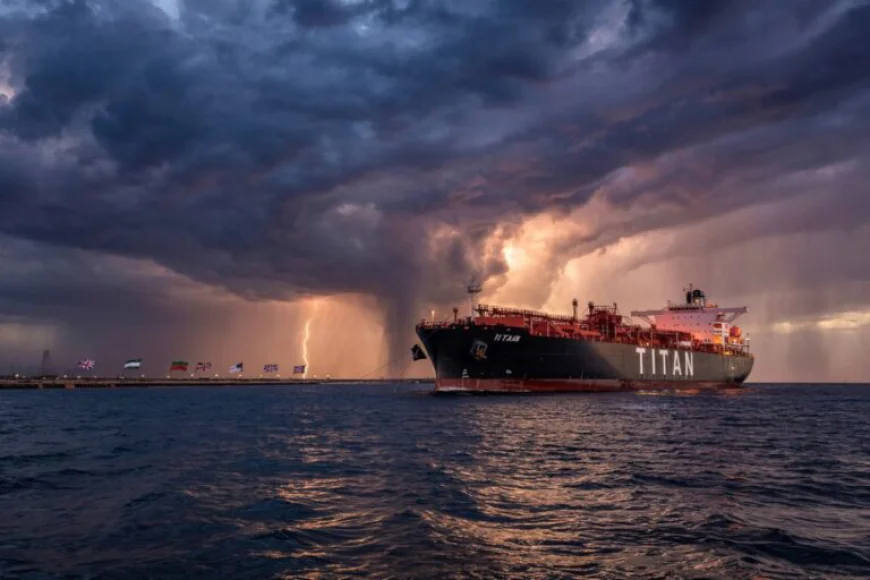
UAE Joins UK, France, Japan, Canada, Bahrain, and sixteen other countries in issuing a joint statement calling for immediate action to cease Iran’s strikes and open the Strait of Hormuz as the choke has put a stop to roughly 20% of the world’s oil, leading to a hammering impact not only on the energy markets; but also travel and tourism across the world.
Increased fuel prices have led to rising airfares, flight cancellations, and longer travel times, disrupting international air travel, especially in routes connecting Europe, Asia, and the Middle East. Furthermore, the Middle East, a crucial hub for global tourism, is experiencing a downturn in visitors due to safety concerns. This article explores the immediate need for diplomatic intervention to stabilize the region, safeguard energy security, and restore stability to global travel and tourism, reports Travel and Tour World.
Strait of Hormuz crisis: Urgent global response needed
The Strait of Hormuz, a crucial waterway for global energy supplies, has become a flashpoint for international tension, particularly due to recent attacks on commercial vessels by Iran. In a bid to resolve this escalating situation, the UAE has joined forces with sixteen other nations, including the UK, France, Japan, Canada, Bahrain, and several European countries, in issuing a joint statement urging Iran to immediately halt its aggressive actions. The statement also calls for the free passage of ships through this critical maritime route, aiming to restore stability to global energy markets and ensure the smooth functioning of air travel, tourism, and broader geopolitical stability.
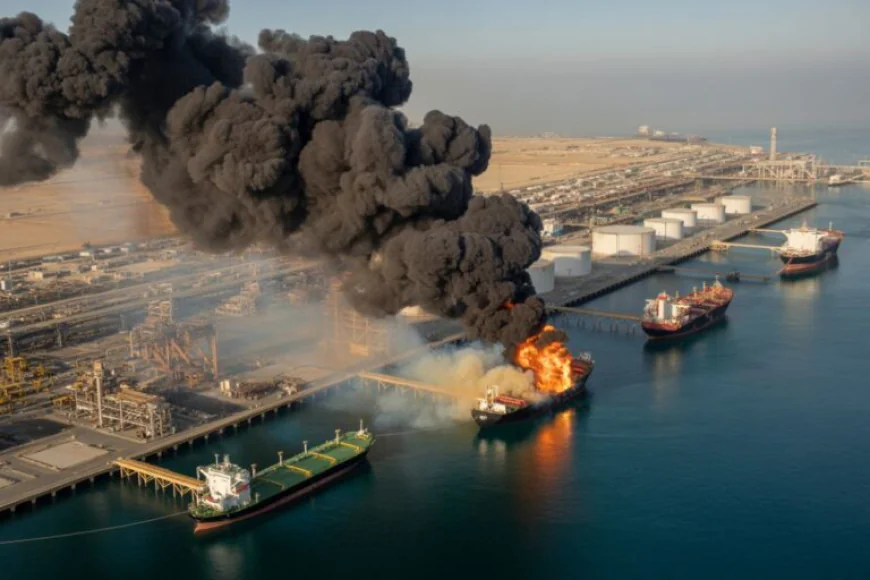
An aerial view capturing the fire erupted at Fujairah oil zone in UAE after the fall of an Iranian drone debris. Photo: TTW
Significance of Strait of Hormuz
Strategically located between the Persian Gulf and the Gulf of Oman, the Strait of Hormuz serves as a vital transit point for approximately 20% of the world’s oil shipments. This narrow waterway is essential for the transportation of crude oil and liquefied natural gas (LNG) from the Middle East to global markets. As such, any disruptions here can send shockwaves through the global economy, triggering surging fuel prices, impacting airfares, and causing widespread instability in international travel.
Global response to rising tensions
The joint statement issued by the UAE Ministry of Foreign Affairs condemns the recent attacks by Iran on civilian and commercial infrastructure in the Gulf, highlighting the dangers posed to international shipping and energy supply chains. The escalating conflict has drawn concern from the global community, with nations such as the United States, France, and the UK warning that such actions could further destabilize the region and disrupt the global flow of oil. Countries involved in the statement have called on Iran to cease these activities immediately, in line with United Nations Security Council Resolution 2817.
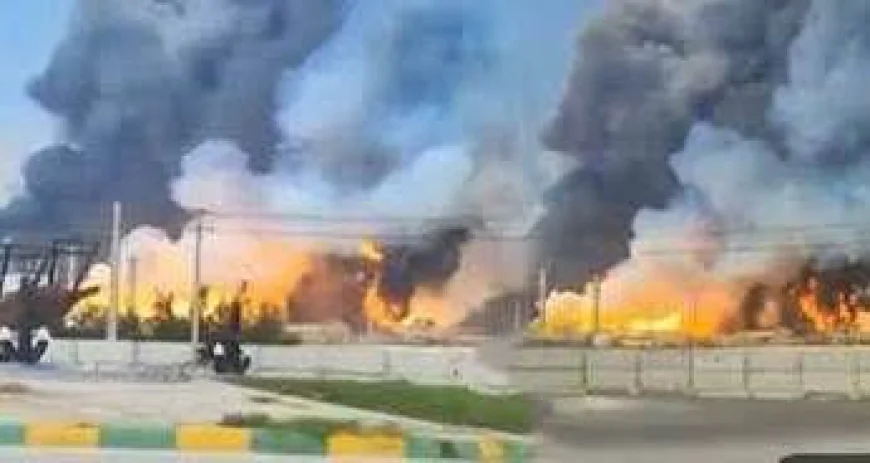
This AI-generated image is used for illustration purposes only. Photo: Collected
The consequences of these attacks are not confined to the region alone; they are felt globally. The disruption of oil shipments from the Gulf has caused significant spikes in fuel prices, contributing to the rising cost of air travel. The uncertainty surrounding the stability of this critical energy corridor has led to increased flight cancellations and delayed schedules, especially in routes connecting Europe, Asia, and the Middle East. This directly affects millions of travelers, making air travel less reliable and more expensive.
List of countries mentioned in joint statement
United Arab Emirates, United Kingdom, France, Germany, Italy, Netherlands, Japan, Canada, Republic of Korea, New Zealand, Denmark, Latvia, Slovenia, Estonia, Norway, Sweden, Finland, Czechi, Romania, Bahrain, Lithuania and Australia.
Economic impacts on global travel and tourism
The ongoing conflict and resulting instability in the Middle East have had serious implications for global tourism. The Middle East, which is a key tourist destination and a hub for global air travel, is experiencing a decline in visitors due to safety concerns. Tourist arrivals in popular destinations like Dubai, Abu Dhabi, and Bahrain have seen a downturn as travelers opt for safer, more stable destinations. This trend threatens to reverse years of growth in the region’s tourism sector, which has been a vital part of its economy.
In addition, airspace closures and the rising costs of aviation fuel are causing a ripple effect across international airlines. Rising airfares have become a significant burden for travelers, particularly for long-haul flights, which are now more expensive due to the increased cost of jet fuel. With the uncertainty around the Strait of Hormuz, airlines are adjusting their routes, some opting for longer detours to avoid the region, further increasing operational costs and flight durations.
Role of international organisations
As part of the global push for de-escalation, the International Energy Agency (IEA) has authorized the coordinated release of strategic petroleum reserves. This step aims to stabilize oil prices temporarily and prevent further disruptions to global energy markets. However, this is seen as a short-term measure. Long-term stability hinges on Iran’s compliance with international laws and respect for the freedom of navigation in the Strait of Hormuz.
Countries, including those involved in the joint statement, have committed to working together to ensure safe passage through this vital waterway. Additionally, diplomatic channels are being used to pressure Iran to end its hostilities and agree to a de-escalation plan that will secure the safety of international shipping and prevent further damage to global economic systems.
Impact on air, travel and tourists
The geopolitical tensions surrounding the Strait of Hormuz are impacting the daily lives of people around the world, especially tourists and business travelers. Rising oil prices have caused airlines to increase ticket prices, especially for routes that traverse the Middle East. With flight cancellations becoming more frequent due to the closure of airspace or route diversions, travelers are facing added frustration and uncertainty.
Moreover, the increased risks have caused some airlines to reconsider flying in or out of the Middle East, affecting connectivity and regional tourism. Middle Eastern cities, which serve as key hubs for international flights, are seeing fewer stopovers, further isolating the region from the global air network.
The call for global cooperation
The message is clear: global cooperation is necessary to address this growing crisis. The international community must continue to push for diplomatic resolutions to ensure that the Strait of Hormuz remains open and that oil supplies are safeguarded. With energy security being closely tied to travel and tourism, resolving this conflict is paramount for stabilizing not just the Middle East, but the global economy as a whole.
ME instability leads to tourism decline
The joint statement issued by the UAE, UK, France, Japan, Canada, Bahrain, and sixteen other countries calls for immediate action to cease Iran’s strikes and open the Strait of Hormuz to resolve the global oil supply crisis that is severely disrupting travel, tourism, and broader energy security. This critical waterway is essential for the global transportation of oil, and any instability here directly impacts global economies. The disruption of oil shipments has led to skyrocketing fuel prices, which in turn affects air travel costs, causing flight cancellations and delays. Furthermore, the instability in the Middle East has led to a decline in tourism, affecting key destinations like Dubai and Abu Dhabi. This growing crisis requires urgent global cooperation, as the security of the Strait of Hormuz directly impacts energy supplies, global trade, and the travel industry. By ensuring the free passage of vessels and preventing further escalations, the international community can safeguard both economic stability and the smooth operation of global travel, restoring confidence in the Middle East as a crucial hub for tourism and energy.
What's Your Reaction?
 Like
0
Like
0
 Dislike
0
Dislike
0
 Love
0
Love
0
 Funny
0
Funny
0
 Wow
0
Wow
0
 Sad
0
Sad
0
 Angry
0
Angry
0


Comments (0)