
Tourism master plan aims for 55.7m visitors, 2.19cr jobs by 2040
A raft of measures has already been rolled out to draw in private investors and open up new employment opportunities in tourism
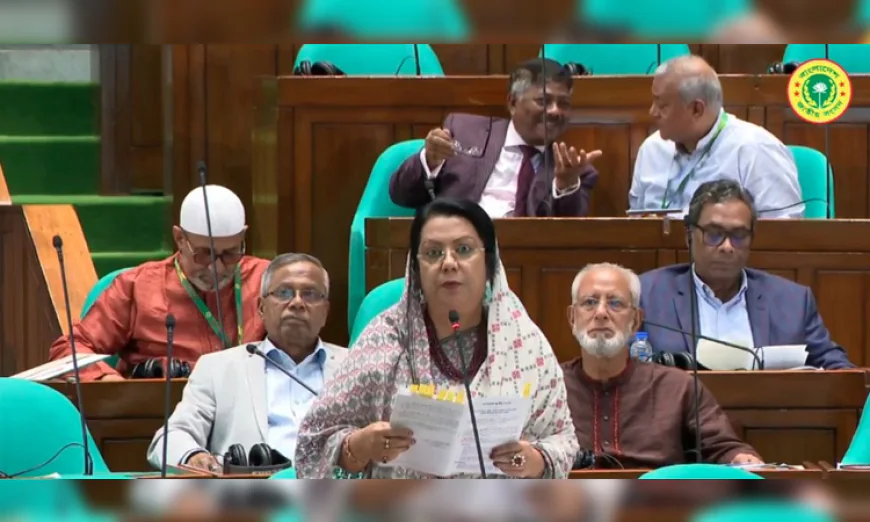
Civil Aviation and Tourism Minister Afroza Khanam has said the government has launched a Tourism Mega Plan (2026–2040), aiming to attract 55.7 million visitors and create jobs for 21.9 million people by 2040, while giving a strong push to private investment and sustainable growth in the sector.
She made the remarks while responding to a starred question from AE Sultan Mahmud Babu (Jamalpur-2) in the Jatiya Sangsad on Wednesday.
The minister said a raft of measures has already been rolled out to draw in private investors and open up new employment opportunities in tourism.
Under the plan, the ministry has adopted a comprehensive strategy to promote tourism entrepreneurship, with a particular focus on women, improve access to low-interest loans and extend policy support in line with the government’s election manifesto.
“The government views tourism as a key engine of economic growth. With that in mind, a range of initiatives has been taken to attract private investment and broaden employment opportunities,” she said.
Highlighting partnership efforts, she said the government is placing greater emphasis on public-private partnerships (PPP) to develop tourism infrastructure and ensure long-term, sustainable growth.
On policy reforms, the minister noted that the National Tourism Policy is being updated to make the sector more inclusive, resilient and future-ready.
Turning to financial support, she said banks are already offering loans on favourable terms to encourage small and medium-sized entrepreneurs to enter the sector, with plans to widen these facilities further.
She also pointed to service improvements, saying a One Stop Service (OSS) is in the pipeline to make life easier for both tourists and investors.
On capacity building, the minister told the House that between the 2021–22 and 2024–25 fiscal years, 1,943 tour operators, 1,215 tour guides and 1,527 street food vendors received training, while a further 3,085 individuals were trained as tourism volunteers.
She added that the Bangladesh Tourism Board has drawn up the National Tourism Human Capital Development Strategy 2021–2030 to build a skilled workforce for the industry.
At present, around 5.19 million people are employed in tourism, with the figure expected to climb to 7.28 million by 2030.
Focusing on sustainability, the minister said investment is being encouraged in eco-tourism and environmentally friendly infrastructure, particularly in Kuakata and other coastal areas, creating jobs for local communities.
At the grassroots level, she said there are plans to expand community-based tourism by involving local people in managing destinations—helping to boost both employment and the rural economy.
On women’s participation, she said steps have been taken to create a more women-friendly environment in tourism and hospitality, encouraging female entrepreneurs and increasing workforce participation.
She also underscored efforts to promote culture, saying initiatives are under way to showcase festivals, traditions and handicrafts of small ethnic communities—giving rural tourism a shot in the arm.
On large-scale investment, the minister told the House that private sector involvement is being encouraged through the Bangladesh Economic Zones Authority (BEZA) to establish an Exclusive Tourist Zone (ETZ) at Sabrang in Teknaf, Cox’s Bazar.
She added that steps have already been taken to implement projects on land owned by Bangladesh Parjatan Corporation in Cox’s Bazar through public-private partnerships.
What's Your Reaction?
 Like
0
Like
0
 Dislike
0
Dislike
0
 Love
0
Love
0
 Funny
0
Funny
0
 Wow
0
Wow
0
 Sad
0
Sad
0
 Angry
0
Angry
0

Comments (0)