Jet fuel security: Strengthening supply chain for Bangladesh
Bangladesh imports around 95 percent of its fuel oil, LNG and coal,
 ATT Desk Report
The jet fuel crisis amid the Middle-East turmoil has served as a wake-up call. Bangladesh's aviation sector cannot afford to remain dependent on fragile, geopolitically vulnerable supply routes. For an industry that moves at the speed of flight, supply chain resilience must move fast too.
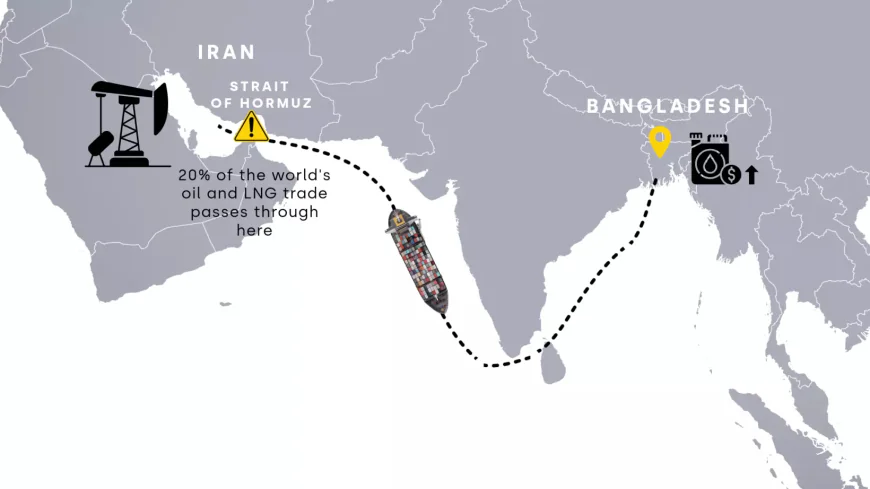
The shipping disruption through Hormuz, which allows nearly one-fifth or an estimated 19 million barrels of the world’s oil a day, that has exposed a critical vulnerability in Bangladesh’s energy infrastructure.

Current state of fuel supply
Bangladesh imports around 95 percent of its fuel oil, LNG and coal. As prices rise or shipping routes become uncertain, the country has limited capacity to mitigate the shockwave. In a strategic pivot away from heavy dependence on Middle-Eastern suppliers, Dhaka has initiated diplomatic outreach to Kazakhstan and Nigeria, seeking fuel import arrangements in short- and long-term agreement.
According to officials concerned, Kazakhstan's stable production profile and diversified export routes make it an attractive partner for Bangladesh's long-term energy strategy. In parallel, Bangladesh officials approached Nigeria – Africa's largest oil producer – through a letter sent on March 19 for the same.
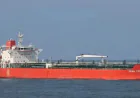
As of late March 2026, Bangladesh’s jet fuel stocks stood at approximately 44,609 tonnes, sufficient to meet existing demand. While this buffer provides some short-term comfort, the underlying structural weaknesses of the supply chain remain a significant concern. The country relies almost entirely on imported refined petroleum products, with jet fuel arriving primarily through Chattogram Port via tanker vessels.
Failure of jet fuel pipeline project
Perhaps, the most glaring infrastructure gap in Bangladesh’s aviation fuel supply chain is the incomplete underground pipeline project from Pitalganj in Rupganj to Hazrat Shahjalal International Airport in Dhaka. The Tk202 crore project, initiated in 2016, remains only 60 percent complete after intractable delays due to political interference, contractor disputes and ongoing legal battles.
By contrast, the pipeline project at Shah Amanat International Airport in Chattogram was successfully done, with jet fuel supply through pipeline beginning last September. The Dhaka project, however, has become a textbook example of costly delays in critical public infrastructure.
Storage limitations and strategic vulnerabilities
Energy experts have repeatedly warned that Bangladesh's fuel storage infrastructure is inadequate for the country's growing consumption needs. Energy expert Prof M Tamim has emphasised that strategic reserves are essential to withstand global supply shocks.
On average, Bangladesh can store fuel equivalent to less than 40 days of consumption, well below the international benchmark of 90 days or more. Although the government set a target in 2020 to build storage capacity equivalent to 60 days of demand, progress has been slow. Several projects, including jet fuel facilities in Parbatipur and Pitalganj, remain incomplete.
A dual-track approach to diversification
In response to the current crisis, Bangladesh is actively reshaping its energy procurement strategy, opening parallel tracks with both India and the United Arab Emirates. At the centre of this plan is a government-to-government arrangement with India that would see Russian crude imported, refined, and sent back as finished fuel. Under this proposal, India would handle procurement and refining, while Bangladesh would cover the full cost—crude, processing and transport—before bringing the refined products home for domestic use.
The logic behind this strategy acknowledges Bangladesh's refining limitations. The sole domestic refinery, Eastern Refinery Limited in Chattogram, was built in 1968 and is designed primarily for lighter West Asian crude, making it unable to efficiently process heavier Russian grades. This mismatch has forced Bangladesh to rely heavily on fuel imports, placing sustained pressure on foreign-exchange reserves.
Import diversification and supply stability
To minimise risks associated with potential disruptions in the Strait of Hormuz, the government has actively sought to diversify its import sources. Fuel imports are now being sourced through alternative routes and suppliers, with strong government oversight ensuring adequate stock levels and diversified import channels.
Energy Division sources report that as of early April 2026, the country held a total of 255,018 tonnes of fuel oil. Diesel imports via the Bangladesh-India Friendship Pipeline have also been stepped up as part of alternative supply arrangements.
On 1 April, 7,000 tonnes of diesel were transported from Numaligarh Refinery in Assam to Parbatipur depot in Dinajpur, bringing total pipeline imports to 17,000 tonnes in three shipments.
Looking forward
Multiple critical steps must be taken to ensure long-term jet fuel security for the aviation sector.
First, the stalled pipeline project must be urgently resolved. The current practice of transporting jet fuel by road tankers is not only expensive but also puts safety and quality risks that an underground pipeline would eliminate.
Secondly, strategic fuel reserves should be established to provide a buffer against global supply shocks. The dual-track procurement strategy with different countries must be pursued while simultaneously building domestic refining capacity to reduce long-term import dependence.
Finally, storage infrastructure expansion projects must be completed without further delay. The current capacity of less than 40 days of consumption leaves the country severely exposed to any prolonged disruption in global supply chains.