

‘Jamil Madrasa Jame Masjid’ largest mosque in North Bengal
The mosque located at the heart of this madrasa is currently recognised as the largest in terms of area and one of the oldest mosques in North Bengal
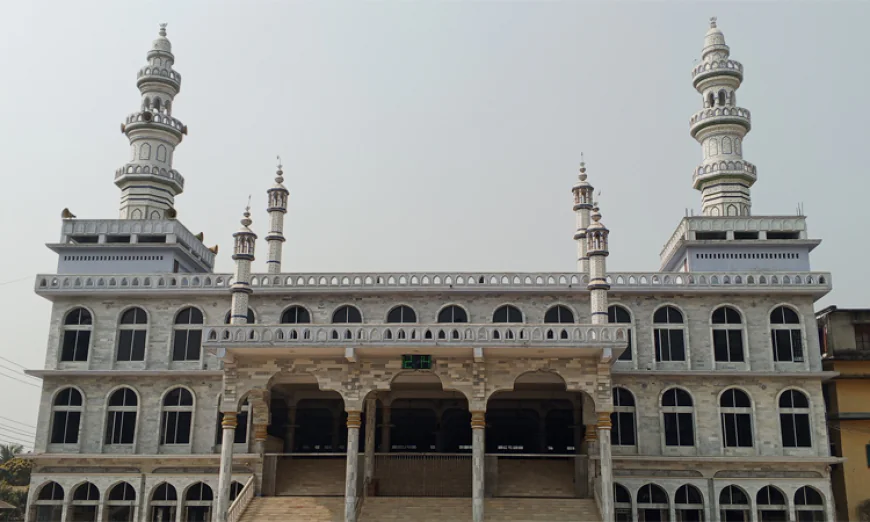
Al-Jamiatul Islamia Kasemul Ulum Jamil Madrasa in Bogura city is one of the most prominent Islamic educational seminaries in the subcontinent. It is situated at Jamilnagar, on the outskirts of the newly introduced city corporation, on 40 bighas of land. This madrasa is currently recognised as the largest in terms of area and its mosque one of the oldest mosques in North Bengal.
This institution was primarily established through the initiative of Mufti Suhail Uddin, chairman of the Jamil Group of Industries. On the 4 January 1960 (1380 Hijri), inspired by Mufti Suhail Uddin, an alumnus of Darul Uloom Deoband, the foundation stone was laid by several revered personalities like Azizul Haq (RA), the then director general of Al-Jamia Al-Islamia Patiya and Haji Yunus (RA).
At the time of the madrasa's establishment, Mufti Abdur Rahman (RA), known as Faqihul Millat, was entrusted with the responsibility of overseeing the educational activities.
Currently, his son, Mufti Arshad Rahmani, is serving as the principal (muhtamim).
The grandeur of this mosque is truly captivating. Throughout its 67-year history, the mosque has undergone renovations in three phases. There are 33 rows on each floor of the mosque. An estimated 3,000 worshippers can offer prayers at a time on a single floor. The entire mosque complex has arrangements for over 10,000 people to pray together.
The mosque remains perpetually vibrant with the presence of the madrasa's 3,000 residential students and over a hundred teachers and staff.
Unlike many mosques that are closed after prayers, this mosque at Jamil Madrasa remains active and inhabited 24 hours a day.
Mufti Ataullah Nizam, assistant director of the mosque, told state news agency BSS, "Even if you come here at two or three in the morning, you can hear the recitation of the Holy Quran and the supplications of the students before Allah."
Every Friday and during two Eids, thousands of devout people from various districts of North Bengal gather here to offer their prayers. Although it has no permanent government funding source, this vast Islamic centre continues to operate through the donations and love of local and expatriate Muslim brothers.
This historic mosque is not just a place of worship; it has become a symbol of trust and a centre of spiritual tranquility for the people of North Bengal.
What's Your Reaction?
 Like
0
Like
0
 Dislike
0
Dislike
0
 Love
0
Love
0
 Funny
0
Funny
0
 Wow
0
Wow
0
 Sad
0
Sad
0
 Angry
0
Angry
0




Comments (0)