

Eid escapes in Bogura where history, nature and culture converge
As the gateway to North Bengal, Bogura carries a deep historical identity shaped by centuries of political, cultural and economic evolution

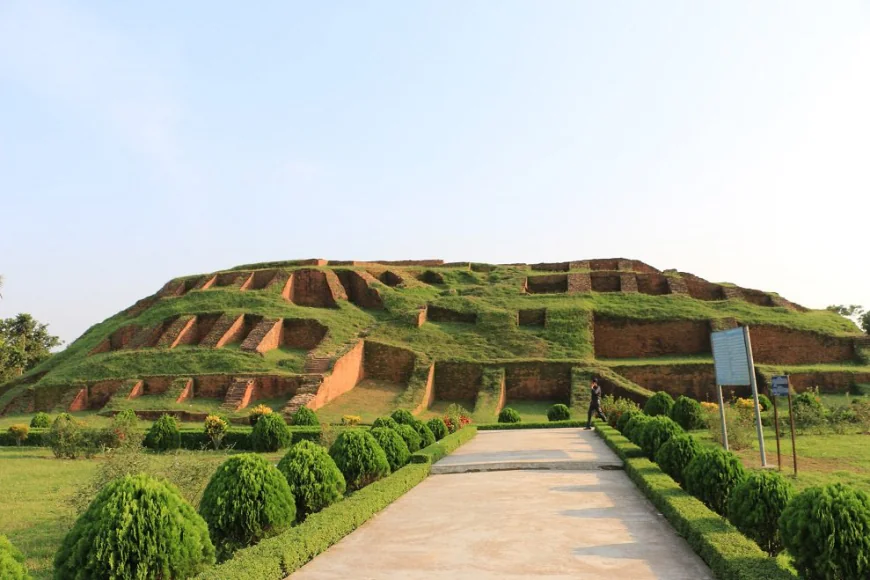
As Eid holidays encourage people to step out, northern Bangladesh’s Bogura is drawing growing attention as a travel destination-offering a unique blend of ancient heritage, riverside landscapes and modern leisure.
Often described as the gateway to North Bengal, Bogura carries a deep historical identity shaped by centuries of political, cultural and economic evolution.
The district has produced notable figures including anti-British movement martyr Prafulla Chaki, former Pakistani Prime Minister Muhammad Ali Bogra, and Bangladesh’s martyred president Ziaur Rahman, among others.
Originally named after Muhammad Ali Bogra, the district’s spelling was officially changed from “Bogra” to “Bogura” in 2018.
A land of layered history and civilisation
At the heart of Bogura lies Mahasthangarh, widely recognised as the ancient city of Pundranagar. Dating back more than two millennia, it served as a major urban and religious centre under successive dynasties including the Maurya, Gupta, Pala and Sena rulers.
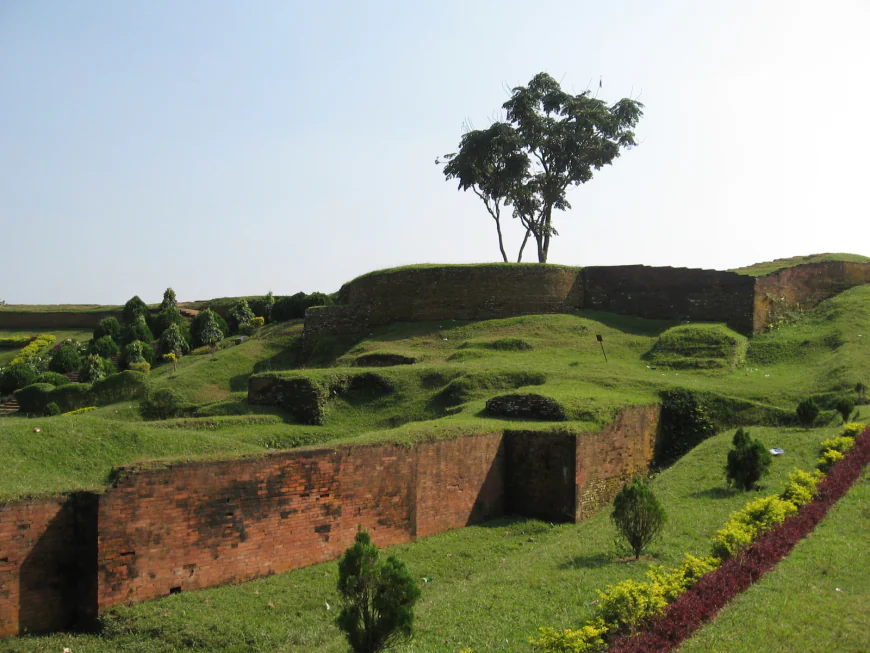
Mahasthan means a place that has sanctity and garh means fort. Mahasthan was first mentioned in a Sanskrit text of the 13th century entitled Vallalcharita. Photo: Wikipedia
The site reflects a civilisation that flourished long before the Common Era, with remnants of fortifications, structures and artefacts that continue to attract archaeologists, historians and visitors.
Nearby, the shrine of Shah Sultan Balkhi Mahisawar Mazar remains a focal point for both pilgrims and tourists.
Other culturally significant locations include Behula Basor Ghor, associated with the legendary tale of Behula and Lakhindar from the medieval epic Manasamangal. The nearby Jiyat Kunda, linked to Raja Parshuram, also adds a mythological dimension to the region’s historical landscape.
Quiet retreat in archaeology of spirituality
Beyond Mahasthangarh, Bogura hosts several important archaeological and religious sites.
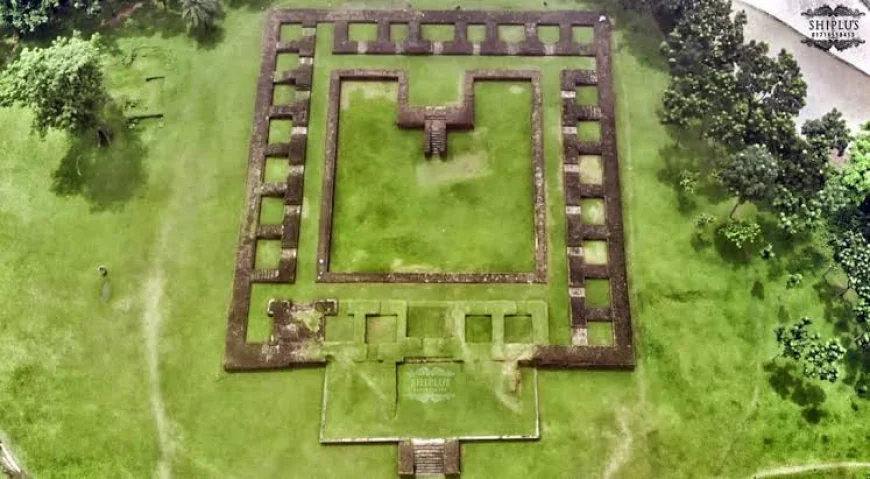
An aerial view of Bhasu Bihar, a complex of two rectangular monasteries and a semi-cruciform shrine of the post-Gupta period, located at about 6 km west of Mahasthangarh on the northern part of Bihar village under Bihar union of Shibganj upazila in Bogura. Photo: Wikipedia
Bhasu Bihar, an ancient Buddhist monastery complex, offers a peaceful environment surrounded by open countryside. It stands as a reminder of the region’s role as a major Buddhist centre in earlier centuries.
The district is also dotted with ancient stupas, temples and ruins, reflecting its diverse religious and cultural heritage.
Sacred sites such as Baba Adam’s Mazar at Adamdighi and other historical landmarks further enrich its tourism profile.
Rivers, landscapes and scenic getaways
Nature plays a central role in Bogura’s appeal. The riverside area of Sariakandi, along with spots like Prem Jamuna Ghat, offers expansive views of the Jamuna River, especially during sunset.
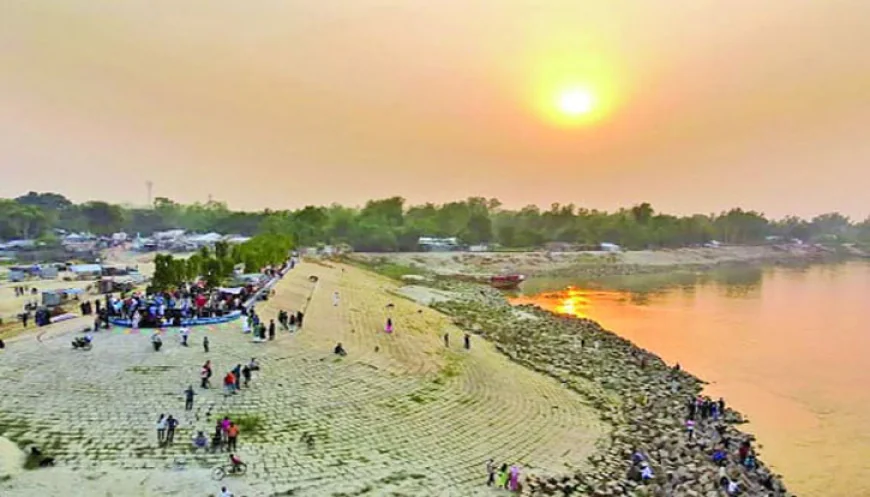
A huge dam has been built to protect the Jamuna from erosion at Sariakandi upazila in Bogura. The beauty of the river and this dam together have created an impeccable natural environment here. Photo: Parjatan Bichitra
These locations have become increasingly popular for Eid outings, providing open spaces, fresh air and a break from urban congestion. The combination of water, sky and landscape creates a calm setting for families and groups of visitors.
Recreation, food and social life
For leisure activities, destinations such as Naz Garden attract families and young visitors with recreational facilities, dining options and open areas for social gatherings. Urban hangout spots like the Mom Inn area also remain popular during holidays.
Bogura’s food culture is another major attraction. The district is widely known for its traditional yoghurt (doi), kotkoti and a variety of street foods. Local delicacies, including alughati served during special occasions, reflect the region’s rich culinary heritage and add to the overall travel experience.

The curd or yoghurt produced in Bogura is a popular traditional dessert across Bangladesh. Photo: Wikipedia Commons
In recent years, tourism-oriented services have also expanded to support visitors more effectively.
Many recreational spots and private establishments now offer basic to mid-range accommodation, guided assistance, parking facilities, and family-friendly environments.
Food courts, organized seating areas, and improved sanitation services are increasingly available in popular zones. Some locations also provide event hosting facilities, picnic arrangements, and group packages, making them suitable for family outings, school trips, and corporate gatherings.
These growing service facilities are gradually enhancing the overall visitor experience and contributing to Bogura’s appeal as a convenient and accessible travel destination.
A growing hub of tourism, development
Bogura’s importance extends beyond tourism. Over the decades, it has developed into a centre for education, industry and infrastructure.
The presence of medical colleges, an engineering and technology university, and international-standard sports facilities such as Shaheed Chandu Stadium highlights its institutional growth.
Industrial expansion, particularly in foundry, ceramic, jute and pharmaceutical sectors, has contributed to the district’s economic significance. Meanwhile, increasing tourist inflow-estimated at several thousand foreign visitors annually-continues to generate revenue and interest.
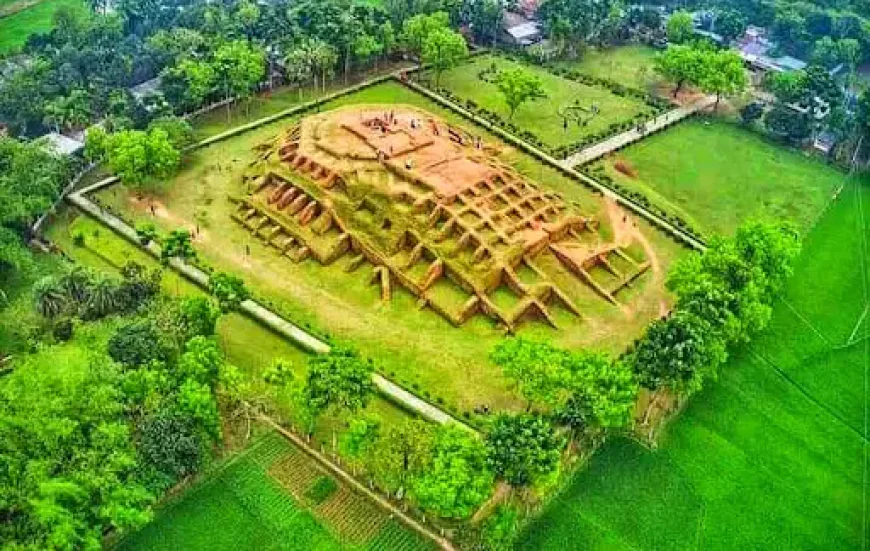
An aerial view of the legendary Behula Basar Ghar or Gokul Medh is an archaeological site excavated in Gokul village under Bogura town. Photo: Wikipedia
Plans to revive an airport at Arulia on the outskirts of the town are expected to further enhance connectivity. Once operational, it could link Bogura with neighbouring regions and potentially position it as a regional hub for trade and transport.
A destination shaped by heritage
Bogura’s identity is rooted in both history and transformation. From ancient Pundranagar to modern infrastructure development, the district reflects a continuity of civilisation alongside evolving economic and social dynamics.
During Eid, this layered identity becomes more visible. Visitors explore historical ruins, enjoy riverside landscapes, gather with family and friends, and experience a district that balances heritage with everyday life.
With its combination of archaeological significance, natural beauty, cultural depth and emerging infrastructure, Bogura is steadily establishing itself as one of Bangladesh’s most diverse and promising destinations for travel and tourism.
What's Your Reaction?
 Like
0
Like
0
 Dislike
0
Dislike
0
 Love
0
Love
0
 Funny
0
Funny
0
 Wow
0
Wow
0
 Sad
0
Sad
0
 Angry
0
Angry
0

Comments (0)