

Walking the Silk Road
Kyrgyzstan is not only about nature but also about history, and for this reason I took a one-day trip with Bishkek Walks to discover the Silk Road

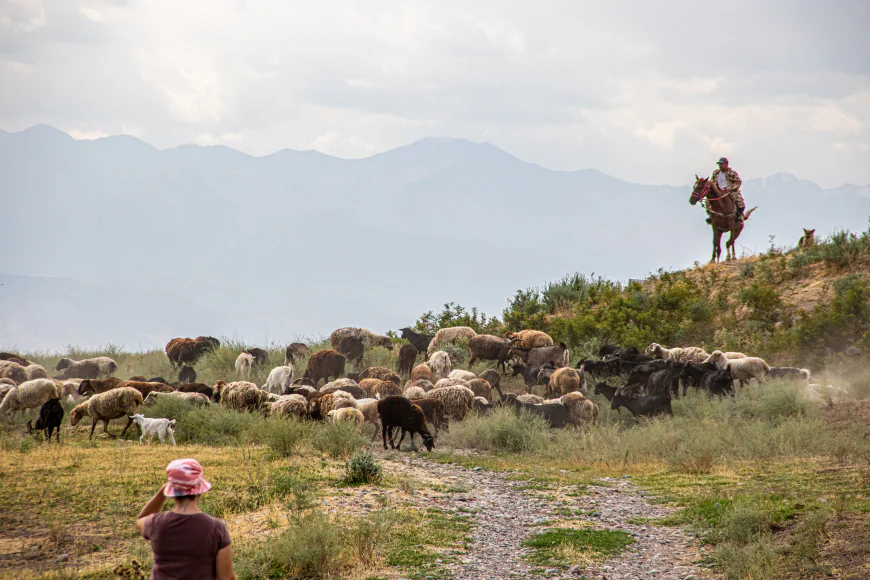
(Flavio Massignan is an Italian living in Budapest, Hungary, where he works as a chemist. He likes to combine volunteering, photography and travelling. He has visited 44 countries, with still many more to go. This travel blog, first published in “I Only Take Pics”, is about his experiences while travelling in the Central Asian country of Kyrgyzstan. The travel blog is being published for the readers of Aviation & Tourism Times.)
Flavio Massignan
In the summer of 2021, I spent around three months in Kyrgyzstan. As you might know by now from my first post in this series, I volunteered for a contemporary art association and, thanks to this, I was able to meet many lovely people.
In the previous post, I talked about a Sunday hike I did with my friend Valeria, and before that I wrote about another hike in Ala Archa that I did with Kami. However, Kyrgyzstan is not only about nature but also about history, and for this reason I took a one-day trip with Bishkek Walks to discover the Silk Road.
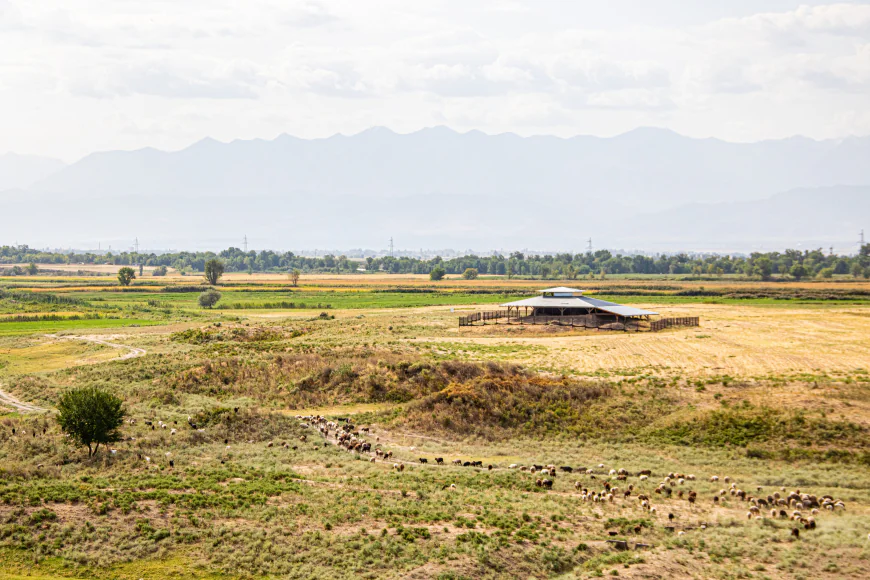
The Silk Road was an ancient network of trade routes connecting the East and West, from China to the Mediterranean Sea.
The Silk Road was an ancient network of trade routes connecting the East and the West, from China to the Mediterranean Sea. Established during the Han Dynasty (206 BCE–220 CE), it facilitated the exchange of goods, cultures and ideas. Silk, spices, tea and precious metals were among the commodities traded, while religions, philosophies and technologies also spread along these routes. The Silk Road played a crucial role in shaping the civilisations it connected, fostering economic and cultural exchanges that had a lasting impact on world history.
The Silk Road in Kyrgyzstan was a significant segment of this ancient trade network, serving as a vital link between China and the Mediterranean. The region’s rugged terrain and strategic location made it an important caravan transit point. Key cities such as Osh and Balasagun flourished as bustling trade hubs where merchants exchanged silk, spices and textiles.
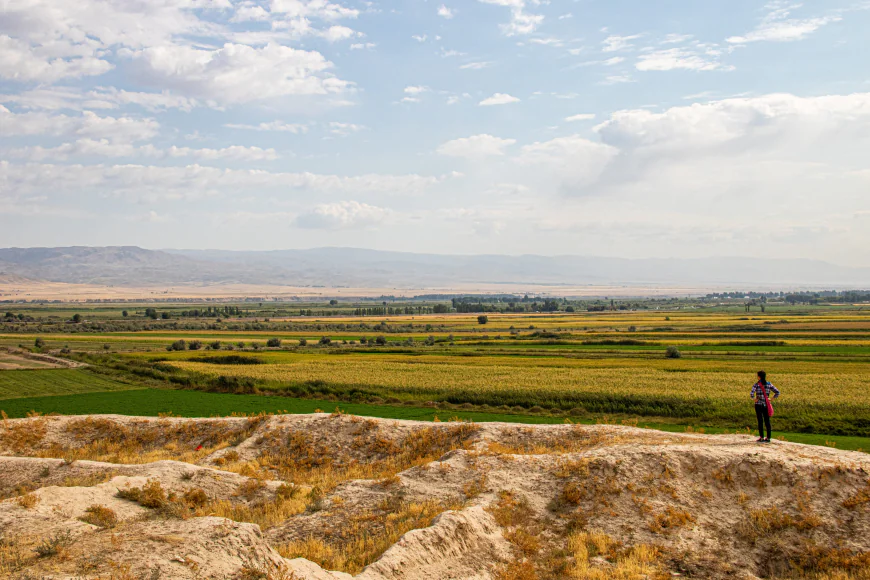
Today, remnants of the Silk Road in Kyrgyzstan can be seen in its archaeological sites, historical monuments and preserved caravanserais, offering a glimpse into the vibrant history of this ancient trade route. The legacy of the Silk Road continues to be a source of cultural pride and historical significance for Kyrgyzstan.
The tour I took part in involved visiting archaeological sites of different cities with an archaeologist as our guide. We left Bishkek on a Saturday morning and our first stop was Nevaket.
Nevaket was a prominent centre along the Silk Road during the early medieval period. Situated in the Chuy Valley near the modern city of Tokmok, Nevaket thrived as a bustling hub of trade, culture and political power.
Our guide told us that it was founded around the 6th century CE and served as the capital of the Western Turkic Khaganate and later the Karluk Khaganate
Our guide told us that it was founded around the 6th century CE and served as the capital of the Western Turkic Khaganate and later the Karluk Khaganate. He also explained that the city flourished due to its strategic position, facilitating the exchange of goods such as silk, spices and precious metals between China, Central Asia and the Middle East. Its diverse population included Turks, Sogdians, Chinese and other ethnic groups, contributing to a rich cultural tapestry.
Nevaket was known for its impressive architecture, including palaces, mosques and fortifications. The city also had a vibrant intellectual life, with scholars and artists contributing to its cultural and scientific achievements.
We saw that archaeological excavations in the region have uncovered remnants of this once-thriving city, including pottery, coins and structures that provide insight into its historical significance.
The next site we visited, not far from Nevaket, was the city of Ak-Beshim, which dates back to the early medieval period. Known historically as Suyab, Ak-Beshim was a major city on the Silk Road, serving as a key cultural and economic hub from the 6th to the 12th centuries CE.
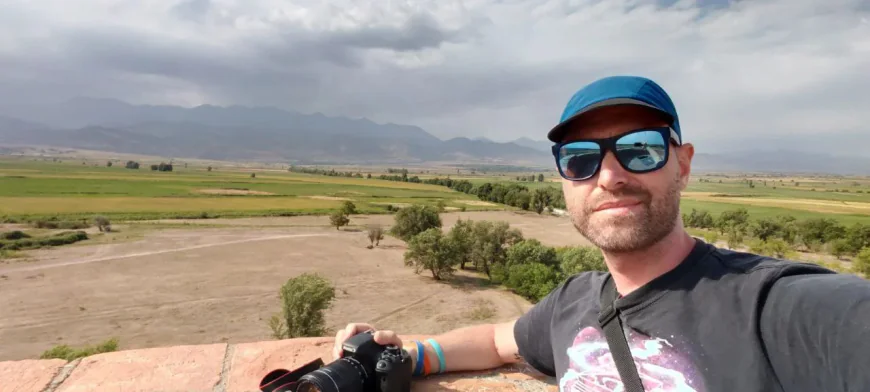
Italian travel blogger Flavio Massignan takes a selfie in Kyrgyzstan
We learned that it was founded by the Sogdians and, like Nevaket, the city played a crucial role in the exchange of goods. It also had a similarly diverse population, making it a melting pot of cultures and religions. This diversity is reflected in the city’s architectural and artistic remains, which include Buddhist stupas, Zoroastrian fire temples and Christian churches.
The archaeological excavations we saw have uncovered significant artefacts and structures such as city walls, residential areas, religious buildings and workshops. These findings provide valuable insight into the city’s layout, economic activities and daily life. We visited a large Buddhist stupa; the guide told us there was once a monastery complex, indicating the city’s importance as a religious centre.
After lunch, we visited the ancient city of Burana, which dates back to the 9th century CE. Burana was originally part of the city of Balasagun, one of the most important centres along the Silk Road and the capital of the Kara-Khanid Khanate.
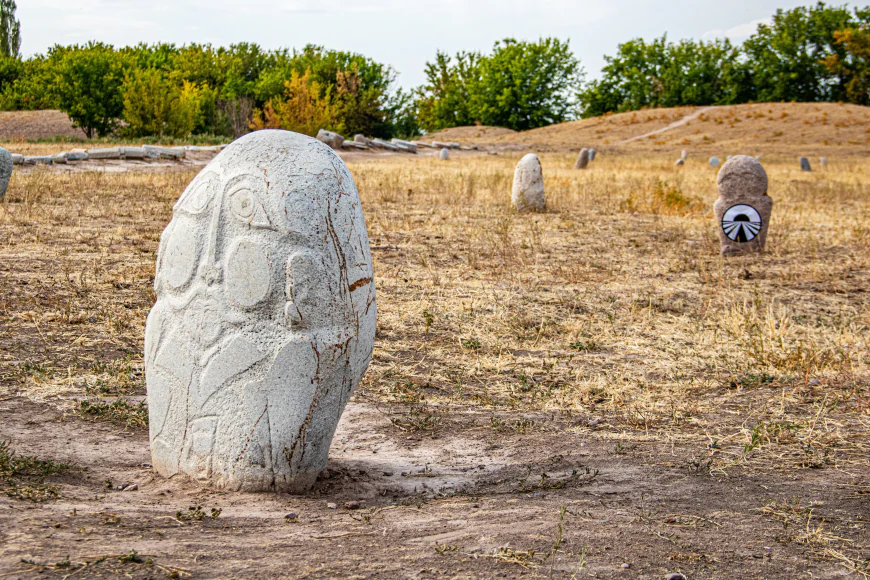
The archaeological excavations we saw have uncovered significant artefacts and structures such as city walls, residential areas, religious buildings and workshops
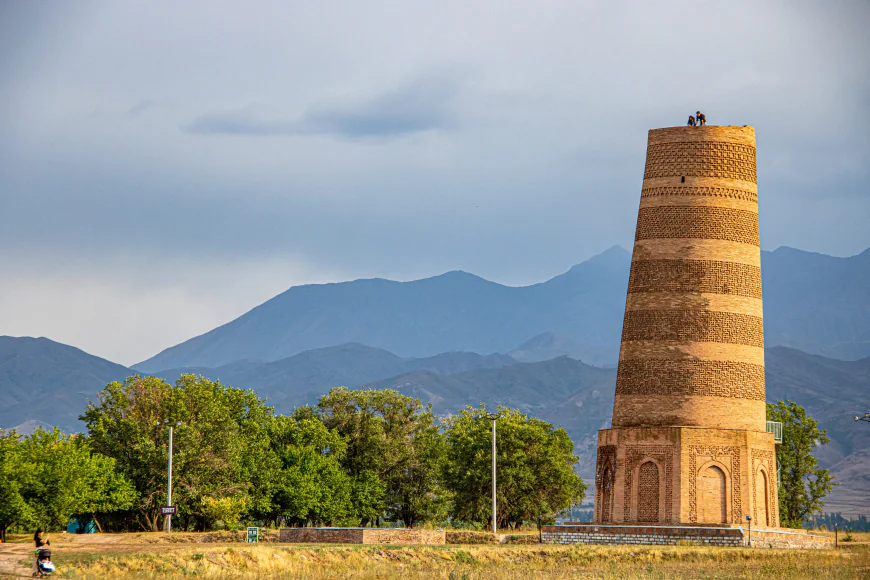
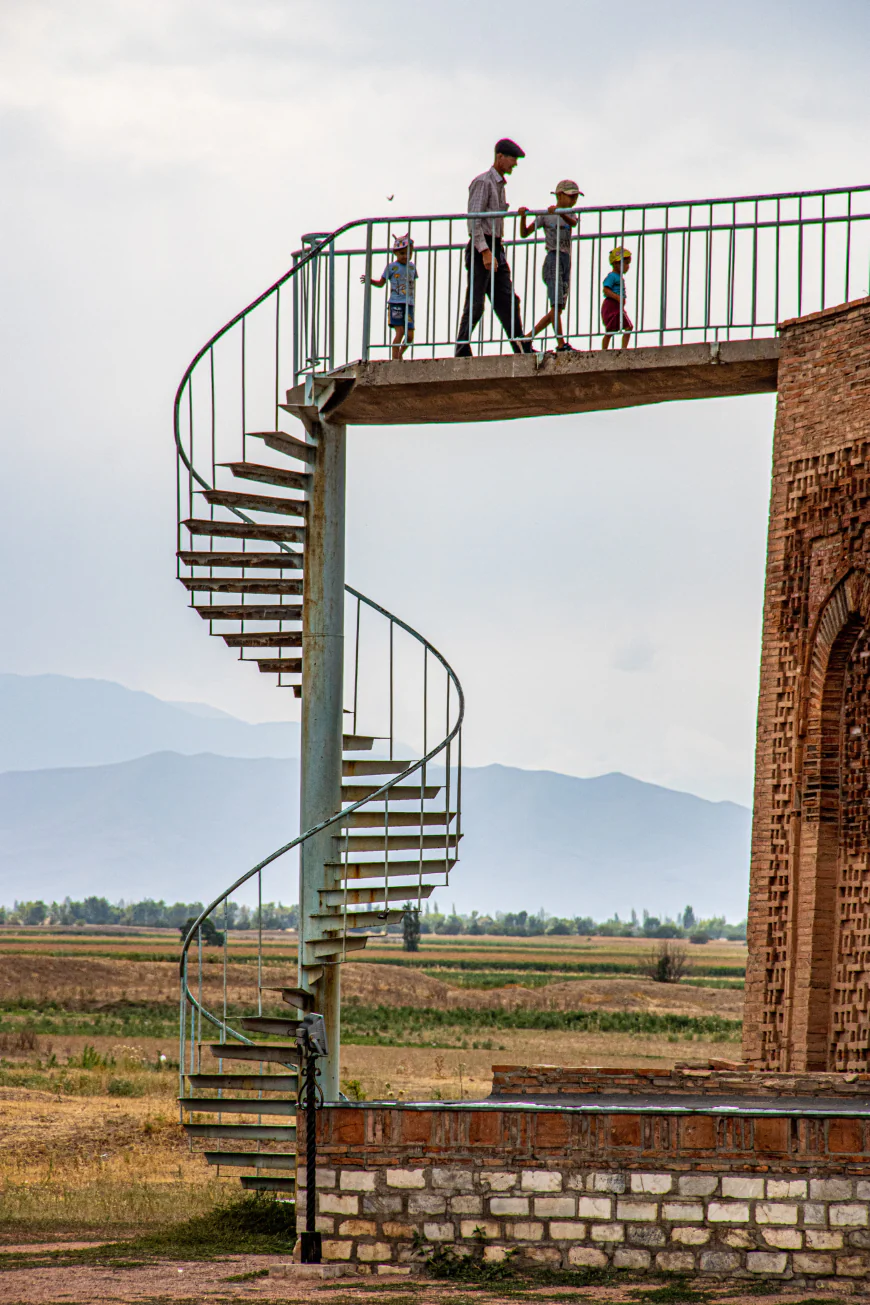
Burana is renowned for its impressive minaret, known as the Burana Tower, which stands as one of the few remaining structures from the city’s golden age. The tower, originally built in the 11th century and standing 45 metres tall, served both as a watchtower and a symbol of Islamic architecture in the region. Over time, due to earthquakes and erosion, its height has been reduced to about 25 metres.
The site around the Burana Tower includes the ruins of ancient buildings, mausoleums and a collection of petroglyphs. Archaeologists have uncovered remains of residential areas, fortifications and irrigation systems, providing insight into the urban planning and daily life of its inhabitants. We visited a small museum on the site displaying artefacts such as pottery, coins and tools, further illustrating the city’s historical significance.
Like the other cities, Burana played a crucial role in the cultural and economic exchanges that shaped the medieval history of Central Asia, acting as a melting pot of cultures, religions and languages, reflecting the diverse populations that travelled through or settled along the Silk Road.
What surprised me most among all the things the guide told us was how Kyrgyzstan’s section of the Silk Road was a meeting place of cultures, languages and religions. Buddhist stupas, Christian monasteries and Islamic mosques dotted the landscape, reflecting the diverse influences that passed through. I was impressed by how these could have coexisted in a more or less peaceful way, accepting differences and perhaps even seeing them as a value.
I learned a great deal from this trip. The guide was very knowledgeable and had a contagious enthusiasm. Walking on what was probably once the walls of these ancient cities, or where people once gathered to trade goods, was truly impressive. If you are ever in the area, it is well worth a visit.
What's Your Reaction?
 Like
0
Like
0
 Dislike
0
Dislike
0
 Love
0
Love
0
 Funny
0
Funny
0
 Wow
0
Wow
0
 Sad
0
Sad
0
 Angry
0
Angry
0


Comments (0)