

Airport revival master plan to boost tourism, connectivity
The plan will begin with reopening selected dormant airports, followed by runway expansion, terminal upgrades and the installation of modern safety and navigation systems

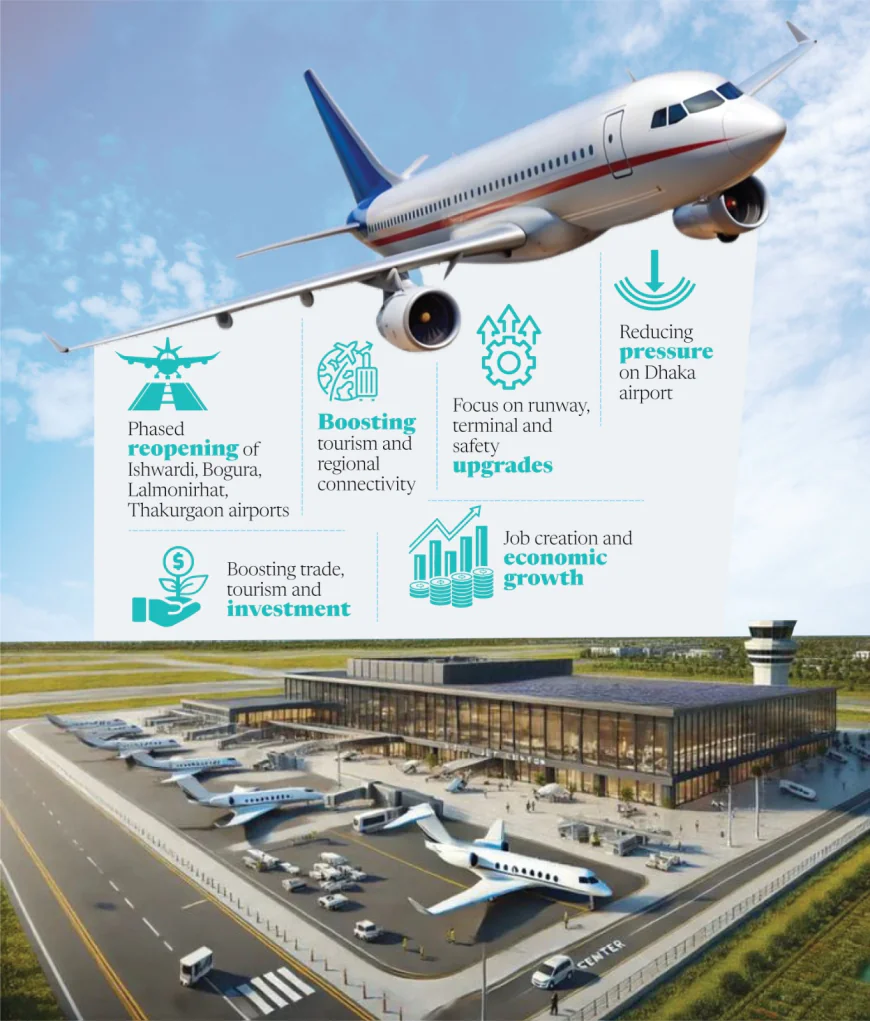
The government has set the wheels in motion on a comprehensive master plan to revive long-shuttered and underused airports across Bangladesh with an eye to boosting tourism, strengthening regional connectivity and spreading economic activity beyond the capital.
A senior official at the Ministry of Civil Aviation and Tourism said the plan will roll out in phases. It will begin with reopening selected dormant airports, followed by runway expansion, terminal upgrades and the installation of modern safety and navigation systems.
A separate “National Tourism Master Plan” is also in the works to support the effort.
Officials describe the move as a strategic shift to make aviation a key driver of domestic tourism and investment, citing it as “killing two birds with one stone”.
The initiative targets multiple commercially inoperative airports, including Ishwardi, Thakurgaon, Lalmonirhat, Bogura, Shamshernagar, Cumilla and Tejgaon.
Phased revival strategy
The first phase will focus on restoring basic operations and infrastructure. The second will upgrade runways, terminals, cargo handling and security. In the final stage, selected airports may be elevated to regional or even international standards, depending on demand and commercial viability.
According to authorities concerned, the plan aims to ease pressure on Dhaka’s main airport while opening up alternative air corridors across the north, south and northeast.
Ishwardi: Industrial gateway
Ishwardi Airport tops the priority list, with a reopening target of 2030. Located near the Rooppur Nuclear Power Plant and the Ishwardi Export Processing Zone, it is seen as a potential logistics hub for industry and energy projects.
Inactive for over a decade, the airport will require a runway extension from 4,700 to at least 6,000 feet, along with modern terminal facilities and fire safety systems. Business leaders say its revival could cut travel time for foreign investors and give exports a shot in the arm.
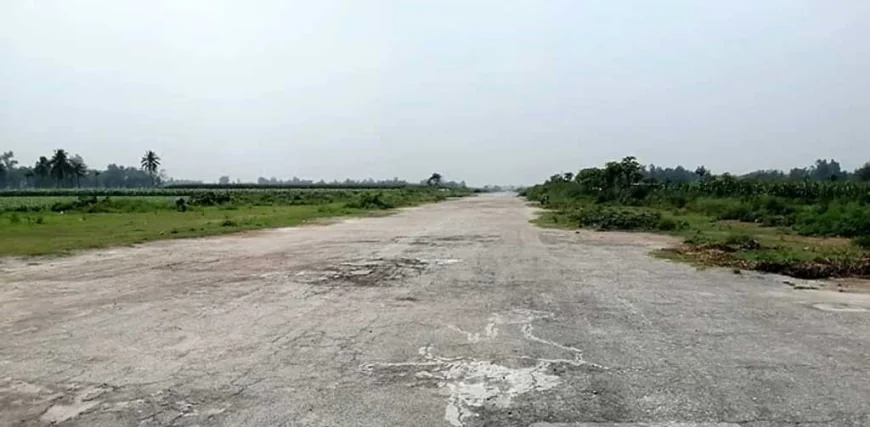
Runway of the abandoned Thakurgaon airport. Photo: Collected
Thakurgaon: High cost, high ambition
Thakurgaon Airport, built in 1931, is earmarked for major redevelopment. Plans include runway reconstruction, land acquisition and modern navigation systems.
The project could cost nearly Tk 9,871 crore and take up to four years. Once completed, it may handle up to 1.5 million passengers annually, with potential links to Nepal, Bhutan and India’s northeast. However, high costs and land issues remain sticking points.
Lalmonirhat: Quickest win
Lalmonirhat Airport is seen as low-hanging fruit, as much of its original infrastructure remains intact. A technical committee is assessing requirements, but officials expect minimal land acquisition, making it faster and more cost-effective to revive.
Its proximity to land ports and trade routes adds to its strategic value, though its border location requires careful handling.
Bogura: Demand outpaces facilities
Bogura Airport has strong backing from agricultural exporters and businesses. However, it lacks key infrastructure, including a control tower, terminal, fire services and adequate security.
Its 4,500-foot runway is also too short for commercial flights. Even so, stakeholders believe an upgrade could transform transport for northern produce such as potatoes, mangoes and vegetables.
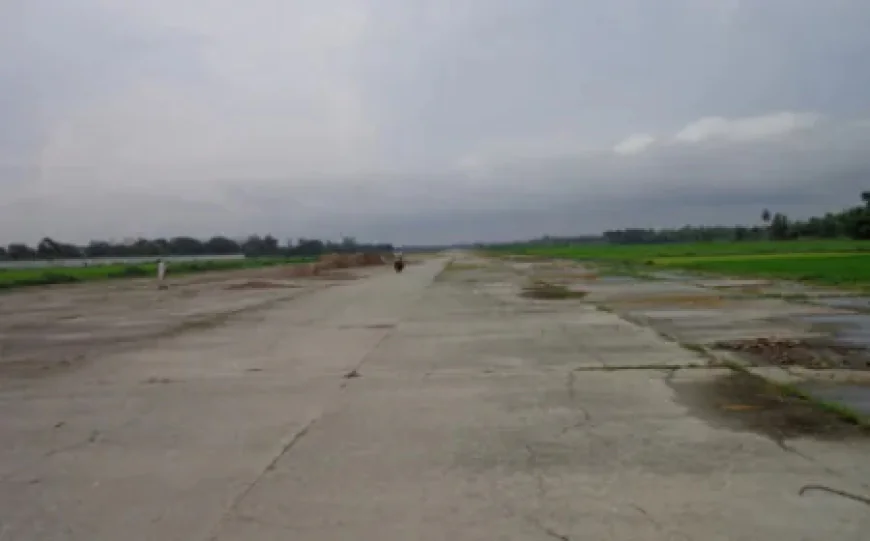
A view of the abandoned Lalmonirhat Airport built on 1166.68 acres of land in Mahendranagar-Harati area under Sadar upazila in Lalmonirhat. Photo: Offroadbangladesh
Smaller airports
Shamshernagar, Cumilla and Tejgaon are also part of long-term plans. Shamshernagar could support eco-tourism in Moulvibazar’s tea garden region. Cumilla may ease pressure on the Dhaka–Chattogram corridor, while Tejgaon is being considered for specialised services such as business jets, charter flights and air ambulances.
Policy push
Officials say the master plan reflects a broader shift towards decentralising aviation and promoting balanced regional growth. Tourism-heavy areas such as Sylhet, the north and coastal regions are key targets. It is also expected to create jobs, woo foreign investment and cut reliance on road transport.
Political backing
State Minister for Civil Aviation and Tourism M Rashiduzzaman Millat said the government is committed to reopening closed airports, noting that several were operational in the past.
“We are working to reopen these airports. Air travel should be affordable and accessible to ordinary people. With proper management, fares can also be reduced,” he said.
Parliamentarian M Nasser Rahman echoed the call, stressing the need to make better use of existing infrastructure and reduce dependence on a handful of major airports.
Challenges ahead
Hurdles remain despite the momentum. High costs, land acquisition, uncertain passenger demand and long-term sustainability are major concerns.
Experts warn that reopening airports alone will not be enough. Without regular flights, airline interest and integrated transport links, the plan risks remaining up in the air.
What's Your Reaction?
 Like
0
Like
0
 Dislike
0
Dislike
0
 Love
0
Love
0
 Funny
0
Funny
0
 Wow
0
Wow
0
 Sad
0
Sad
0
 Angry
0
Angry
0


Comments (0)