

Fuel crisis triggers tourist slump in Kuakata
Low visitor turnout hits local businesses as fuel shortage disrupts travel plans

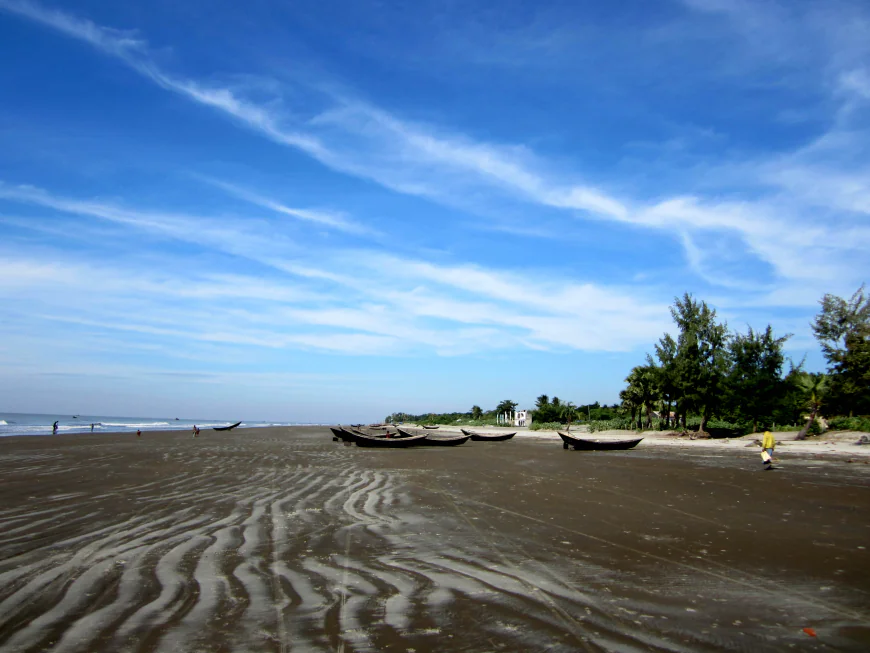
Bangladesh’s iconic beach destination Kuakata is witnessing a sharp decline in tourist arrivals as an ongoing fuel crisis and administrative restrictions disrupt travel plans, placing significant strain on the local tourism economy.
Despite it being a peak weekend period, last Friday saw unusually low visitor numbers, with normally crowded beaches appearing quiet and businesses struggling to stay afloat. Industry insiders warn that if the situation drags on, it could have long-term economic consequences for the region.
The drop in tourist flow is largely attributed to reduced fuel availability, which has significantly limited private vehicle travel to Kuakata. In addition, a directive requiring shops to close by 7:00pm has curtailed evening activities-traditionally a key driver of tourism spending-resulting in shorter stays and reduced economic activity.
Popular tourist spots, including Zero Point, Leburbon, Gangamati, Kawarchar, and the Rakhine Market, reported minimal visitor presence, a far cry from the usual weekend crowds.
Small business owners have been among the hardest hit. Beach photographer Faisal Ahmed said his daily customer count has fallen from around 25 to just four or five. “Some days, I earn nothing at all. It is becoming impossible to support my family,” he said.
Local trader Abdul Rashid echoed similar concerns. “What I used to earn in a single day now takes a week. Many of my goods are going to waste. If this continues, I may have to shut down my business,” he added.
Hospitality operators are also facing mounting losses. Al-Amin Khan Ujjal, AGM of Sikder Resort and Villa, said bookings have dropped sharply. “We usually rely heavily on tourists travelling by private vehicles, but this Friday there were almost none. Occupancy has fallen from 70-80% to just 15-20%,” he said, warning that the business may not survive if the situation continues.
Tourists rethink travel plans
The crisis is also shaping tourist behaviour. Rafiqul Islam, a private sector employee from Dhaka, said he cancelled a planned family trip due to uncertainty over fuel availability. “We did not want to risk getting stranded on the highway, so we decided to stay back,” he said.
University student Nusrat Jahan, who managed to visit Kuakata with friends, described the experience as unusually quiet. “The beach felt empty compared to previous visits. Many shops closed early, and there was very little to do at night,” she said, adding that the trip fell short of expectations.
Livelihoods under pressure
The decline in tourism is having a ripple effect across the local economy. Ibrahim Wahid, president of the Kuakata Hotel-Motel Employees Association, said reduced bookings have led to fewer working hours and lower incomes. “Many employees are not receiving full salaries, and some fear losing their jobs. Thousands of livelihoods are now at risk,” he noted.
MA Motaleb Sharif, president of the Kuakata Hotel-Motel Owners Association, warned that the sector is nearing breaking point. “We have made significant investments in tourism infrastructure, but without visitors, it is difficult to cover operational costs such as electricity, staff salaries, and maintenance. If the situation does not improve soon, many businesses may face closure,” he said.
Call for urgent action
Stakeholders have urged the authorities to stabilise fuel supply and reconsider restrictive measures to restore tourist confidence. Experts suggest that ensuring uninterrupted transport and extending business hours could help revive tourism activity in the coastal destination.
For now, Kuakata-once vibrant with visitors-remains unusually quiet, reflecting the broader economic strain caused by ongoing fuel uncertainty.
What's Your Reaction?
 Like
0
Like
0
 Dislike
0
Dislike
0
 Love
0
Love
0
 Funny
0
Funny
0
 Wow
0
Wow
0
 Sad
0
Sad
0
 Angry
0
Angry
0



Comments (0)