

HSIA third terminal deal likely today
Govt, Japan finalise third terminal operations model; travel tax likely to rise, multi-operator ground handling on the anvil

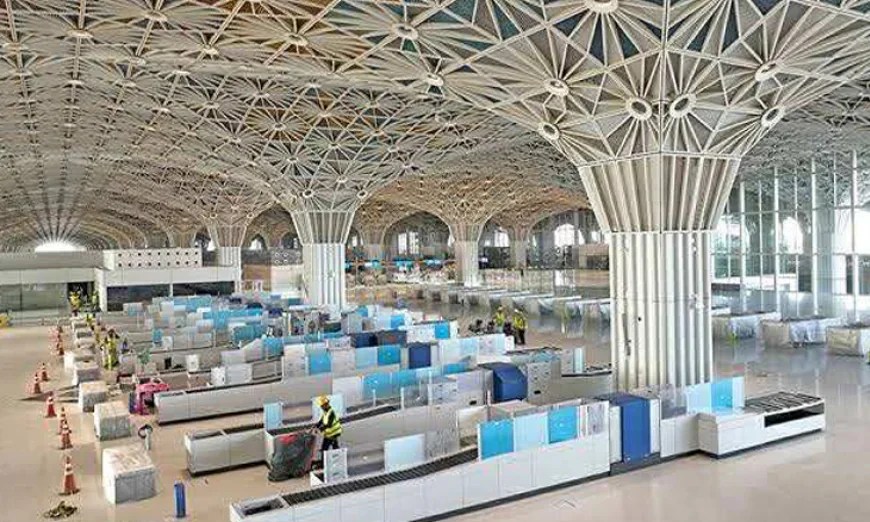
A final decision on the operational model of the long-awaited third terminal at Hazrat Shahjalal International Airport (HSIA) is expected today (Friday), marking a key milestone for the aviation sector in Bangladesh.
The decision will be taken at a high-level meeting at the Ministry of Foreign Affairs, where senior officials from Bangladesh and Japan are scheduled to finalise the structure for managing the facility.
On Thursday, State Minister for Civil Aviation and Tourism M Rashiduzzaman Millat said the government is hopeful of reaching a conclusion, noting that most financial issues have been resolved with support from Japan.
“We are optimistic that a decision will be finalised tomorrow,” he said, adding that discussions with the Japanese ambassador have helped narrow remaining gaps.
Passenger costs likely to spike
As part of the proposed framework, outbound passengers may have to bear additional costs. Currently, a travel tax of Tk 500 is levied on outbound passengers. According to the proposed decision, the tax is being increased to Tk 1,500. As a result, an additional Tk 1,000 will be added to each ticket, putting a big burden on passengers.
According to officials, the increase is necessary to cover operational expenses, including maintenance, advanced security systems, and ensuring international-standard passenger services at the new terminal.
However, the move has raised concerns among travellers, particularly those who frequently travel abroad for medical treatment, education, or employment. Many fear the added cost will further increase the financial burden amid already high airfares.
Changes in ground handling operations
The third terminal is also expected to bring structural changes to ground handling services. Unlike the current system, Biman Bangladesh Airlines may no longer have exclusive control over these operations.
Instead, authorities are considering a joint or multi-operator model involving foreign partners, which could introduce competition and potentially improve service quality.
Ground handling includes key services such as passenger assistance, baggage management, cargo operations, aircraft cleaning, and other support functions critical to airport efficiency.
Experts say while competition could enhance service standards, poor coordination among multiple operators may create operational challenges if not managed properly.
Timeline for implementation
If a consensus is reached, officials estimate it may take around three months to sign the final agreement, followed by another six months for full operational readiness.
The third terminal-built with financial support from the Japan International Cooperation Agency at an estimated cost of Tk 21,398 crore-is designed to significantly expand the airport’s capacity.
Once operational, it is expected to handle an additional 12 to 16 million passengers annually, along with nearly 900,000 tonnes of cargo.
Officials say the terminal will play a crucial role in positioning Bangladesh as a regional aviation hub, provided the transition is managed efficiently and passenger interests are carefully balanced.
What's Your Reaction?
 Like
0
Like
0
 Dislike
0
Dislike
0
 Love
0
Love
0
 Funny
0
Funny
0
 Wow
0
Wow
0
 Sad
0
Sad
0
 Angry
0
Angry
0




Comments (0)