
Assessing US-Iran MoU and prospects for negotiations
In the negotiations in February, right before the military campaign began, Iran had reportedly agreed to dispose of the HEU in exchange for sanctions relief

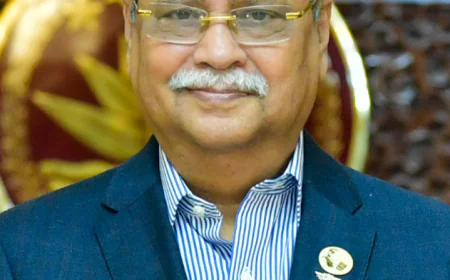
(Frank Lowenstein is an executive director and member of the International Advisory Council at APCO, a global advisory and advocacy firm helping clients navigate a complex world and create lasting impact. Frank Lowenstein has over 15 years of experience at very senior levels of the US government, most recently serving as special envoy for Israeli-Palestinian Negotiations and senior advisor to Secretary of State John Kerry at the US Department of State from 2014-2017. He is currently an internationally recognised expert on US foreign policy and Middle East issues and a frequent contributor to major international media outlets, including BBC, CNN, the New York Times, the Wall Street Journal and the Washington Post. For the readers of Aviation and Tourism Times, his recent analytical essay on US-Iran conflict is republished here. The essay was first published in jstreet.org.)

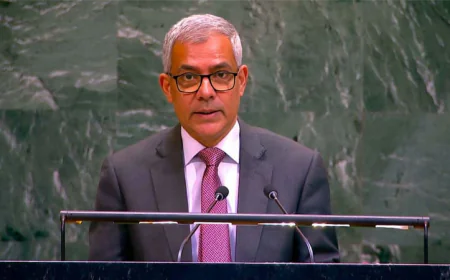
Columnist Frank Lowenstein. Photo: Collected from Limkedin
The Memorandum of Understanding (MoU) signed last week by the Trump administration and Iran is a welcome and necessary step to ending a disastrous war of choice that the US and Israel never should have started. As the first days of the ceasefire – which saw a continuation of fighting in Lebanon and Iran’s partial closure of the Strait of Hormuz – demonstrate, commitment at the highest levels of American and Iranian leadership will be necessary to sustain the tenuous agreement.
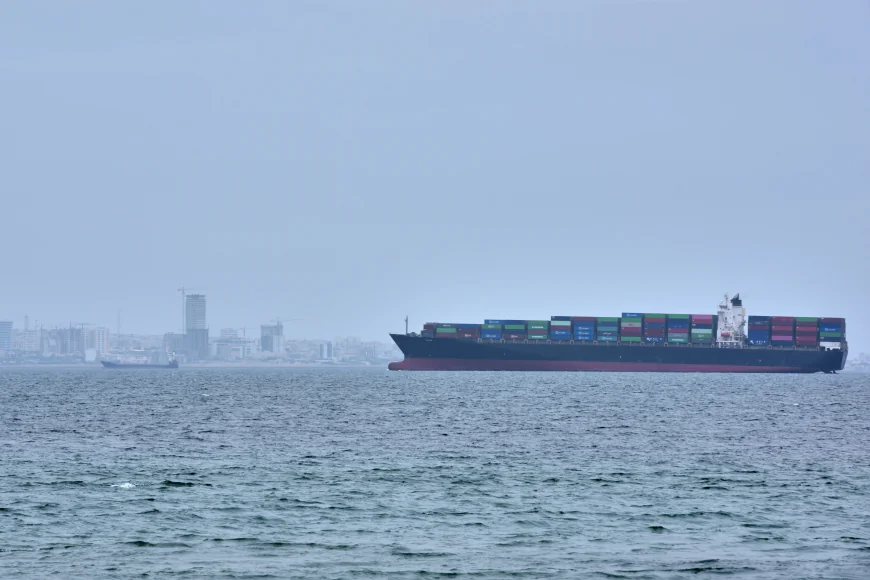
The terms of the deal reflect the weakened position of the Trump administration, which urgently needed to relieve the increasing economic and political pressure caused by Iran’s closure of the Strait of Hormuz (SoH). In fact, Iran was able to effectively dictate the terms of the MoU, receiving significant financial benefits up front along with ending the US naval blockade in return for opening the Strait, while deferring the main American demands to a 60-day negotiating period that began over the weekend.
While final judgment should be reserved pending the outcome of these negotiations, the United States has significantly less leverage and a lower likelihood of extracting major concessions from Iran than it had at the beginning of the conflict. It is already clear, therefore, that the war initiated by Trump and Netanyahu will not achieve its stated objectives, including changing the regime, destroying Iran’s ballistic missile capabilities, and ending its support for proxies.
The bottom line is that despite the military operation’s tactical successes, Iran’s demonstrated ability to withstand even extreme military pressure and assert control of the SOH has left the US, Israel, and our regional allies in a significantly worse strategic situation. And the divergence between Prime Minister Netanyahu’s desire to continue the war – and efforts to derail agreement on the MOU – and Trump’s commitment to finally ending the conflict has created major strains in the US-Israel relationship.
While reports suggest Vance’s initial negotiating session resulted in Iran agreeing to allow International Atomic Energy Agency (IAEA) inspectors back into the country, the most difficult negotiations remain ahead, and both sides will need to be prepared to make significant concessions for a final agreement to be reached. It is now critical for the Trump administration to engage in the type of determined, realistic, and expertly informed negotiations that it has shown little willingness or ability to engage in thus far.
Key provisions of the MoU
It is important to note that the MoU is not itself a binding agreement; it simply lays out terms for an immediate ceasefire and vague parameters for future negotiations. But one key aspect of the document is the absence of any provisions that address many of the main points that Trump, Netanyahu, and their allies had previously argued were key to a 'good deal'.
It does not mention limits on Iran’s ballistic missile programme, which intelligence reports suggest remains at approximately 70% of pre-war capacity; nor does it include any requirement that Iran reduce or otherwise alter its support for proxy groups in the region. The Memorandum also calls for non-interference in each other’s internal affairs, which arguably precludes future efforts to undermine the regime and support Iranian protesters, to whom Trump famously promised that 'help is on the way', and contains no commitment by Iran to limit its future nuclear enrichment program, let alone dismantle its enrichment facilities.
The MoU is best understood as defining two phases: The first phase provides significant financial benefits to Iran up front in exchange for opening the Strait of Hormuz, and the second consists of vague parameters that must be further negotiated in ongoing talks.
The first phase
The Strait of Hormuz. Section 5 of the MoU calls for Iran to open the SoH for “commercial vessels with no charge for 60 days only” (emphasis added). Bolstered by the provision that final arrangements for the SoH will be negotiated with Oman and other Gulf states, this implies that after 60 days, Iran may begin to charge fees in the Strait. While Secretary Rubio and many others have said it is 'unacceptable' for Iran to charge fees for transit, this MoU lays the groundwork for Iran to reap significant revenues from doing exactly that.
End of the Lebanon war. Rather than calling for an end to Iran’s support of regional proxies, Section 1 of the MoU explicitly calls for 'the immediate and permanent termination of military operations on all fronts, including Lebanon' – where Hezbollah remains a potent military force. Further, it calls for “ensuring the territorial integrity and sovereignty of Lebanon', a clear call for Israel to withdraw its forces currently in southern Lebanon.
Prime Minister Netanyahu, who was not a party to the deal, has made clear he intends to continue the IDF’s occupation of southern Lebanon regardless of the MoU. Fighting between Israel and Hezbollah indeed continued until late on Saturday, when a tentative renewed ceasefire was agreed to. A resumption of high-intensity fighting in Lebanon could threaten the viability of the ceasefire itself, so it will be critical for Iran to make sure that Hezbollah refrains from provocations against Israel, and for Trump to make clear to Netanyahu that he must act with restraint.
Immediate Financial Benefits for Iran. A notable aspect of the MoU is the major financial benefits Iran will receive, including a significant windfall at the outset:
Allowing immediate Iranian oil sales: In addition to ending the US naval blockade in return for opening the SOH, which was obviously open for free passage by all commercial traffic before the war, Section 10 calls for the US “immediately upon signing” to issue waivers for Iran to sell its oil that will last “until the termination of sanctions.” In other words, the MoU essentially permanently removes all sanctions on Iranian oil sales, thereby providing an immediate windfall to the regime while removing the main source of US leverage in future negotiations.
Release of frozen assets: Section 11 states that upon implementation of the MoU, the US will make Iran’s frozen or restricted funds (estimated at $24 billion) fully available for use by the Iranian regime in whatever way it sees fit. This is a stark contrast to the far smaller amount of frozen funds released by the Biden administration, which was restricted to humanitarian purposes. Along with oil sales, this will provide the regime with tens of billions of dollars that it can potentially use to consolidate domestic control and begin restoring its military capabilities.
Maintaining the status quo. In Section 9, both the US and Iran agree that while negotiations on the final deal are ongoing, they will refrain from upsetting the status quo. For Iran, this is effectively a commitment to not resume enrichment or attempt to retrieve the roughly 440 kilograms of highly enriched uranium buried at its bombed nuclear sites. The US, meanwhile, commits not to impose any new sanctions or deploy additional forces to the region – limiting its maneuvering room in the negotiations.
The second phase
Long-term financial benefits for Iran. The MoU also outlines substantial financial benefits Iran would receive under a future final agreement:
$300 Billion Reconstruction Fund: Section 6 of the MoU calls for the US to work with regional partners to develop a plan to provide Iran with at least $300 billion in reconstruction funds during the 60-day negotiating period. While these funds would only be available if a final agreement is reached, that would constitute a massive and unprecedented windfall that would strengthen the regime for decades.
The termination of all sanctions against Iran: In Section 7, the United States makes an unprecedented commitment to “undertake to terminate all types of sanctions” against Iran “in an agreed-upon schedule as part of the final deal.” Notably, the reference to “all” sanctions means relief would extend to sanctions tied to human rights abuses and support for terrorism as well, a clear expansion beyond the nuclear sanctions lifted under the JCPOA. In essence, the provision would make Iran an unsanctioned country that American companies — and other foreign entities — are free to trade with. Both the schedule for this relief and the Iranian concessions linked to it remain to be negotiated in the ongoing talks.
Iran’s nuclear programme. On the fundamental issue of Iran’s nuclear stockpile and future enrichment capabilities, the MOU is very vague and subject to differing interpretations:
Highly enriched uranium: Most critically, Section 8 states that the parties “have agreed to resolve the disposition” of Iran’s stockpile of highly enriched uranium (HEU), 'at a minimum by blending it down'. Trump had previously insisted that the HEU be given to the United States, and the JCPOA, Obama’s nuclear deal, required Iran to send its stockpile of uranium to Russia. The bigger question is whether Iran will follow through, as the MoU language is vague and calls for further agreement on a mechanism – and on what Iran will demand in return (the MoU implies full sanctions relief may be necessary). In the negotiations in February, right before the military campaign began, Iran had reportedly agreed to dispose of the HEU in exchange for sanctions relief. It will be critical for the Trump administration to make certain that disposing of the HEU is part of the final deal.
Nuclear enrichment programme: On the pivotal issue of Iran’s nuclear enrichment programme, the language in Section 8 is even vaguer. It merely says the parties have “agreed to discuss the issue of enrichment,” taking into account “Iran’s nuclear needs.” In effect, the MOU contains no commitment whatsoever by Iran to limit its future enrichment program, let alone dismantle its enrichment facilities. Reports suggest that Iran has previously offered a full suspension of enrichment for 5-10 years, while Trump has insisted on 20. It will be a significant achievement if Iran agrees to an extended moratorium – and it will likely need to be linked to the negotiated sanctions relief schedule.
Prospects for Negotiations
The Trump administration now enters into negotiations with an emboldened Iranian regime and far less leverage than it had before the war began. US intelligence estimates reportedly suggest that Iran has no intention of making any significant concessions on the nuclear file. At a minimum, Trump must ensure that any final deal removes the serious threat posed by Iran’s HEU stockpile, which is estimated to be enough to build 10 nuclear weapons; that Iran agrees not to enrich uranium above a low level for an extended period; and that the IAEA is readmitted into Iran for thorough supervision, inspection and verification of these processes. This will require that Trump include experienced nuclear experts and seasoned negotiators in what is likely to be a prolonged negotiation, and his team must be prepared to move off of maximalist demands. In fact, a very good outcome at this point would be a deal similar to the JCPOA, which would have fully contained Iran’s nuclear threat for over a decade if Trump had not pulled out.
What's Your Reaction?
 Like
0
Like
0
 Dislike
0
Dislike
0
 Love
0
Love
0
 Funny
0
Funny
0
 Wow
0
Wow
0
 Sad
0
Sad
0
 Angry
0
Angry
0
Comments (0)