

Goaldi Mosque: A sultanate-era gem
Among the many enduring relics of its glorious past, the historic Goaldi Mosque stands as a proud symbol of the architectural brilliance of the Sultanate era

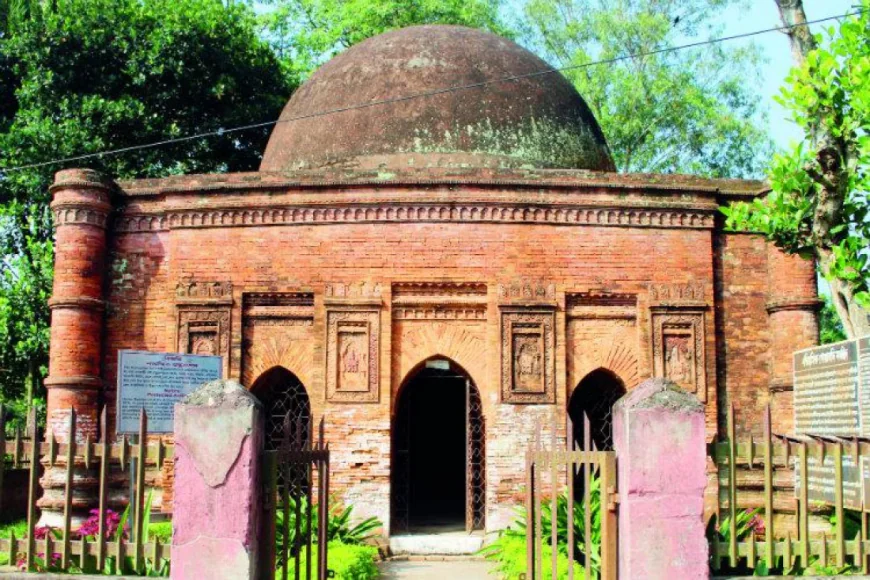
Walking along the rural trails of Sonargaon, once the ancient capital of Bengal, one can almost breathe in the fragrance of history.
Among the many enduring relics of its glorious past, the historic Goaldi Mosque stands as a proud symbol of the architectural brilliance of the Sultanate era.
For nearly five centuries, the mosque has stood the test of time, bearing witness to the splendour, craftsmanship and cultural refinement of medieval Bengal.
Rooted in history
According to the inscription preserved at the mosque, it was built in 1519 during the reign of Sultan Alauddin Hussain Shah. The structure was commissioned by Mullah Hijabar Akbar Khan.
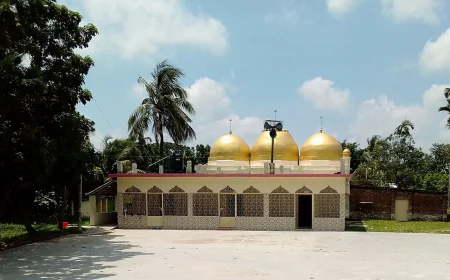
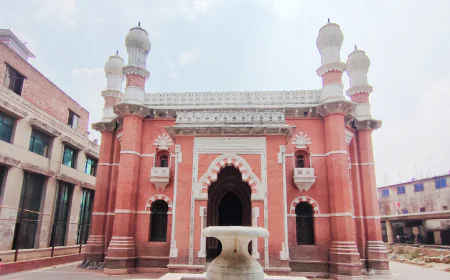
The mosque exemplifies the characteristic single-domed style that became widely popular during the Bengal Sultanate period, reflecting both structural ingenuity and aesthetic sophistication.
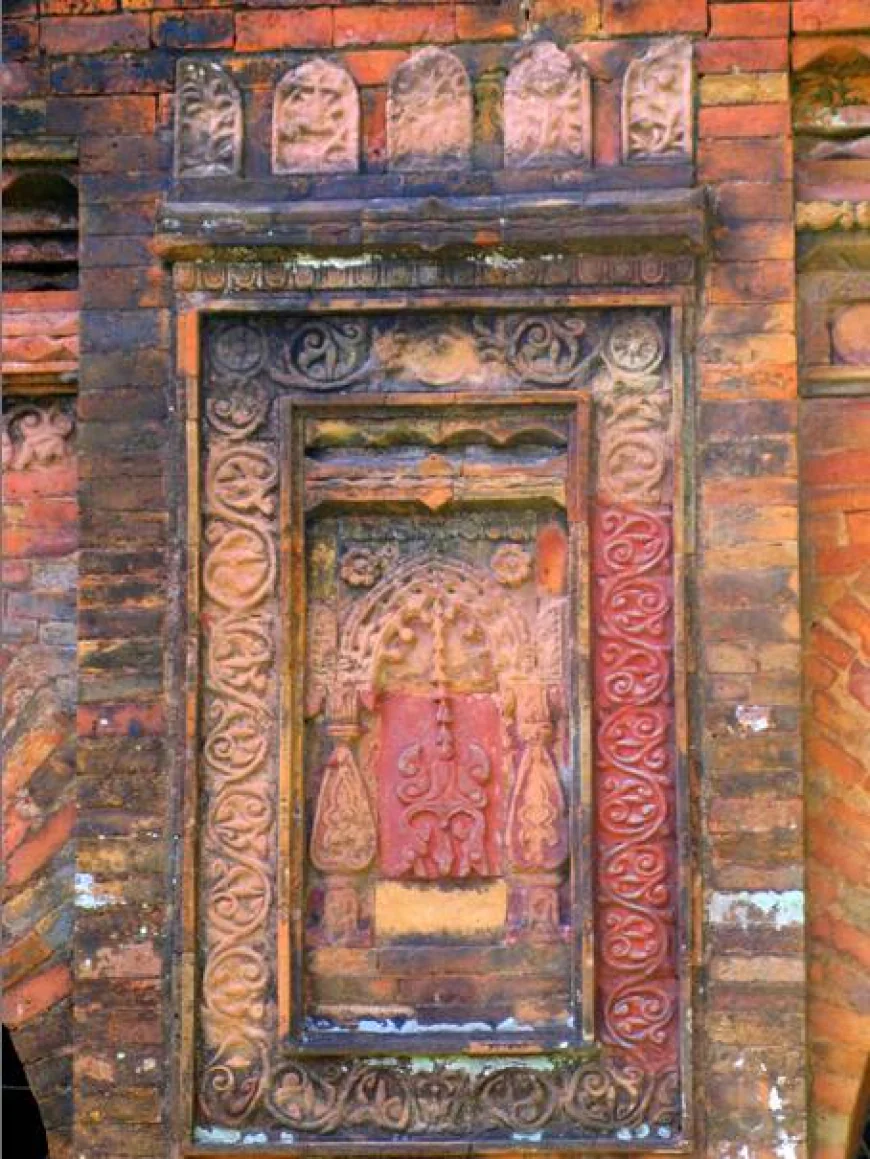
The intricate design on the wall of the mosque. Photo: Collected
A unique architectural masterpiece
The Goaldi Mosque is a single-domed edifice constructed with lime mortar, red bricks and stone. Despite the passage of time, intricate decorative motifs remain visible on the outer walls and pillars, showcasing the artistic excellence of the craftsmen of that era.
The eastern side of the mosque features three arched entrances, while the northern and southern sides each contain a single arched doorway. The central dome rises gracefully over four corner arches that form the structural base. Inside, the mosque is adorned with Arabic calligraphic ornamentation.
The mihrab and pulpit are decorated with elegant dark-toned designs, enhancing the solemn and spiritual ambience of the prayer hall. A valuable black stone embedded above the mihrab further adds to its historical significance.
A magnet for visitors
The mosque attracts numerous local and foreign visitors every day. Tourists visiting Sonargaon, 36km from the capital, often consider it a must-see destination for a direct connection with Bengal’s rich past.
Dheu, a university student visiting from Dhaka, told BSS: “Every ancient monument in Sonargaon introduces us to our early civilisation. When I look at the terracotta designs of Goaldi Mosque, I realise how extraordinarily skilled our artisans were 500 years ago.”
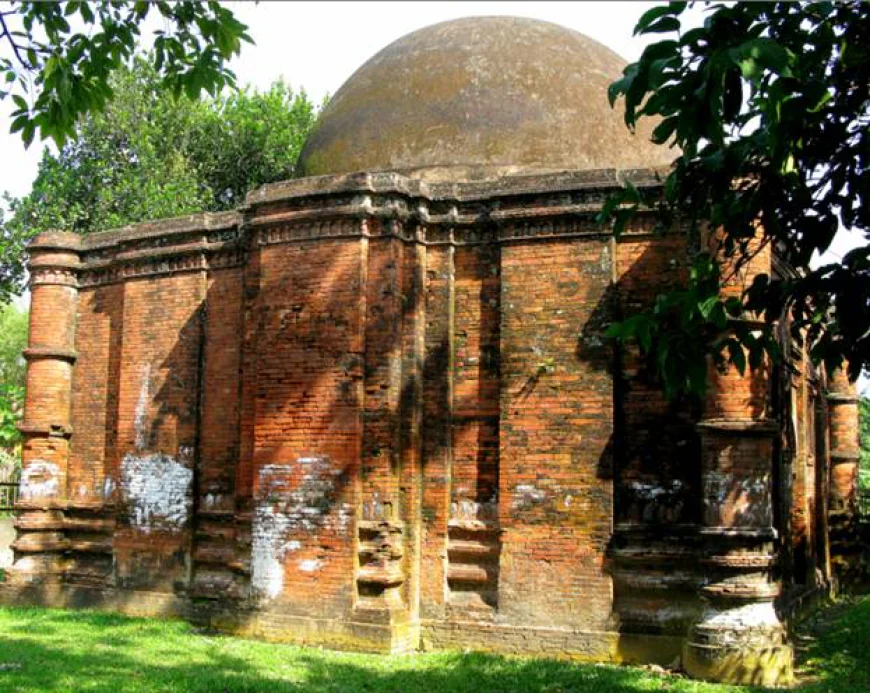
For decades, Goaldi Mosque was in utter ruins until its restoration in 1975. Photo: Collected
Conservation and future plans
The mosque is currently under the supervision of the Department of Archaeology. A boundary wall has been constructed around the site to protect it from encroachment and damage.
However, experts have expressed concern over cracks that have appeared in different parts of the structure and the potential impact of salinity and environmental factors on its decorative elements.
Shahed Kayes, convener of the Sonargaon History, Heritage and Archaeological Preservation Committee, said that although the outer boundary wall has been painted, restoration of the cracked sections of the mosque is urgently needed.
“If renovation is carried out carefully, preserving the original architectural style and structural integrity, the mosque can be sustained for several more centuries,” he said.
Afroza Khan Mita, regional director of the Department of Archaeology, told BSS that a tender has already been floated for renovation works. “We expect the restoration work to begin within the next week,” she said.
As one of the finest surviving examples of Sultanate architecture in Sonargaon, the Goaldi Mosque continues to stand in silent grandeur, embodying the enduring legacy of Bengal’s rich historical and cultural heritage.
What's Your Reaction?
 Like
0
Like
0
 Dislike
0
Dislike
0
 Love
0
Love
0
 Funny
0
Funny
0
 Wow
0
Wow
0
 Sad
0
Sad
0
 Angry
0
Angry
0


Comments (0)