

Outbound tourism grapples with visa hurdle: BOTOF president
Although there has been political stability in recent months, Bangladesh's international connectivity is yet to return to previous levels as visa processing still remains the biggest challenge

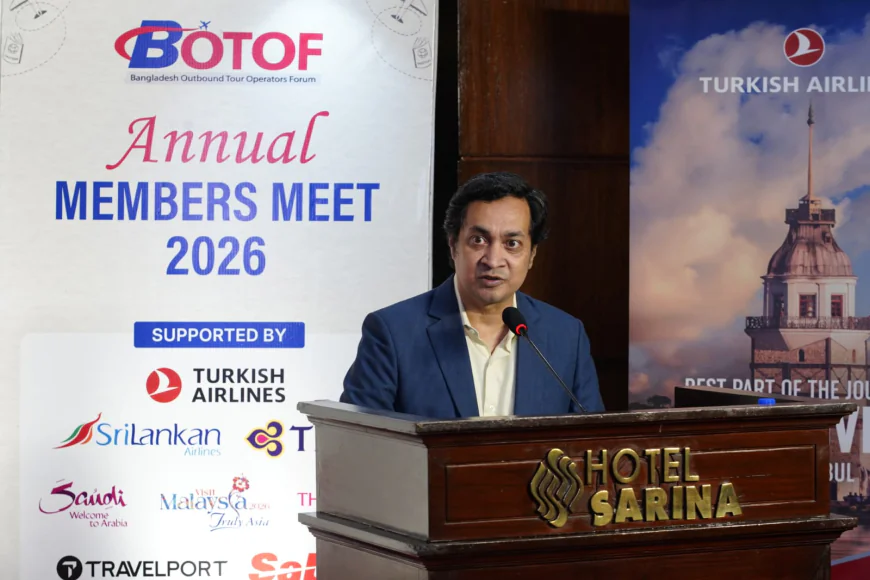
The outbound tourism industry in Bangladesh is facing significant challenges due to visa restrictions, limited international connectivity and high airfares, said Chowdhury Hasanuzzaman Rony, president of Bangladesh Outbound Tour Operators Forum (BOTOF). In an exclusive interview with the Aviation and Tourism Times (ATT), he discussed the current state of the sector, its key challenges and the way forward. Read excerpts of the interview below.
ATT: What is your overall assessment about the current state of outbound tourism from Bangladesh?
Rony: The business situation of outbound travel market is currently in a fragile state. Although there has been political stability in recent months, Bangladesh's international connectivity is yet to return to previous levels. The biggest challenge remains visa processing, as many countries have not fully restored normal visa services for Bangladeshi travellers. As obtaining a visa is the first prerequisite for international travel, these restrictions are dealing a heavy blow to the country's outbound tourism.
ATT: Which destinations are currently most popular among Bangladeshi travellers?
Rony: Traditionally, neighbouring countries account for the largest share of outbound travel from Bangladesh. Until 2023-24, around 40% of the outbound Bangladeshi tourists used to go to India, the biggest market for the outbound tour operators. However, with Indian tourist visas still suspended, many travellers are opting for alternative destinations.
At present, Nepal, Bhutan, Sri Lanka, the Maldives, Thailand, Malaysia, Indonesia, Singapore and China are among the most popular destinations. China is also attracting an increasing number of Bangladeshi medical tourists.
ATT: What are the biggest challenges facing outbound tour operators today?
Rony: Outbound tourism depends not only on tourism policies obtained and implemented by the govertnment, but also on Bangladesh's foreign relations and international connectivity. Visa restrictions are the biggest challenge for the sector which ultimately have resulted in a stumbling block.
In addition, travellers often face difficulties at immigration desks and airports. We need faster immigration services, better ground handling and quicker baggage delivery. Sometimes passengers have to wait more than two hours to receive their luggage after landing. These issues negatively affect the overall travel experience.
ATT: What is your vision for the outbound tourism sector for the next five years?
Rony: Bangladesh has strong potential to expand the tourism sector if only adequate infrastructure is developed alongside improved service standards. We need a modern and digitally driven tourism industry with the capacity to deliver all kinds of services no sooner had the tourist asked for it.
Travel agencies must digitalise all kinds of services including sales, reservations and marketing wings. We must achieve the capacity to adapt quickly with the rapidly changing world of artificial intelligence and newer technologies; we must adapt quickly. Otherwise, we risk lagging behind our regional competitors.
ATT: What policy support is needed from the government?
Rony: The government should work closely with tour operators in formulating tourism-related policies. A more operator-friendly environment with a stronger policy support are essential for the sector's growth through providing uninterrupted services.
Authorities should also improve airport services and immigration facilities in addition to building tourism-related infrastructure. The government support is expected to play a vital role in developing a competitive tourism industry.
ATT: What impact do visa restrictions and airfares have on outbound tourism growth?
Rony: Visa restrictions, imposed by a number of countries since the fall of Sheikh Hasina-led Awami League government on 5 August 2024, have significantly reduced travel demand in several key markets. Airfares from Bangladesh are also relatively high compared to neighbouring countries.
Greater airline competition and expanded international connectivity could help bring down ticket prices. We hope the opening of the third terminal at Hazrat Shahjalal International Airport will attract more airlines and help create a more competitive market, ultimately benefiting both the travellers and tour operators.
ATT: What steps is BOTOF taking to improve service standards in the industry?
Rony: BOTOF currently has more than 150 member organisations. We regularly organise training programmes, seminars and networking events to improve professional standards and create skilled manpower across the industry.
We work with foreign tourism boards to keep our members informed about new destinations and travel trends. We are also engaging with government agencies and other trade bodies to strengthen and develop industry standards. Our ultimate goal is to build a more professional, technology-driven and globally competitive outbound tourism sector for Bangladesh.
What's Your Reaction?
 Like
0
Like
0
 Dislike
0
Dislike
0
 Love
0
Love
0
 Funny
0
Funny
0
 Wow
0
Wow
0
 Sad
0
Sad
0
 Angry
0
Angry
0

Comments (0)