

Swiss talks yield roadmap towards US-Iran deal
The recently signed ceasefire MoU has laid the groundwork for a comprehensive agreement aimed at ending months of regional tensions and military confrontation
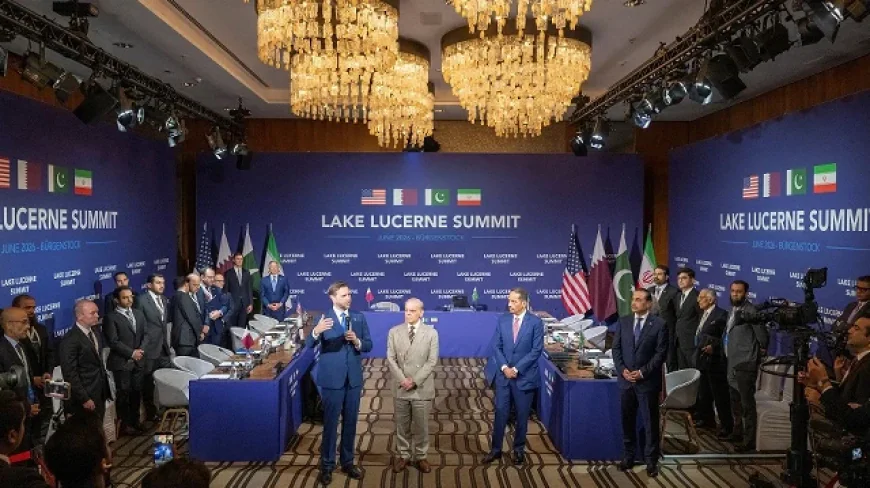
Iranian officials have described the latest round of indirect negotiations with the United States in Switzerland as a significant step towards implementing a recently signed ceasefire memorandum of understanding (MoU) and laying the groundwork for a comprehensive agreement aimed at ending months of regional tensions and military confrontation.
The Iranian delegation, headed by Parliament Speaker Mohammad Baqer Qalibaf, returned to Tehran on Monday after nearly 18 hours of intensive consultations in Bürgenstock, Switzerland.
The team included Foreign Minister Abbas Araghchi and other senior officials, according to Tehran Times.
The talks, facilitated by Pakistan and Qatar, brought together Iranian and US representatives in a series of bilateral and quadrilateral meetings focused on implementing provisions of the Islamabad MoU, which was signed on June 17 following several weeks of negotiations.
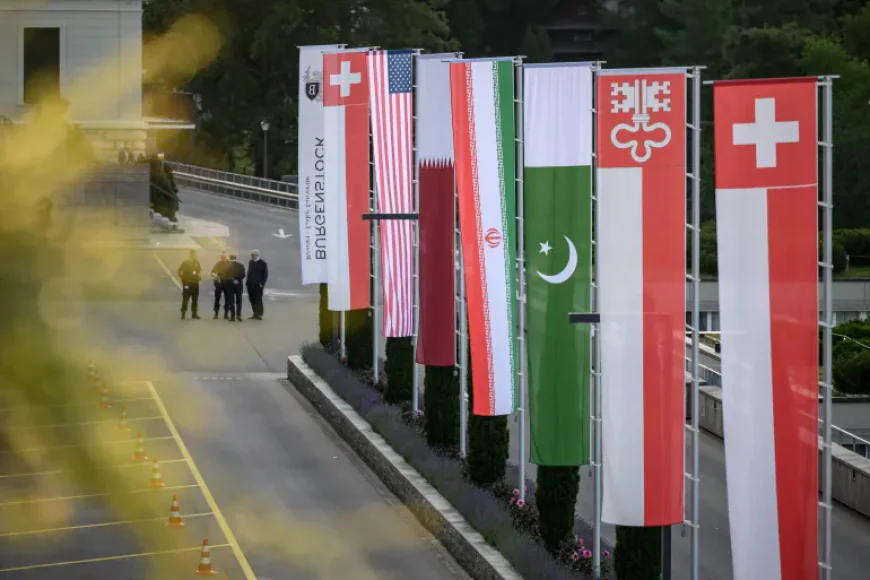
Flags of Switzerland, United States, Qatar, Pakistan and local Swiss canton of Nidwalden are photographed at the Burgenstock luxury hotel complex overlooking Lake Lucerne, Switzerland, on Saturday (June 21, 2026), before high-level talks aimed at advancing a deal to end the war. Photo: AFP
In a joint statement issued after the talks, Pakistan and Qatar announced that the parties had agreed on a 60-day roadmap towards a final agreement, the establishment of specialised working groups, and the continuation of expert-level and technical negotiations. The mediators also outlined mechanisms for monitoring implementation, maintaining communication channels, and addressing regional issues in support of diplomacy and de-escalation.
Foreign Minister Abbas Araghchi said the negotiations had produced tangible progress on several issues that Tehran had identified as prerequisites for advancing discussions towards a final settlement.
On Monday, Araghchi announced significant progress in ending the war in Lebanon, largely due to the tireless mediation efforts of Pakistan and Qatar.
According to Araghchi, measures linked to the lifting of restrictions on Iran’s oil and petrochemical exports have begun to take effect, portions of Iran’s frozen assets have been released, and plans have been launched to support reconstruction and economic recovery following the damage caused during the February war.
Araghchi also highlighted the Lebanon deconfliction cell as the 'first real test'.
Iranian officials have repeatedly emphasised that implementation of these commitments is essential before negotiations on a broader agreement can formally begin.
Foreign Ministry spokesman Esmaeil Baqaei reiterated that Tehran’s approach remains based on the principle of 'commitment for commitment', stressing that Iran will closely monitor the implementation of obligations by the other side while fulfilling its own responsibilities under the agreement.
“The basis of our work is commitment in exchange for commitment,” Baqaei said, adding that Iran would utilise all available mechanisms to ensure that agreed commitments are implemented in practice.
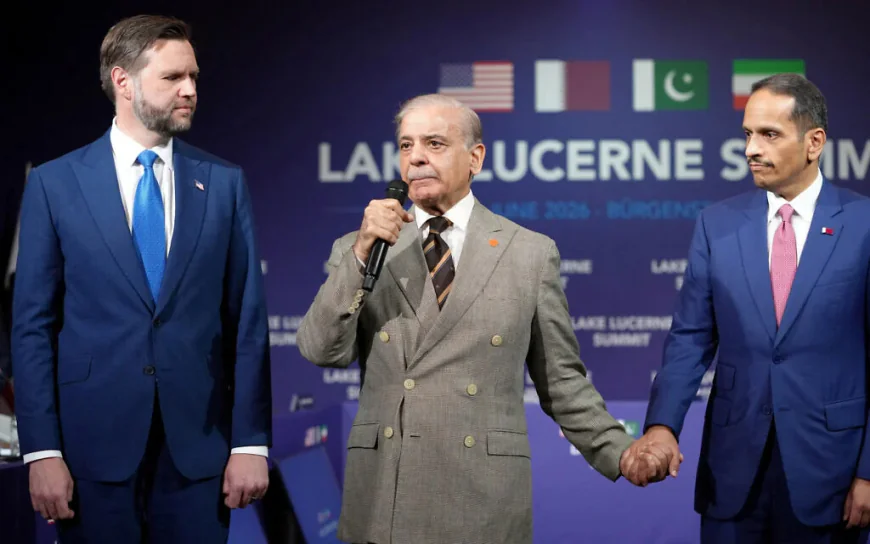
Pakistan's Prime Minister Shehbaz Sharif (C) speaks next to US Vice President JD Vance (L) and Qatar's Prime Minister and Minister for Foreign Affairs Sheikh Mohammed bin Abdulrahman bin Jassim Al-Thani during a quadrilateral meeting between the United States, Iran, Pakistan and Qatar at the Burgenstock luxury hotel complex overlooking Lake Lucerne, Switzerland, on Sunday (June 21, 2026). Photo: Nathan Howard/AFP
Iran maintains cautious optimism as domestic support for diplomacy grows
Iranian officials have expressed cautious optimism following the latest round of negotiations with the United States in Switzerland, while emphasising that any progress towards a final agreement will depend on the implementation of commitments already outlined in the recently signed memorandum of understanding.
Foreign Ministry spokesman Baqaei said the Iranian delegation clarified Tehran’s positions 'clearly and unequivocally' during the talks and stressed that discussions on a comprehensive settlement, including nuclear-related issues, cannot begin until key provisions of the agreement are put into effect.
According to Iranian officials, the negotiations included an exchange of views on sanctions relief and the nuclear issue. Tehran, however, emphasised that these discussions did not constitute formal negotiations on a final agreement and reiterated that the complete lifting of US sanctions remains one of its principal objectives.
Despite describing the Geneva talks as constructive, Iranian authorities continue to approach the diplomatic process with caution. Abdollah Haji Sadeghi, the Leader’s representative to the Islamic Revolution Guard Corps (IRGC), said the Islamic Republic is negotiating from a position of strength, placing its trust in Iranian negotiators rather than in the United States or other adversaries. He added that while Iran remains committed to diplomacy, it possesses the capability and determination to safeguard its rights through other means if necessary.
The diplomatic process has also received support from figures across Iran’s political spectrum, reflecting a broad domestic consensus in favour of pursuing negotiations while remaining vigilant regarding Washington’s compliance with its commitments.
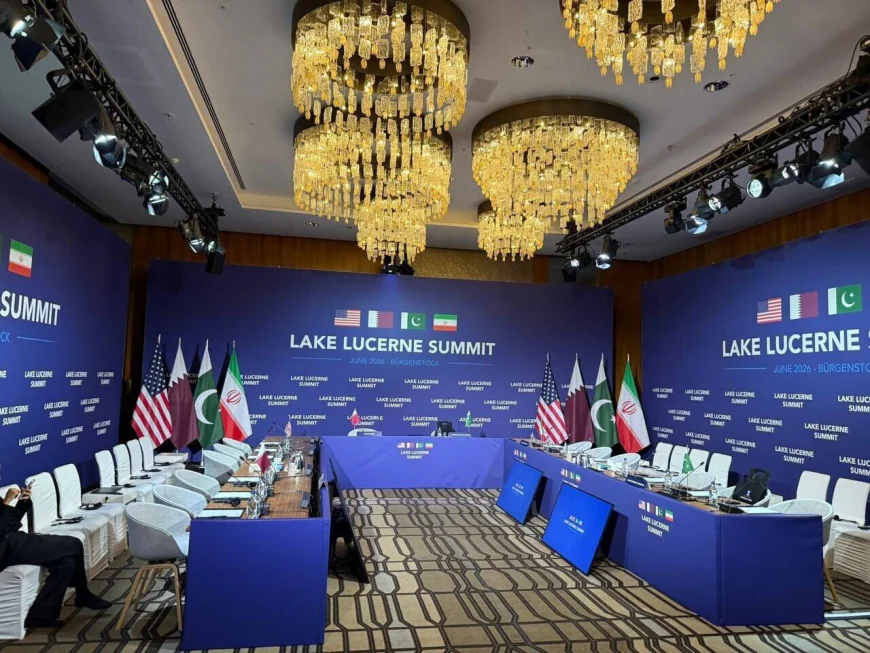
The conference room at the Buergenstock resort at Obbuergen city in Switzerland where the US-Iran peace talks kicked-off on Sunday. Photo: Iran International
President Masoud Pezeshkian said Iran entered the negotiations “with dignity, confidence, and without making concessions”, adding that Tehran had secured the provisions it sought and would firmly defend its rights throughout the process.
Iran’s caretaker Defence Minister, Brigadier General Majid Ebnolreza, also, in a telephone conversation with Pakistan’s Defence Minister, Khawaja Muhammad Asif, stressed that Tehran remains cautious despite the signing of the MoU, emphasising that Iran’s Armed Forces would respond decisively to any violation of the agreement.
Alireza Novin, a parliamentarian, likewise argued that the understanding reached with the United States was achieved from a position of strength rather than necessity. He said Iran’s strategic capabilities and public support have strengthened its position in both regional affairs and diplomatic negotiations.
Reformist politician Esmaeil Gerami Moghaddam, chairman of the National Trust Party, also voiced support for the negotiating team despite longstanding concerns regarding US reliability. He stressed that any agreement would proceed within Iran’s established decision-making framework and warned against attempts to politicise the negotiation process.
The comments highlight a broader convergence among Iranian political currents on the need to continue diplomatic engagement while carefully monitoring the implementation of commitments by the United States.
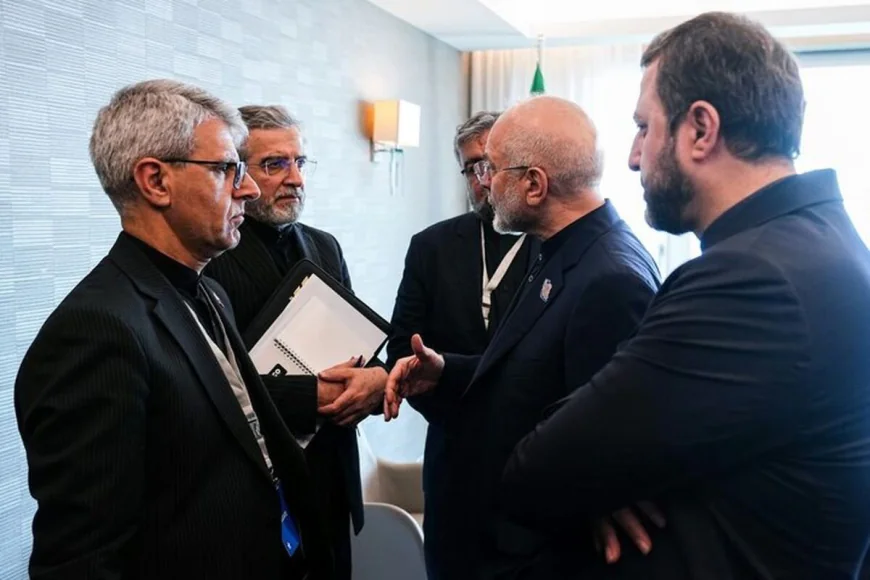
The Iranian delegation discuss among themselves during the Lake Lucerne Summit at the Buergenstock resort at Obbuergen city in Switzerland where the US-Iran peace talks kicked-off on Sunday. Photo: Tehran Times
The latest negotiations come after months of heightened tensions and military confrontation involving Iran, the United States and Israel. The memorandum of understanding signed on June 17 established the first formal framework for ending hostilities and opening a pathway towards broader political and security negotiations.
Iranian officials have repeatedly pointed to the experience of the 2015 Joint Comprehensive Plan of Action (JCPOA) as a reason for their cautious approach. Tehran argues that shortcomings in the implementation of previous agreements underscore the importance of effective verification mechanisms and reciprocal commitments in any future settlement.
While the Geneva talks have generated diplomatic momentum, analysts say significant challenges remain. Future negotiations are expected to focus on sanctions relief, the release of frozen Iranian assets, regional security arrangements and nuclear-related issues that are likely to require complex technical discussions and sustained political engagement.
For now, Tehran and the mediating countries have portrayed the Swiss negotiations as an important step towards transforming a fragile ceasefire into a durable diplomatic process, while acknowledging that considerable work remains before a final agreement can be reached.
What's Your Reaction?
 Like
0
Like
0
 Dislike
0
Dislike
0
 Love
0
Love
0
 Funny
0
Funny
0
 Wow
0
Wow
0
 Sad
0
Sad
0
 Angry
0
Angry
0
Comments (0)