

The story of a cabin crew
After more than 66 years in the air, the industry’s longest-serving flight attendant prepares to retire

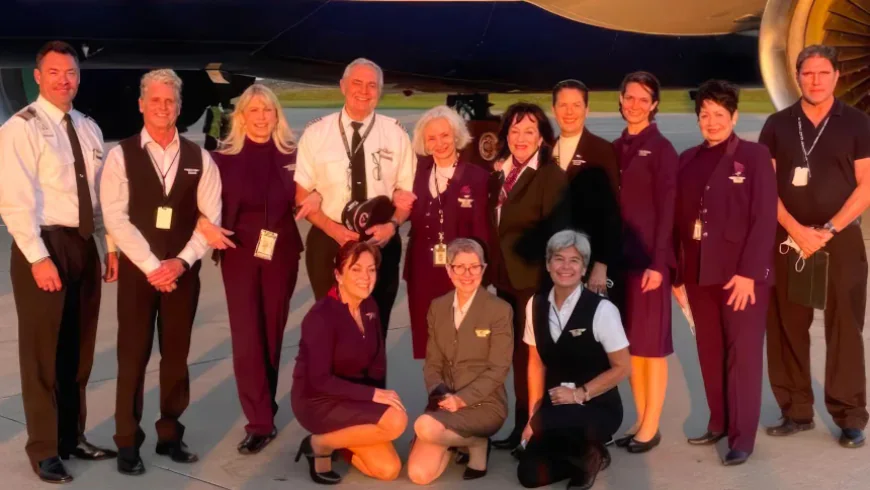
Being cabin crew always held a certain glamour for Joan Prince Crandall.
It opened doors to new experiences and gave her the opportunity to travel the world and learn new things. She remembers the days of high heels and fashion in the skies—much of which has disappeared today, reports US news outlet CNN.
After more than 66 years, memories of that glamour are one reason she is still flying. Her employer, Delta Air Lines, believes she is the industry's longest-serving flight attendant—the title that replaced "stewardess" decades ago.
"That has been my career—from stewardess to flight attendant," she told CNN in an interview.
Prince Crandall began her career at Pacific Airlines in 1959, flying on propeller aircraft such as the Martin 404 and the Fairchild F-27. The first aircraft she worked on was a Douglas DC-3, a 24-passenger plane.
"The airlines wanted young women who had a glamorous look," she said.
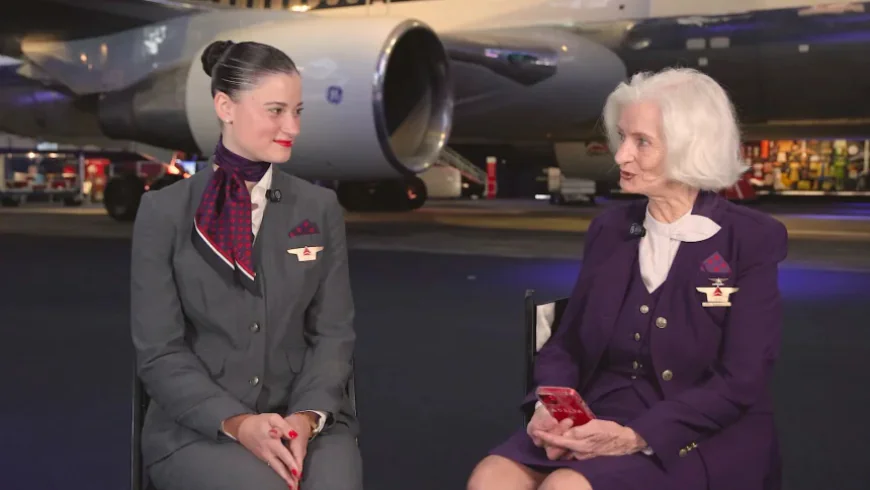
Delta Air Lines flight attendants Alise Broussard and Joan Prince Crandall. Photo: Delta Air Lines
However, as technology has evolved, so too has the profession: from the early days of fashion statements such as go-go boots and a strong emphasis on service to a role that is critical to airline safety. Flight attendants, while still smartly dressed and serving food and drinks, are also on the front line during aviation emergencies, helping passengers evacuate and dealing with other critical situations. That aspect of the job has remained unchanged since Prince Crandall began her career, although the number of passengers she is responsible for has grown dramatically.
Over the decades, the airlines she worked for underwent a series of mergers and consolidations. After Pacific came Air West, then Hughes Airwest, Republic Airways, Northwest and, finally, Delta Air Lines in 2008.
Through it all, she kept flying and is now based in Washington state. But her remarkable career was not without challenges.
A difficult start in a male-dominated world
Being a young working woman in the late 1950s and 1960s was no easy task.
Prince Crandall remembers much of the early era of flying fondly: the fashionable uniforms, high-class service and strong focus on safety.
However, stewardesses were also under intense scrutiny. Some airlines imposed strict rules on weight and appearance, required women to leave their jobs if they married and enforced retirement at the age of 32.
Prince Crandall said she knew of other airlines enforcing appearance policies, but she did not encounter those issues with her employers. She does, however, remember the restrictions regarding marriage and age.
"In this day and age, those policies would never have happened," she said.
For many young women, according to Prince Crandall, the profession was viewed as a job to do "for about two years". But many, like her, caught the aviation bug and fought to remain in the profession, build seniority and enjoy the opportunities it offered.
The flight attendant profession dates back to the 1930s, when the first stewardesses—many of them nurses—were hired to assist passengers. Women were selected because they provided "a source of cheap labour", according to the Association of Professional Flight Attendants. Today, the average flight attendant salary is about $70,980, according to the US Bureau of Labor Statistics.
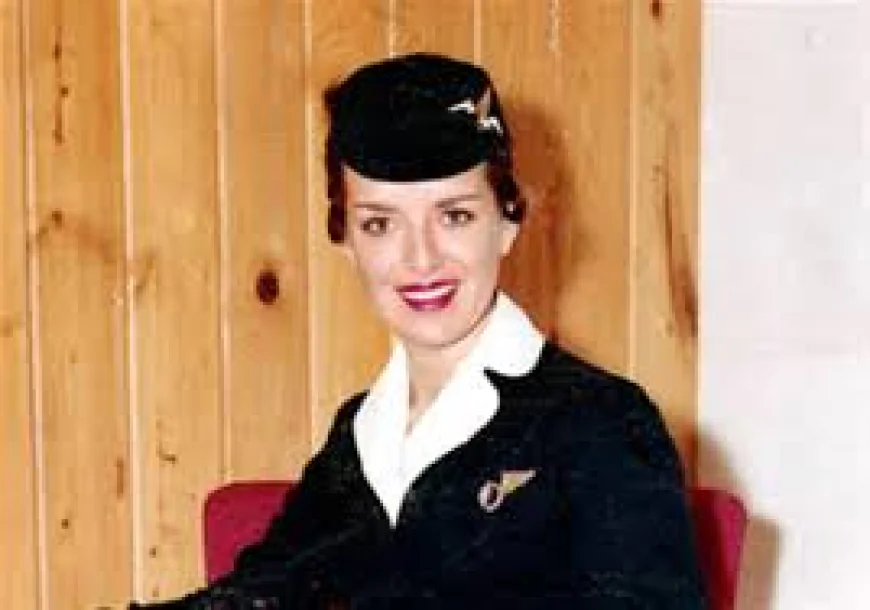
Young Prince Crandall began her career at Pacific Airlines in 1959. Courtesy: Joan Prince Crandall
For Prince Crandall, the past six decades have brought changes far beyond pay.
She remembers when her airline began replacing propeller aircraft with new jets, leaving behind the noisy piston-engine planes that were limited in speed, range and capacity.
"Higher, faster, smoother, more seats," she said, recalling the transition with a broad smile and unmistakable enthusiasm. She can still picture the aircraft, feel the interiors and smell the jet fuel.
"Those changes were just huge," she said.
Another watershed moment came with major civil rights legislation. She vividly remembers the impact of the Civil Rights Act of 1964, particularly on women in the predominantly female profession.
She recalled that the bill initially aimed to ban discrimination based on race, religion, colour or national origin. The addition of the words "and sex" transformed its impact.
According to the National Archives, the prohibition of sex discrimination was likely added as an amendment intended to derail the bill, but it ultimately became law with the protection intact.
"The Civil Rights Act changed life for you and me and women across the country, but it was a huge change for flight attendants," she said.
Flight attendants—and women in many other professions—could now marry or have children without fear of losing their jobs. It paved the way for future generations to pursue careers while maintaining lives outside work.
Passing the torch
After 66 years in the skies, Prince Crandall is preparing to retire and pass the torch to a new generation of flight attendants, including Alise Broussard, who recently graduated from Delta's In-Flight Training Centre.
The two met shortly after Broussard completed her training. Prince Crandall described the experience as a moment of déjà vu.
Broussard told CNN that on her first day she was asked to write down why she wanted to become a flight attendant. She was still completing her degree at Louisiana State University when she accepted the position.
"For me, the biggest part of it was the true emotional connection with Delta employees and passengers," Broussard said.
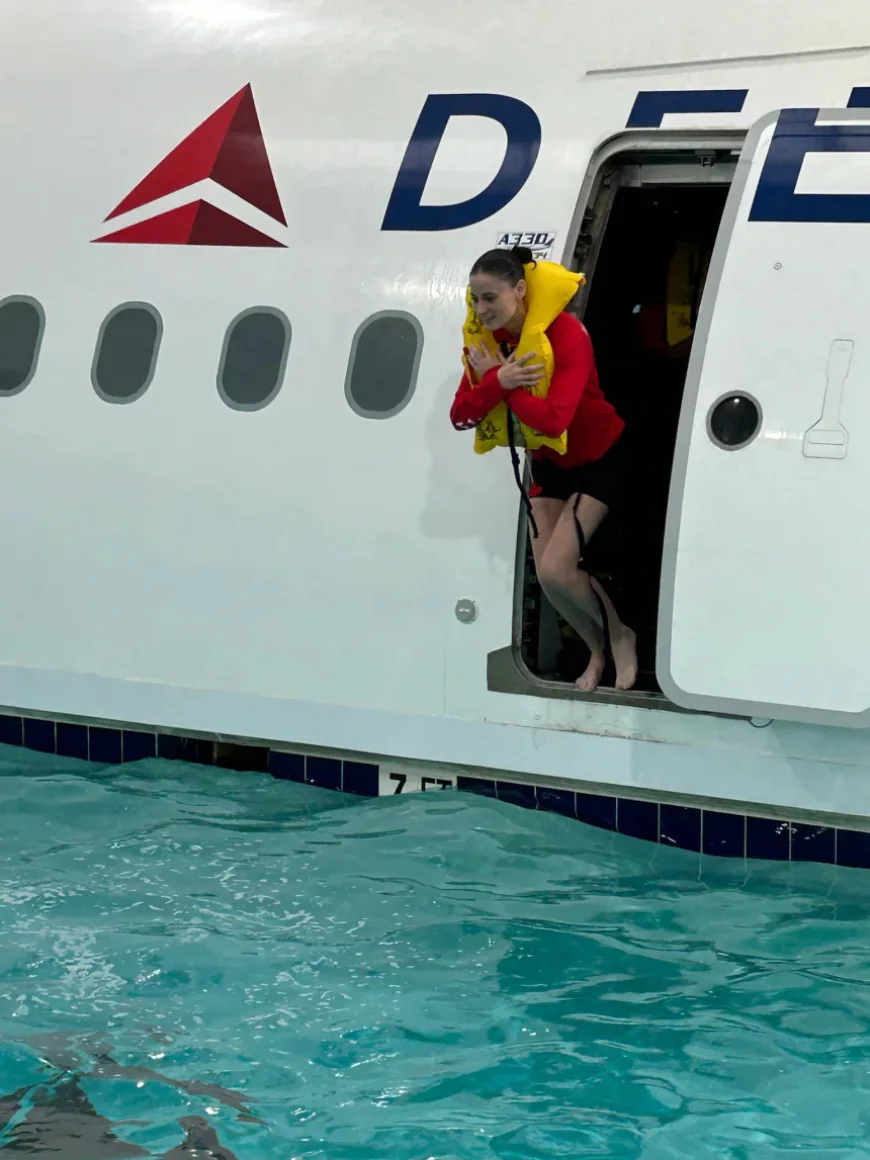
Alise Broussard participates in Delta Air Lines emergency landing training. Courtesy: Alise Broussard
It is that emotional connection to the wider world that Prince Crandall has cherished since the 1950s. During her career, aviation witnessed rapid advances; both the moon landing and the Boeing 747 arrived within a decade of her first days as a stewardess.
"I like to think of it as being in this long silver tube, but faster, higher," she said while reflecting on technological progress. "It's been an education, quite wonderful."
Yet some of the most important aspects of the job—safety and connecting people with the world—have stood the test of time.
"The job—it's harder, it's longer," she said when reflecting on the changes.
A Delta Airbus A350-900 can carry 306 passengers—nearly eight times as many as Pacific's propeller-driven Martin 404.
These days, she often serves as the lead flight attendant on her routes, a position known as flight purser, responsible for leading the cabin crew.
Once she retires, Prince Crandall plans to write a book and continue travelling. Among her favourite destinations are Paris, Mumbai and Hong Kong.
"I've been lucky," she said. "I'm physically healthy, and it's still fun."
This time, however, she will not be taking drink orders or delivering safety briefings. Instead, she will simply be exploring the world.
What's Your Reaction?
 Like
0
Like
0
 Dislike
0
Dislike
0
 Love
0
Love
0
 Funny
0
Funny
0
 Wow
0
Wow
0
 Sad
0
Sad
0
 Angry
0
Angry
0





Comments (0)