

Third Terminal agreement uncertain as revenue dispute deepens
At the heart of the impasse lies a revised financial proposal from the Japanese consortium, which is seeking 22.5% of per-passenger revenue during the initial five years of operation, with the share potentially rising to 27%

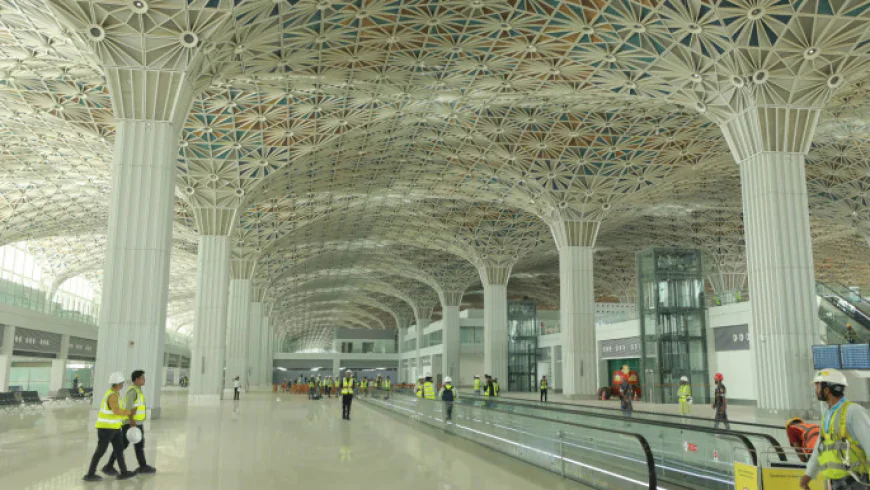
Uncertainty is deepening over the operational launch of the long-awaited third terminal at Hazrat Shahjalal International Airport, as negotiations between the Bangladesh government and a Japanese consortium remain deadlocked over revenue-sharing and risk allocation terms.
Despite multiple rounds of high-level talks, both sides have yet to reach a consensus, raising fresh concerns that the state-of-the-art facility—already more than 99% complete—may miss its expected operational timeline this year.
At the heart of the impasse lies a revised financial proposal from the Japanese consortium, which is seeking 22.5% of per-passenger revenue during the initial five years of operation, with the share potentially rising to 27%.
In the cargo segment, the consortium has proposed a similar revenue range, or alternatively a fixed charge per tonne.
Bangladesh authorities have stopped short of endorsing the proposal, citing long-term fiscal risks and concerns over national interest. Officials say the structure could result in a substantial outflow of revenue to the foreign operator during the early years of operation—precisely when the government is under pressure to service loans, including those from the Japan International Cooperation Agency (JICA), which financed the terminal’s construction.
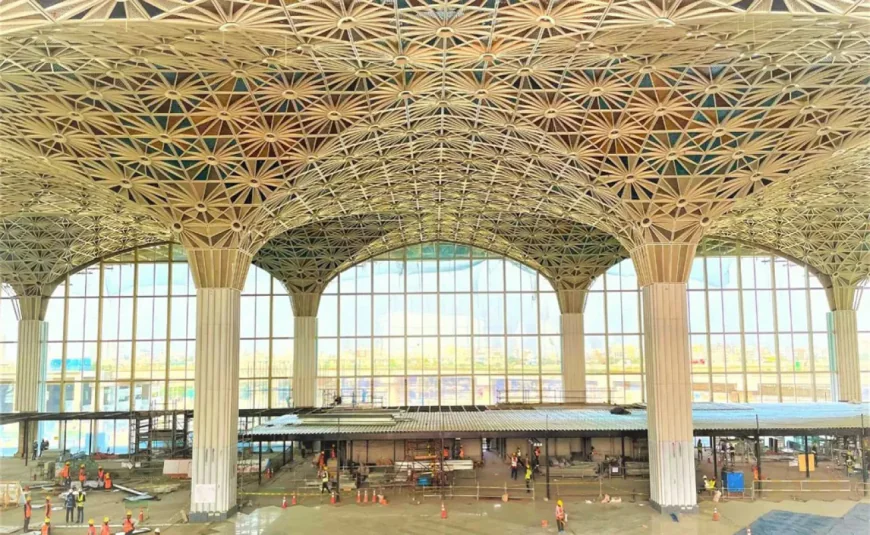
Third Terminal of Hazrat Shahjalal International Airport. Photo: BSS
A key sticking point is the proposed “risk-sharing model”. Under the framework, if actual revenues exceed projections by more than 10%, 75% of the surplus would go to the Civil Aviation Authority of Bangladesh (CAAB).
However, if revenues fall short by the same margin, Bangladesh would bear 75% of the losses.
Policymakers in Dhaka view this asymmetry as potentially leaving the country exposed to disproportionate downside risk.
Aviation expert Kazi Wahidul Alam told the Aviation And Tourism Times that slower-than-expected growth in passenger traffic or cargo demand could leave Bangladesh facing significant financial liabilities.
“Given the existing debt burden, especially from JICA financing, any agreement must be carefully structured to avoid long-term fiscal stress,” he said, adding that a balanced compromise could still deliver reputational and economic gains.
The Japanese consortium—comprising major firms including Sumitomo Corporation and Sojitz Corporation, along with airport operators linked to Narita and Haneda—has defended its proposal as commercially viable and “balanced”.
It has also pledged to introduce advanced operational systems, digital technologies, and international best practices to help transform Dhaka into a regional aviation hub.
Officials in Dhaka, however, have made it clear that operational expertise alone will not be the deciding factor.
“Safeguarding financial interests and maintaining sovereign control remain our top priorities,” a senior government official said, noting that further scrutiny of the proposal is underway.
State Minister for Civil Aviation and Tourism M Rashiduzzaman Millat confirmed that Bangladesh has formally requested a revised offer. “If a mutually acceptable agreement is reached, it may take around three months to finalise the contract,” he said.
Even if negotiations move forward, industry insiders caution that operational readiness could take considerably longer.
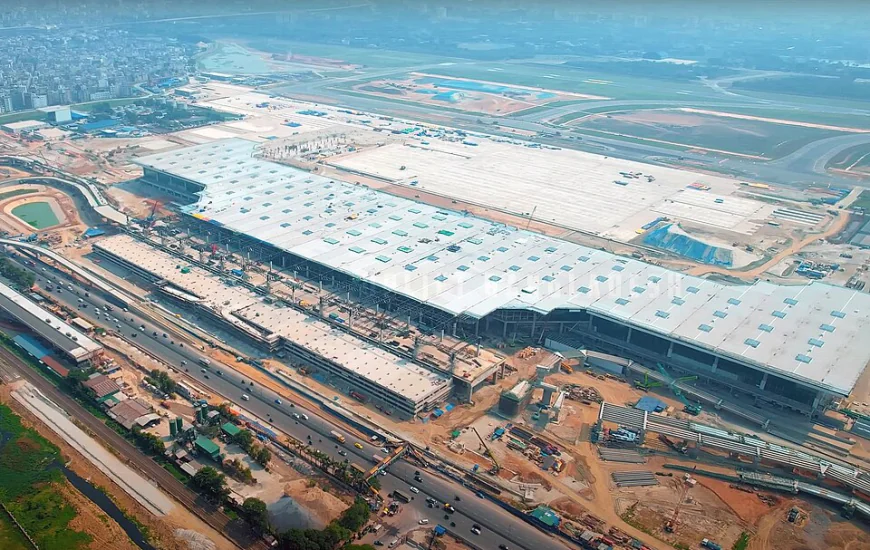
Construction underway for the Third Terminal of Hazrat Shahjalal International Airport, Dhaka. Photo: Wikipedia
Establishing a local operating entity, procuring equipment, and coordinating multiple agencies—including immigration and customs—are expected to take additional time.
Some officials privately estimate that the terminal may not become fully operational for another one to one-and-a-half years.
The delays are particularly striking given the project’s timeline. Construction of the third terminal began in 2019 and was formally inaugurated in October 2023, but commercial operations have yet to commence due to unresolved management and revenue-sharing issues.
Once operational, the new terminal is expected to significantly expand Bangladesh’s aviation capacity, enabling the airport to handle up to 20 million passengers annually—more than double its current throughput.
The facility includes modern baggage systems, self check-in kiosks, expanded aircraft parking, and enhanced passenger amenities designed to align with leading international hubs.
For now, however, the future of the terminal hangs in the balance, hinging on whether Dhaka and its Japanese partners can bridge their differences over how the revenues—and the risks—are shared.
What's Your Reaction?
 Like
0
Like
0
 Dislike
0
Dislike
0
 Love
0
Love
0
 Funny
0
Funny
0
 Wow
0
Wow
0
 Sad
0
Sad
0
 Angry
0
Angry
0



Comments (0)