

Exotic tulips lure hundreds of tourists to Panchagarh village
Visitors are greeted by a brightly decorated entrance before stepping into what many describe as a living canvas of flowers swaying in the breeze

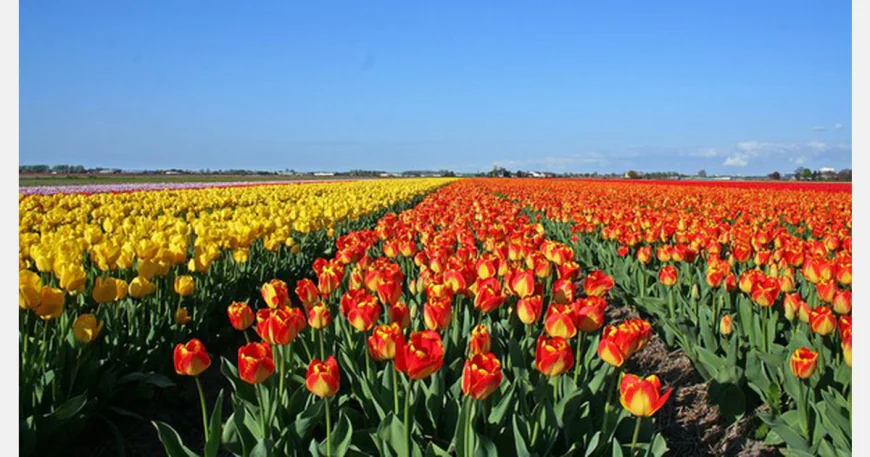
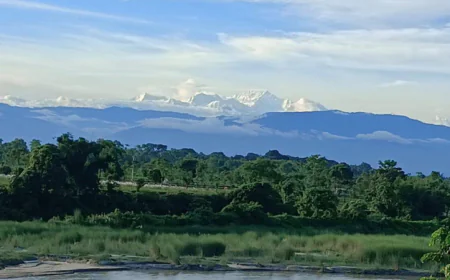
Tentulia in the northern district of Panchagarh is no longer known solely for offering views of the majestic Kanchenjunga; the border village of Dorjipara has now emerged as a vibrant tulip destination, drawing hundreds of visitors each day, and earning comparisons with the Netherlands.
For the fifth consecutive year, exotic tulips have bloomed across a sprawling 60-decimal farm in Tentulia, turning the landscape into a riot of colour. The garden features around 14,000 tulips in five varieties, including Lalibela (red), Denmark, Strong Gold (yellow), and Mystic Van Eyck (pink).
Visitors are greeted by a brightly decorated entrance before stepping into what many describe as a living canvas of flowers swaying in the breeze. Special shading systems have been installed to regulate sunlight and temperature, enhancing both the visual appeal and growing conditions of the delicate blooms.
Crowds from across the country are flocking to the garden each day. With entry regulated through ticket sales, visitors can be seen snapping selfies, strolling through the fields, and buying tulips as gifts for loved ones.
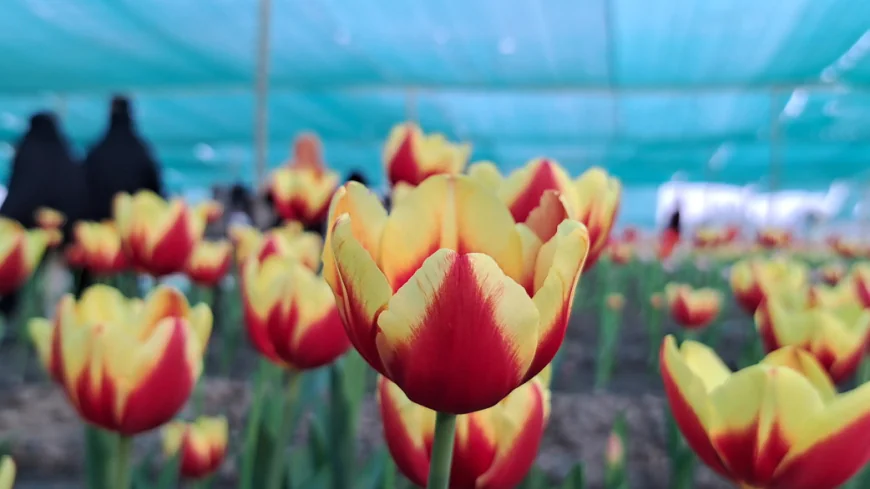
The garden features around 14,000 tulips in five varieties, including Lalibela (red), Denmark, Strong Gold (yellow), and Mystic Van Eyck (pink). Photo: UNB
The farm has been developed through the efforts of 10 marginalised women entrepreneurs under the initiative of the Eco Social Development Organization. What began as a pilot project in 2022 has since blossomed into a thriving enterprise, breathing new life into the local economy.
Farmer Rabiul Islam said each tulip bulb costs approximately Tk 80 to import from the Netherlands. Cultivation requires intensive daily care and protection from adverse weather. Each stem is currently being sold for Tk 100 and is enjoying strong demand. In addition to meeting local needs, tulips are also being supplied to markets in Dhaka.
Tulips, traditionally grown in colder climates, require daytime temperatures of around 15 degrees Celsius and nighttime temperatures close to 10 degrees Celsius. Buds typically appear within 18 to 20 days of planting, and under favourable conditions, the flowers can last between 25 and 60 days.
Abdul Matin, deputy director of the District Department of Agricultural Extension (DAE), said the climate in Panchagarh has proved suitable for tulip cultivation. “With modern technology and proper care, tulip farming has created strong commercial potential here. We are providing technical support to farmers to expand cultivation on a larger scale,” he added.
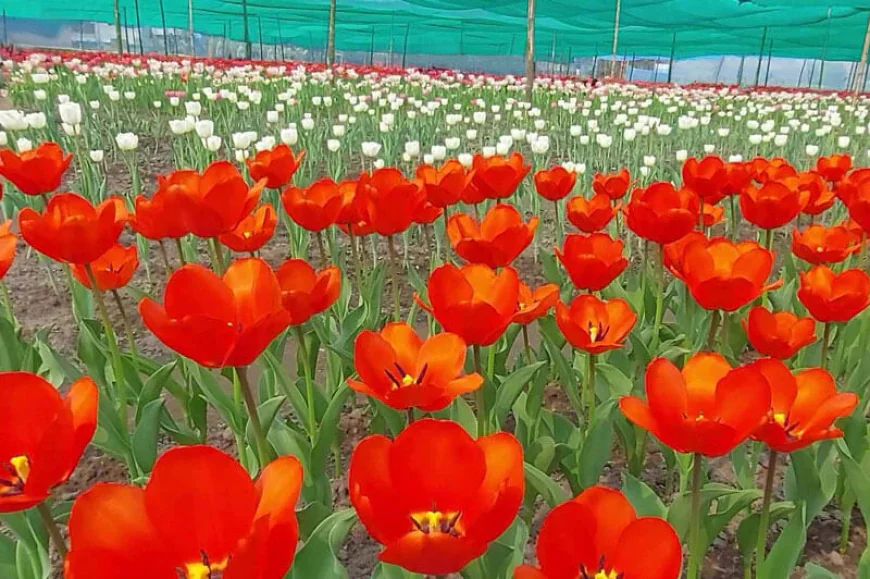
Dorjipara village, at Tetulia in Panchagarh, thrives with vibrant tulip blooms, boosting tourism. Photo: UNB
ESDO Founder and Executive Director Dr Muhammad Shahid Uz Zaman said the initiative aims to make small farmers self-reliant and reduce dependence on imported tulips. “What started as a dream five years ago has now become a reality. It has also opened up opportunities for eco-community tourism in Tentulia,” he added.
With its vibrant fields and growing commercial success, Tentulia’s tulip garden is fast emerging as a new symbol of agricultural innovation and rural tourism in northern Bangladesh.
What's Your Reaction?
 Like
0
Like
0
 Dislike
0
Dislike
0
 Love
0
Love
0
 Funny
0
Funny
0
 Wow
0
Wow
0
 Sad
0
Sad
0
 Angry
0
Angry
0


Comments (0)