Europe attracts more Bangladeshi workers
Legal migration rises 46% in the first half of the current calendar year as Gulf recruitment weakens amid Middle-East tensions
 ATT Correspondent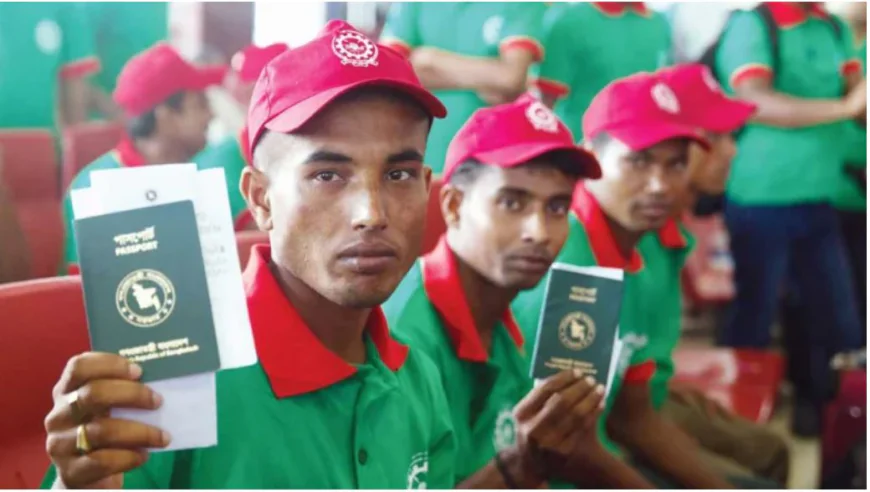
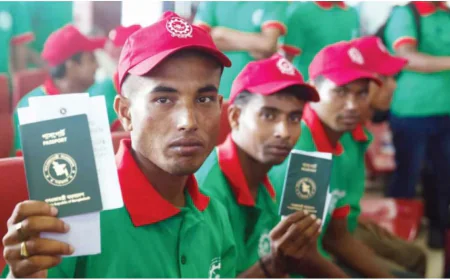
The dream continent of Europe is emerging as a key destination for Bangladeshi migrant workers, with legal migration to the continent rising sharply despite a significant decline in overall overseas employment caused by weakening recruitment in the Gulf.
According to the latest data from the Bureau of Manpower, Employment and Training (BMET), 18,220 Bangladeshis migrated legally to European countries between January and June 25, 2026, marking a 46.4% increase from 12,445 during the same period last year.
The strong European performance comes at a time when Bangladesh's traditional labour markets in the Gulf have slowed considerably. Recruitment to Gulf countries fell by 38.2% year-on-year to 257,967 workers from 417,343, largely due to the impact of the Iran conflict, tighter Saudi visa restrictions and broader regional uncertainty. As a result, Bangladesh's total overseas employment declined by around 28% during the first half of the year.
Labour market experts said the contrasting trends highlight the growing importance of diversifying Bangladesh's overseas employment destinations beyond the Gulf, which has historically absorbed the vast majority of the country's migrant workforce.
Italy has emerged as the leading European destination for Bangladeshi workers following renewed cooperation between Dhaka and Rome to promote legal migration and discourage irregular movement. During the first six months of this year, Italy recruited 4,645 Bangladeshi workers, mainly for seasonal agricultural and related jobs, after hiring 9,365 workers throughout 2025.
Recruitment has also gained momentum in Portugal, Romania, Serbia, Russia and Belarus, reflecting increasing demand for foreign workers across Europe amid persistent labour shortages in construction, agriculture, manufacturing, transport and hospitality.
Encouraged by these developments, the government has stepped up efforts to expand labour migration through bilateral arrangements with several European countries, including Serbia, Greece, North Macedonia, Romania, Portugal and Russia.
Speaking in Parliament earlier this year, Prime Minister Tarique Rahman said Bangladesh was actively exploring alternative overseas labour markets to reduce dependence on the Gulf following recent geopolitical instability in the Middle East.
Migration specialists described Europe's growing demand as a positive development but cautioned that the region still accounts for only a small share of Bangladesh's overseas employment. Of the 357,650 Bangladeshis who migrated abroad for work by June 25 this year, only about 5% went to Europe, while nearly 72% were employed in Gulf countries.
Industry experts believe Bangladesh could secure a much larger share of Europe's labour market if it addresses persistent challenges, including shortages of skilled workers, document fraud, low visa approval rates and concerns among employers over workers leaving their assigned jobs to move illegally to other European countries.
"Employers increasingly want workers with practical skills, technical competence and a willingness to learn," said Sharmin Afroz Shumi, Chairman of Infinity HCM Ltd, a recruitment agency specialising in Europe.
She noted that illegal onward migration by some workers has damaged employers' confidence, leading to stricter recruitment procedures and closer monitoring of Bangladeshi workers.
Despite these challenges, emerging destinations such as Moldova, Cyprus, Bosnia and Herzegovina and North Macedonia are creating fresh opportunities, particularly for skilled workers in construction, mechanics, welding, heavy equipment operation and agriculture.
The financial attraction of Europe is also reflected in remittance flows. According to Bangladesh Bank, Bangladeshi migrants in the United Kingdom remitted around $3.5 billion during the first nine months of FY2025-26, exceeding the $2.6 billion sent from the United Arab Emirates despite the UAE hosting roughly twice as many Bangladeshi workers.
Migration experts said Europe could become a much stronger pillar of Bangladesh's overseas employment strategy, provided the country invests in skills development, strengthens worker screening and restores the confidence of European employers and immigration authorities.