

FIFA World Cup’s new-look Round of 32 delivers drama
The expanded 48-team FIFA World Cup 2026 has delivered an unpredictable tournament as the knockout round moves on

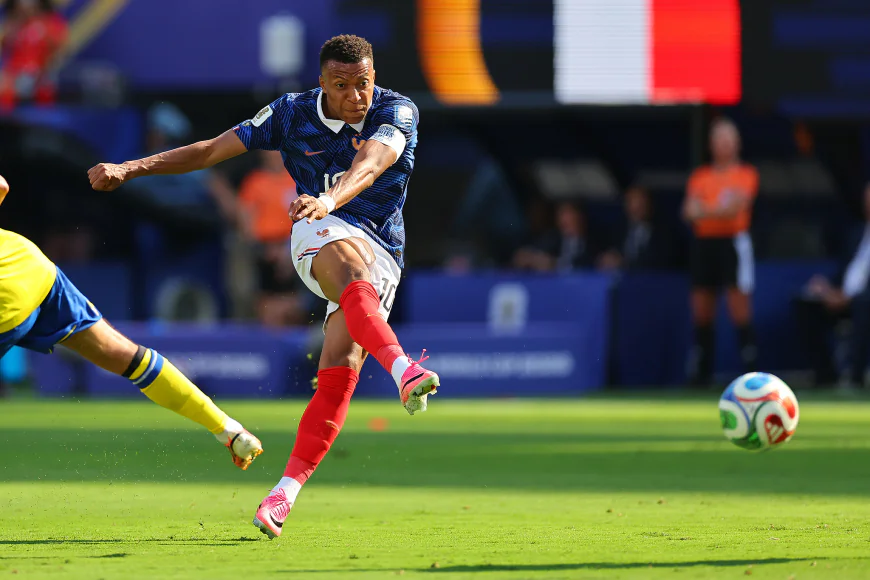
The FIFA World Cup 2026 has already delivered one of the most exciting and unpredictable tournaments in football history. Hosted jointly by the United States, Canada, and Mexico, this edition introduced an expanded 48-team format, allowing more nations to compete on the world’s biggest stage. The new format has brought greater diversity, thrilling matches, and several memorable surprises.
The group stage showcased a blend of established football powers and emerging nations. Traditional giants such as Brazil, France, England, Argentina, Spain, and Belgium progressed comfortably, demonstrating their quality and experience. However, the tournament also highlighted the rapid development of football across the globe, with countries like Morocco, Paraguay, Norway, Canada, and Cape Verde proving they could compete with the world’s best.
The Round of 32 has been particularly dramatic. Canada made history by defeating South Africa to reach the Round of 16, delighting home supporters. Brazil maintained their status as title contenders with a hard-fought 2-1 victory over Japan, while France produced one of the most dominant performances of the knockout stage by defeating Sweden 3-0. Kylian Mbappé continued his remarkable World Cup career with another outstanding display, reinforcing his reputation as one of the tournament's greatest performers.
The biggest shock came when Paraguay eliminated four-time champions Germany in a tense penalty shootout after a 1-1 draw. Morocco also caused an upset by defeating the Netherlands on penalties, proving that determination and tactical discipline can overcome traditional football powers. These unexpected results have made the tournament even more exciting and demonstrated that no team can be taken lightly in modern international football.
Beyond the results, the tournament has been praised for its vibrant atmosphere, excellent stadiums, and passionate fan support across North America. The expanded format has given more nations the opportunity to experience World Cup football, while maintaining a high level of competition. Although some critics questioned the larger tournament before it began, the quality of matches has largely justified the change.
As the competition moves beyond the Round of 32, the race for the championship remains wide open. With powerhouse teams still in contention and underdogs continuing to surprise, the FIFA World Cup 2026 has already established itself as one of the most entertaining and unpredictable editions of the tournament. Football fans around the world can look forward to an unforgettable conclusion.
The mandatory pausing of play in each half for a hydration break seems like having the greatest effect on the game itself. FIFA introduced 3-minute hydration break midway through each half.
Hydration breaks give players a vital moment to rehydrate and cool down during matches played in extreme heat, reducing the risk of cramps and heat-related injuries. They also help maintain the pace and quality of play in the second half, ensuring fans see fitter, sharper football until the final whistle.
As the round moves toward its climax this week, several blockbuster fixtures loom. The United States face Bosnia and Herzegovina on home soil in Santa Clara on Thursday morning (Bangladesh time), while Portugal and Croatia renew a rivalry dating back to their 2016 European Championship final meeting, with Cristiano Ronaldo and Luka Modrić still leading their respective sides deep into their careers. Spain, England and Argentina all remain firmly in the conversation as the tournament barrels toward the Round of 16.
If the opening exchanges of this new-format World Cup are any indication, fans should brace for a knockout stage unlike any before it — bigger, longer, and, so far, considerably less predictable.
What's Your Reaction?
 Like
0
Like
0
 Dislike
0
Dislike
0
 Love
0
Love
0
 Funny
0
Funny
0
 Wow
0
Wow
0
 Sad
0
Sad
0
 Angry
0
Angry
0




Comments (0)