

Closed domestic airports' reopening stressed to spur tourism
The proposal is reopening long-idle Shamshernagar Airport and reviving regional facilities in Bogura, Lalmonirhat and Ishwardi. If brought back into service in a planned way

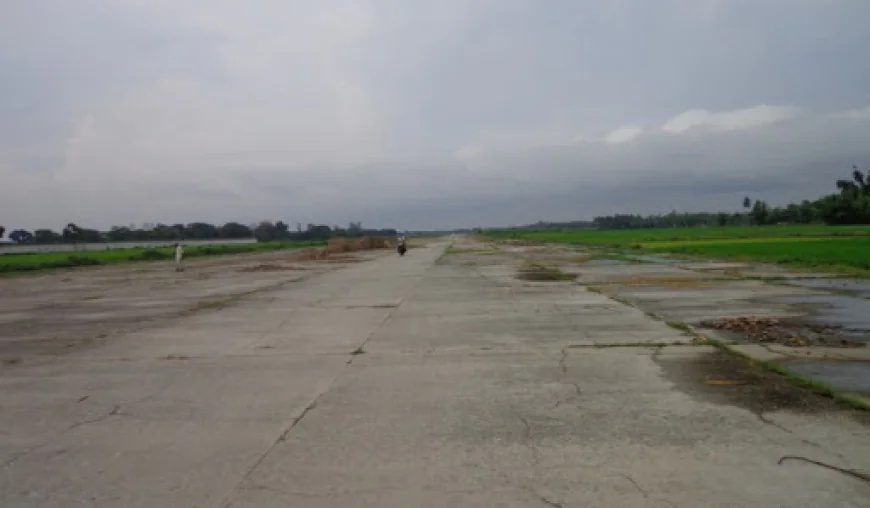
Bangladesh must urgently revive closed and underused airports to strengthen domestic tourism and build a more resilient travel economy amid rising global instability and conflict.
Member of Parliament M Nasser Rahman said this as chief guest at the opening of Dhaka Travel Mart 2026 at Pan Pacific Sonargaon Dhaka on April 9, according to a media report.
He called for a fundamental rethink of Bangladesh’s aviation and tourism infrastructure, arguing that the sector’s future hinges on better internal connectivity, affordable travel, and fuller use of dormant assets.
Central to his proposal is reopening long-idle Shamshernagar Airport and reviving regional facilities in Bogura, Lalmonirhat and Ishwardi. If brought back into service in a planned way, he said, these could ease domestic travel pressure, open new tourism corridors and give local economies outside the capital a much-needed lift.
“Reopening closed airports is no longer optional—it is essential for tourism growth,” he said, warning that reliance on a handful of hubs is risky as global travel remains volatile due to geopolitical tensions, economic uncertainty and fluctuating costs.
In this climate, he argued, domestic tourism must be the industry’s backbone. Stronger internal air links would make it easier for Bangladeshis to travel within the country and for foreign visitors to venture beyond the capital and usual destinations.
He highlighted Moulvibazar as a high-potential yet underdeveloped region. With its tea gardens, rolling hills, wetlands and eco-tourism sites, the district needs targeted investment, better access and coordinated promotion to unlock its promise.
“Without focused support, areas rich in natural and cultural value will remain untapped,” he cautioned, urging policymakers and investors to treat Moulvibazar as a core pillar of the national tourism strategy.
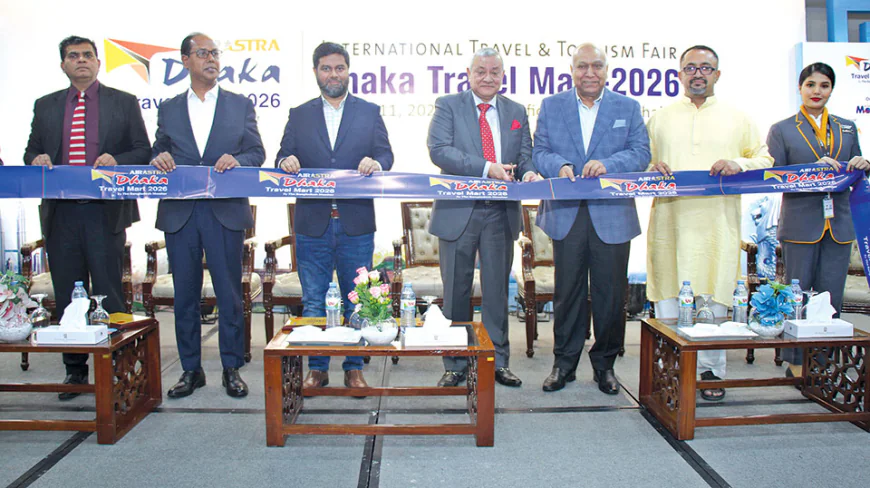
Lawmaker M Nasser Rahman, The Bangladesh Monitor Editor Kazi Wahidul Alam, Country General Manager and CEO of Sabre Travel Network Bangladesh Mohammad Saiful Haque, Head of Card Division at Mutual Trust Bank Abu Bokar Siddik, US-Bangla Airlines General Manager (Public Relations) Kamrul Islam and Air Astra CEO Imran Asif jointly inaugurate Dhaka Travel Mart 2026 cutting a ribbon at Pan Pacific Sonargaon Dhaka on April 9. Photo: The Bangladesh Monitor
Alongside aviation, he stressed the need to upgrade rail links to key destinations, including Sreemangal and nearby areas, with more air-conditioned coaches and improved services to make rail travel more comfortable and reliable.
Such improvements, he noted, are vital for middle-income and budget travellers who form a large share of the domestic market, helping to boost visitor numbers and extend stays.
On aviation costs, he said stabilising global conditions could lower jet fuel prices, easing pressure on airlines and, in turn, leading to more competitive fares that would encourage domestic travel.
However, he warned that infrastructure alone will not cut the mustard without reforms in tourism services. Citing Cox’s Bazar, he criticised “unreasonably high” prices for food, beverages and leisure services.
He noted that a beer costing about USD 1 abroad can be priced at around USD 12, or nearly BDT 1,400, in Cox’s Bazar. “If tourists face such disparities, why would they choose Bangladesh?” he asked, warning that inflated prices undermine competitiveness.
He called for more tourist-friendly pricing across accommodation, food and entertainment, striking a balance between fair business returns and affordability.
He also urged improvements in service quality, more diverse entertainment options and closer alignment with international standards, warning that without such steps, infrastructure gains will fall flat.
Concluding, he said Bangladesh stands at a crossroads in tourism development. With reopened airports, better rail links, stable aviation costs and fair pricing, the country could emerge as a strong regional destination.
“Tourism must be accessible, affordable and competitive to realise its full potential,” he said, calling for swift, coordinated action from government and private stakeholders.
Imran Asif, CEO of Air Astra; Md Saiful Haque, Country Manager and CEO of Sabre Travel Network Bangladesh; Abu Bokar Siddik, Divisional Head of Cards at Mutual Trust Bank; Kamrul Islam, General Manager (Public Relations) at US-Bangla Airlines; and Kazi Wahidul Alam, Editor of The Bangladesh Monitor, also spoke at the opening, striking a similar note.
What's Your Reaction?
 Like
0
Like
0
 Dislike
0
Dislike
0
 Love
0
Love
0
 Funny
0
Funny
0
 Wow
0
Wow
0
 Sad
0
Sad
0
 Angry
0
Angry
0




Comments (0)