

Bangladesh, Malaysia boost education, skills ties
Bangladesh shed lights on the importance of expanding international education pathways to enhance global competitiveness

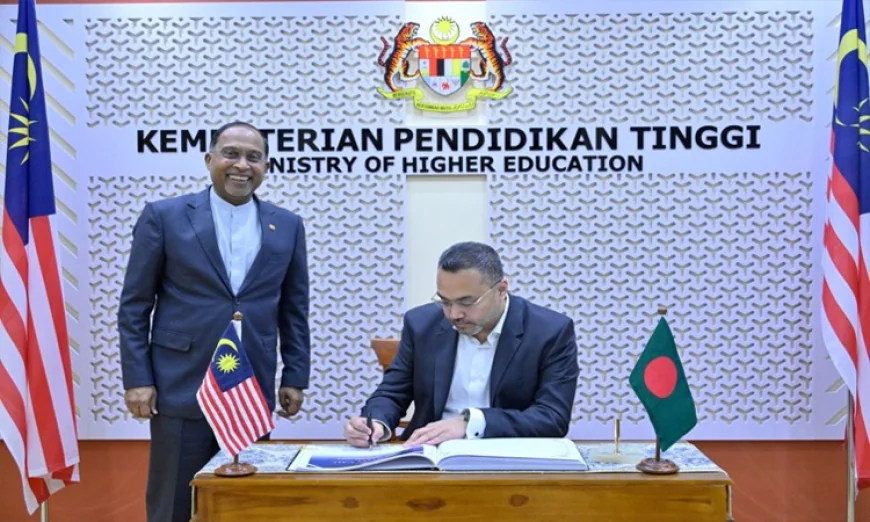
Bangladesh and Malaysia have agreed to strengthen cooperation in higher education, skills development and student mobility, as both countries seek to build a more robust and future-ready workforce.
The understanding was reached during a bilateral meeting in Putrajaya between Prime Minister’s Adviser on Education, Labour and Employment Mahdi Amin and Malaysia’s Higher Education Minister Zambry Abdul Kadir. Bangladesh’s Minister for Expatriate Welfare and Overseas Employment Ariful Haque Chowdhury were also present.
At the meeting, both sides reaffirmed their commitment to expanding cooperation in education and skills development, with Malaysia expressing readiness to deepen engagement with the government led by Prime Minister Tarique Rahman, report BSS.
Bangladesh highlighted the importance of expanding international education pathways to enhance global competitiveness and called for more scholarship opportunities for Bangladeshi students in Malaysia. The adviser stressed the need for structured scholarship frameworks to ensure not only academic excellence but also the welfare, safety and social integration of students abroad.
Dhaka also placed emphasis on strengthening university-to-university partnerships, increasing academic exchanges and introducing joint degree programmes through transparent and sustainable mechanisms.
In response, Malaysia welcomed the proposals and expressed willingness to expand scholarship allocations under existing and future initiatives. Officials noted that more than 11,000 Bangladeshi students are currently studying in Malaysia, contributing significantly to academic collaboration and socio-economic ties between the two nations.
The discussions also focused on aligning education systems with labour market demands through mutually recognised qualifications, distance learning and flexible study pathways. Graduate mobility and skills development emerged as key priorities, with Bangladesh seeking greater professional exposure and employment opportunities for its students and graduates.
Both sides agreed to further strengthen scholarship frameworks, enhance student support systems and deepen long-term institutional, and people-to-people ties, aiming to build a sustainable, knowledge-based partnership between the two countries.
What's Your Reaction?
 Like
0
Like
0
 Dislike
0
Dislike
0
 Love
0
Love
0
 Funny
0
Funny
0
 Wow
0
Wow
0
 Sad
0
Sad
0
 Angry
0
Angry
0




Comments (0)