

Social media rife with Trump, Netanyahu, Modi, BCS Cadre cattle brands
In recent years, a new trend has dramatically changed the atmosphere of Qurbani markets: viral branding. Suddenly, cows and buffaloes are no longer just animals. They become celebrities out of the blue

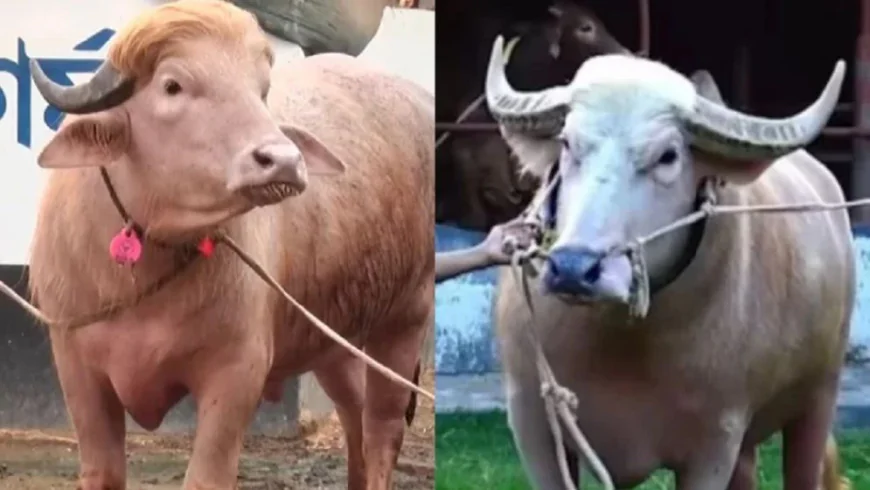
Every year before Eid-ul-Azha, cattle markets across Bangladesh begin transforming into something far bigger than simple livestock trading hubs. They become giant public spaces filled with colour, emotion, competition and spectacle.
But in recent years, a new trend has dramatically changed the atmosphere of Qurbani markets: viral branding. Suddenly, cows and buffaloes are no longer just animals. Out of the blue, they become celebrities.
One buffalo has been named “Donald Trump” while another has become famous as “Netanyahu” because of its aggressive behaviour and unusual hair-like fur. Giant bulls appear with names like “BCS Cadre”, “Boss”, “Sultan”, “Messi” or “King Kong”. Videos flood Facebook and TikTok, resulting in arrival of reporters and gathering of huge crowds. Influencers also come and begin filming.
And within hours, an ordinary cattle farm can turn into a national attraction.
This year, one viral buffalo named “Donald Trump” from Narayanganj reportedly even attracted interest from foreign diplomats. Another animal called “Netanyahu” became a social media sensation after videos showed it behaving wildly inside the market.
At first glance, the entire phenomenon appears to be pure entertainment; but behind the laughter lies a carefully evolving business strategy.
The business of attention
Bangladesh’s Qurbani economy is enormous. Farmers invest for months — sometimes years — raising cattle while facing rising feed prices, transport costs and economic uncertainty. Competition becomes intense during the Eid season.
In that crowded market, visibility means everything and social media visibility now means money.
A cow named “Local Black Bull” may receive little attention online. But a buffalo named “Donald Trump” instantly sparks curiosity. People click, share and tag friends. Media outlets begin covering the story, turning the animal into a brand.
For traders, this is free advertising far more powerful than any traditional marketing campaign.
The strategy is simple: Catchy name → Viral video → Huge crowd → Higher bargaining power → Bigger profit
Many traders openly admit that unusual names help attract buyers faster. Once a farm goes viral, customers arrive not only to buy cattle but also to “see the famous animal”.
In many cases, the crowd itself increases the perceived value of the animal.
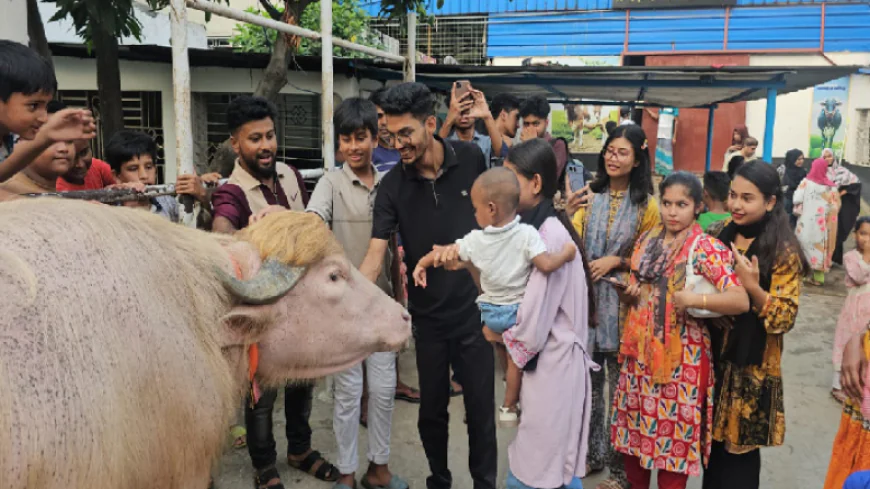
Hundreds of visitors throng Rabeya Agro Farm in Paikpara area of Narayanganj city to see the recently viral ‘Donald Trump’ buffalo. Photo: Collected
When cattle become content
Bangladesh has always had a culture of taking pride in Qurbani animals. Buyers often searched for the biggest, healthiest or most beautiful cow in the market.
But social media has amplified that tradition dramatically and now animals are marketed almost like film characters.
One is presented as calm and gentle. Another as “royal”. Another as “angry”. Another as a “foreign breed”. Dramatic background music, drone footage and cinematic editing are now common in cattle promotion videos.
Some farms even prepare content weeks before Eid to maximise online engagement. In many ways, Qurbani cattle marketing has entered the influencer era.
The goal is no longer just selling livestock. The goal is creating a story people remember.
Fun, creativity — and controversy
For many people, the trend is harmless fun. Children enjoy the funny names. Social media users share the clips for entertainment. Markets become more lively and festive. Traders gain publicity and the buyers enjoy the excitement.
But the phenomenon also raises uncomfortable questions.
Critics argue that excessive theatrics sometimes overshadow the religious spirit of Qurbani. Others feel that using controversial political names may unnecessarily fuel division or online hostility.
There is also concern over exaggeration. Viral videos often inflate animal prices. In the race for attention, reality sometimes becomes secondary.
Yet despite criticism, the trend continues to grow every year.
Why? Because it works.
A mirror of modern Bangladesh
Perhaps the most fascinating aspect of this trend is what it reveals about modern Bangladesh itself.
The viral Qurbani market is no longer only about religion or livestock. It has become a reflection of a rapidly changing society where business, humour, politics and digital culture constantly overlap.
What once depended on physical crowds inside muddy cattle markets now depends on algorithms, Facebook shares and TikTok trends.
In today’s Bangladesh, attention has become currency.
And in that competition for visibility, a buffalo named “Donald Trump” will always attract more buyers than an ordinary animal quietly standing in the corner.
What's Your Reaction?
 Like
0
Like
0
 Dislike
0
Dislike
0
 Love
0
Love
0
 Funny
0
Funny
0
 Wow
0
Wow
0
 Sad
0
Sad
0
 Angry
0
Angry
0



Comments (0)