

Nepal simplifies visa process for Bangladeshi patients: Envoy
Doctors at the conference called for expanding treatment opportunities, including kidney and liver transplants

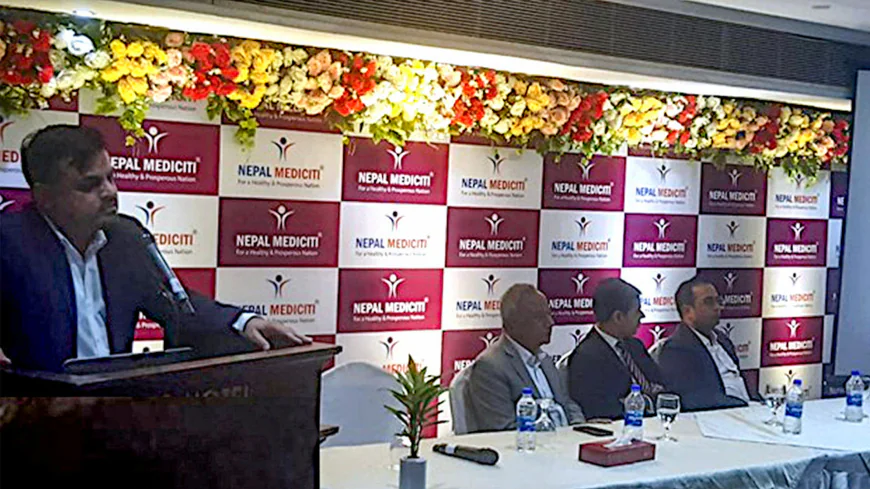
Nepalese Ambassador to Bangladesh Ghanshyam Bhandari has said the visa process for Bangladeshi patients seeking specialised medical treatment in Nepal, including kidney and liver transplants, has been simplified.
He made the remarks while attending an international scientific conference of physicians held at a hotel in the capital on May 10, says a press release sent to media on May 12.
At the event, doctors from Nepal Mediciti Hospital presented on liver cirrhosis, cardiac complications and kidney-related diseases.
Speaking at the conference, Nepal Mediciti Hospital Chairman Dr Upendra Mahato said the number of patients suffering from liver and kidney diseases is rising globally, including in Bangladesh.
He said Nepal’s healthy environment and the advanced medical services provided by Nepal Mediciti Hospital are helping patients recover more quickly.
As a result, patients from more than 100 countries have received treatment at the hospital, he added.
Among others, National Heart Foundation Director Brigadier General Professor Dr Yunusur Rahman, Professor Brigadier General Dr Mahbubur Rahman Bhuiya, Nepal Mediciti Hospital CEO Dr Amit Tomar, CMH Endocrinology Department Head Brigadier General Professor Dr Anwarul Kabir, nephrologist Dr Nabiul Hasan, Dr Bijoy G Rajbanshi, Dr Raj Rana and Manjurul Karim also spoke at the conference.
Doctors at the conference called for expanding treatment opportunities, including kidney and liver transplants.
In his speech, Nepal Mediciti Hospital urology specialist Ravi Kiran Gautam said the number of liver and kidney disease patients is increasing steadily in Bangladesh and around the world.
He stressed the need to work towards ensuring healthier and better lives for these patients.
What's Your Reaction?
 Like
0
Like
0
 Dislike
0
Dislike
0
 Love
0
Love
0
 Funny
0
Funny
0
 Wow
0
Wow
0
 Sad
0
Sad
0
 Angry
0
Angry
0


Comments (0)