

LPG sector seeks policy support, supply
Speakers discussed challenges facing the sector, including supply shortages, complex licensing procedures, investment protection and the promotion of environmentally friendly alternative fuels

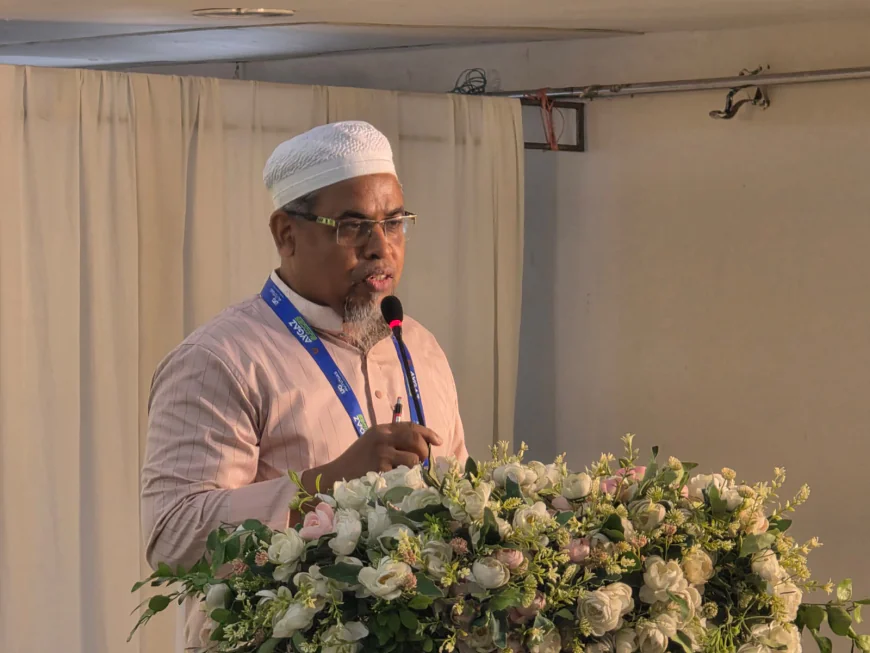
Stakeholders in Bangladesh’s LPG autogas sector have called for stronger policy support, uninterrupted supply and simplified licensing procedures to protect and expand the industry amid rising energy demand and shortages of natural gas.
The demands were raised at the 4th Annual General Meeting of the Bangladesh LPG Autogas Station and Conversion Workshop Owners Association, held at the RAOWA Club in the capital on Saturday.
Participants discussed various challenges facing the sector, including supply shortages, complex licensing procedures, investment protection and the promotion of environmentally friendly alternative fuels.
Speaking at the event, association president Engineer Md Serajul Mawla said the government introduced the “Autogas Policy-2016” to encourage the use of LPG autogas as an affordable and environment-friendly alternative fuel in response to the country’s growing gas crisis.
He said around 1,000 LPG autogas stations have been established across the country, while nearly 150,000 vehicles have been converted to LPG, involving investments of about Tk 1,500 crore.
Referring to instability in the global energy market, geopolitical tensions in the Middle East and rising prices of LNG and liquid fuels, he said LPG has emerged as an effective alternative fuel for Bangladesh. However, inadequate policy support and lack of regulatory cooperation are hindering the sector’s growth.
Maula warned that supply disruptions could occur at any time if the country fails to increase its LPG storage capacity. He urged the authorities concerned to ensure the supply of around 15,000 tonnes of LPG autogas per month.
He also proposed establishing an LPG import and supply system under the Bangladesh Petroleum Corporation (BPC) to help stabilise the market.
The association president further said the widening price gap between CNG and LPG has encouraged many users to switch back to CNG.
“We have already written to the relevant ministry requesting that the issue be addressed seriously,” he added.
Association General Secretary Md Hasin Parvez said entrepreneurs currently need approvals from 10 to 12 different agencies, including the Department of Explosives, Department of Environment, Roads and Highways Department, Fire Service, district administration and local government bodies, to establish and operate an LPG autogas station.
“As a result, business owners are facing lengthy delays and harassment,” he said.
During an open discussion session, station owners and association members called for immediate reforms, including amendments to LPG policies and regulations in line with market realities, simplification of the licensing process, introduction of a one-stop service system and automation of digital licensing procedures.
They also reiterated the proposal for BPC-led LPG import and supply management if necessary
Speakers at the meeting said LPG is not merely an alternative fuel but also an important component of Bangladesh’s future energy security, environmental protection and economic stability.
They urged the government to take swift and effective steps to make the sector sustainable and investment-friendly.
What's Your Reaction?
 Like
0
Like
0
 Dislike
0
Dislike
0
 Love
0
Love
0
 Funny
0
Funny
0
 Wow
0
Wow
0
 Sad
0
Sad
0
 Angry
0
Angry
0


Comments (0)