

FedEx’s MD-11F cargo jets return to the air
After a six-month grounding following a fatal UPS crash, two of FedEx’s MD-11Fs have returned to the skies

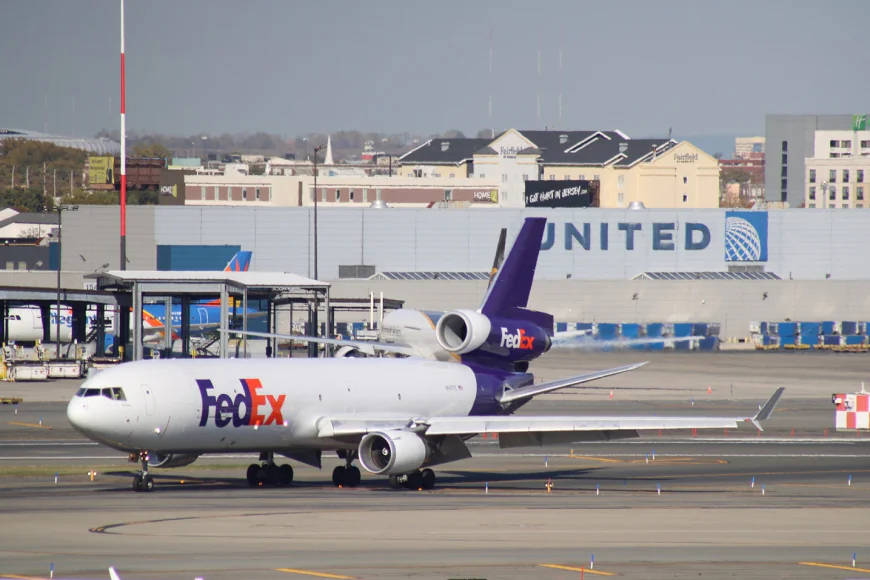
Two of FedEx’s MD-11Fs have back to the skies after being grounded following the devastating crash of a UPS MD-11F on 4 November last year, reports Air Cargo News.
Data from FlightRadar 24 shows that one of the express giant’s MD-11Fs (N621FE) conducted its first flight on 9 May, taking off and landing in Memphis in what looked like a test flight lasting just over an hour.
The return of the carrier’s MD-11Fs had been expected after Richard Smith, chief operating officer of FedEx said the aircraft were “ready to go” during a recent presentation at the New York-based Wings Club, a global society of aviation professionals, in late May.
The aircraft had been grounded for more than six months after the US Federal Aviation Administration (FAA) issued an Emergency Airworthiness Directive (AD) that ordered owners and operators of MD-11 freighters to inspect their aircraft for faults following the fatal UPS accident that resulted in the deaths of three pilots onboard and 12 people on the ground.
The National Transportation Safety Board’s (NTSB) has since early on focused its investigation into the November accident on a failed aft mount assembly after the left GE Aerospace CF6 turbofan and left pylon separated from the wing, sparking a fire, shortly after takeoff.
That assembly, which connects the pylon to the underside of the wing, consists of a bearing assembly housed within two lugs. The bearing assembly itself has an outer race housing an inner “ball element”.
Investigations found evidence of fatigue cracking in one of the two lugs, and along the interior of the bearing race, which fractured into two pieces. Notably, the fatigue cracks in the race originated at the edge of a recessed groove.
“The fatigue cracking extended through the thickness of the bearing race toward the exterior surface, encompassing about 75% of the fracture surface, with the remaining fracture surface consistent with overstress failure,” the agency said.
In FedEx’s fiscal third quarter running to 28 February, FedEx grounding of the company’s MD-11F fleet led to an adjusted operating income “headwind” of $120m as a result of higher operating costs and lost revenue, it said.
FedEx expects further headwind of $55m during the current quarter as a result of the grounding.
Air Cargo News reported in January that FedEx hoped to have its MD-11F aircraft back in the skies by the end of May.
In contrast to FedEx, UPS retired all its MD-11Fs in the fourth quarter of 2025 and said it will replace these aircraft with Boeing 767Fs.
In addition to UPS and FedEx, Western Global Airlines also operated 15 MD-11Fs. All of these are currently parked.
FedEx had largely used its MD-11Fs, on domestic or regional services. Research by Rotate showed that before the grounding, around 70% of total MD-11F capacity was deployed on domestic operations and the model accounted for just 0.4% of total international capacity.
What's Your Reaction?
 Like
0
Like
0
 Dislike
0
Dislike
0
 Love
0
Love
0
 Funny
0
Funny
0
 Wow
0
Wow
0
 Sad
0
Sad
0
 Angry
0
Angry
0




Comments (0)