

Kantaji Temple: A monumental terracotta architecture
Inscriptions on the northern side of the temple reveal that Maharaja Prannath Roy initiated the construction and his son completed it in 1752 after Prannath Roy’s death in 1722
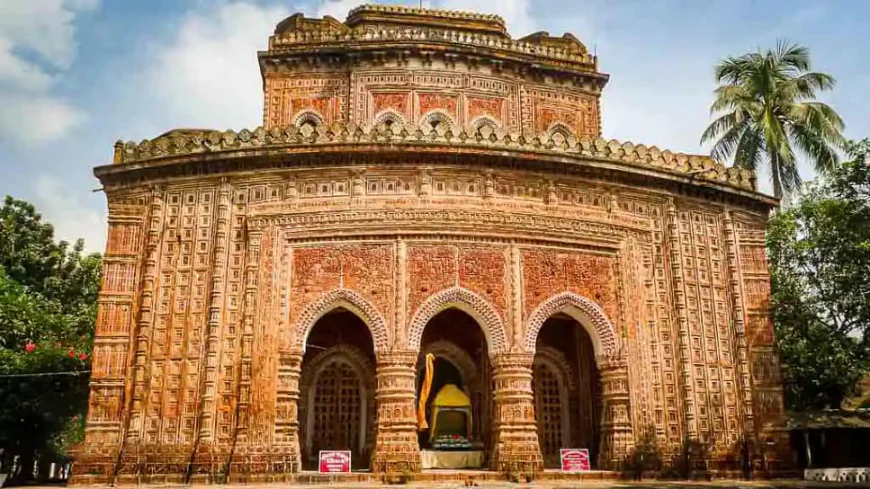
Bangladesh has a long and glorious history. Diverse archaeological sites such as Mahasthangarh, Paharpur, Vashu Vihara, Dhap Vihara, Jogoddol Moha Vihara, Bhoja Vihara, Charpatra Mura, Salban Vihara, Rupban Mura and Gokul Medh from the Hindu-Buddhist periods, alongside Kushumba Mosque, Bagha Mosque, Atia Mosque, Shait Gumbad Mosque, Chhota Sona Mosque and many other mosques from the Muslim period, are among the country’s national treasures.
The structure, craftsmanship, decoration, ornamentation, layout and concepts of these monuments differ greatly, with each possessing its own unique character. These historical records reflect the socio-economic and religious history of the country. Bangladesh’s landscape is unlike that of any other ecological region in the world. Over the centuries, various ideas, beliefs, philosophies and doctrines entered this land. The people embraced these influences and expressed them in a blended form. As a result, the architecture of this region evolved into composite styles such as “Indo-Aryan” and “Indo-Islamic” architecture.
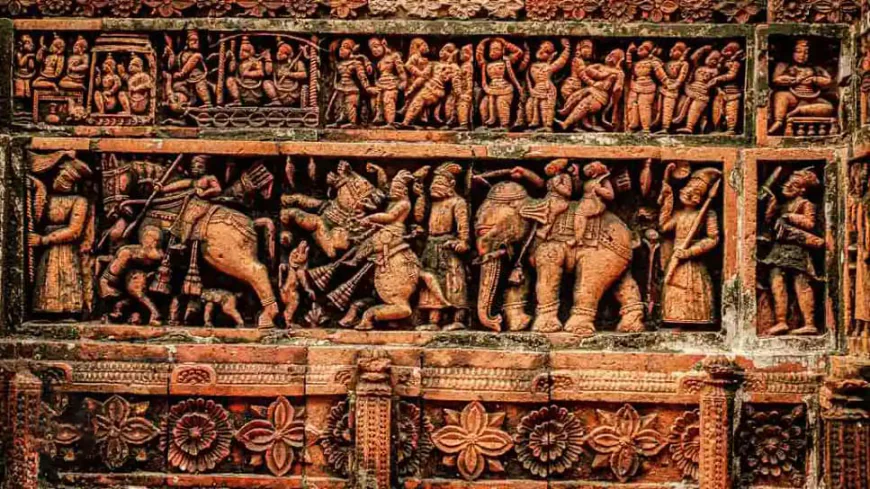
Stories etched in terracotta on the wall of Kantaji Temple in Bangladesh. Photo: Royal Bengal Tours
Dinajpur is a district rich in history, tradition and culture, and the Kantaji or Kantanagar Temple stands as a remarkable testament to this heritage. A unique example of terracotta architecture, the temple’s serene atmosphere and peaceful surroundings attract thousands of visitors beyond the Hindu community.
The Kantaji Temple is also known as Kantajew or Kantanagar Temple. Some call it the Navaratna Temple because of its nine peaks, which give the impression of a chariot rising above the structure. The three-storey temple stands on the bank of the Dhepa River in Kantanagar village of Kaharol upazila, about 20 kilometres north of Dinajpur town. Visitors can easily reach the temple by van or motorbike from Baromile area near the town.
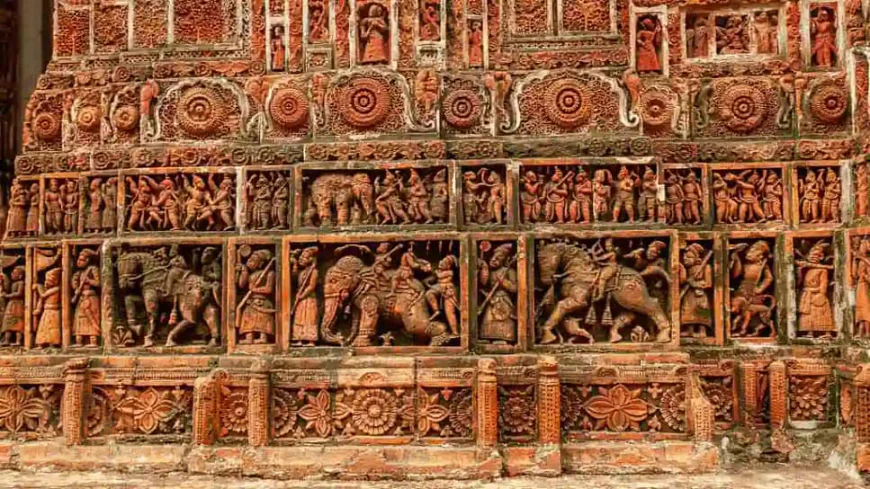
Terracotta panels depicting mythical creatures on the walls of Kantaji Temple. Photo: Royal Bengal Tours
According to legend, the temple was built by the then Maharaja of Dinajpur at enormous expense to house an idol of Lord Krishna. Inscriptions on the northern side of the temple reveal that Maharaja Prannath Roy initiated the construction. His son completed it in 1752 after Prannath Roy’s death in 1722.
There is insufficient information to determine the exact date of the temple’s construction. However, a four-line Sanskrit inscription discovered on the plinth at the northeastern corner of the temple provides details about the completion date and other relevant information. The inscription, written in Bengali script in the Sanskrit language, states that King Prannath began the construction of the elegantly planned Navaratna temple of Rukmini Kanta.
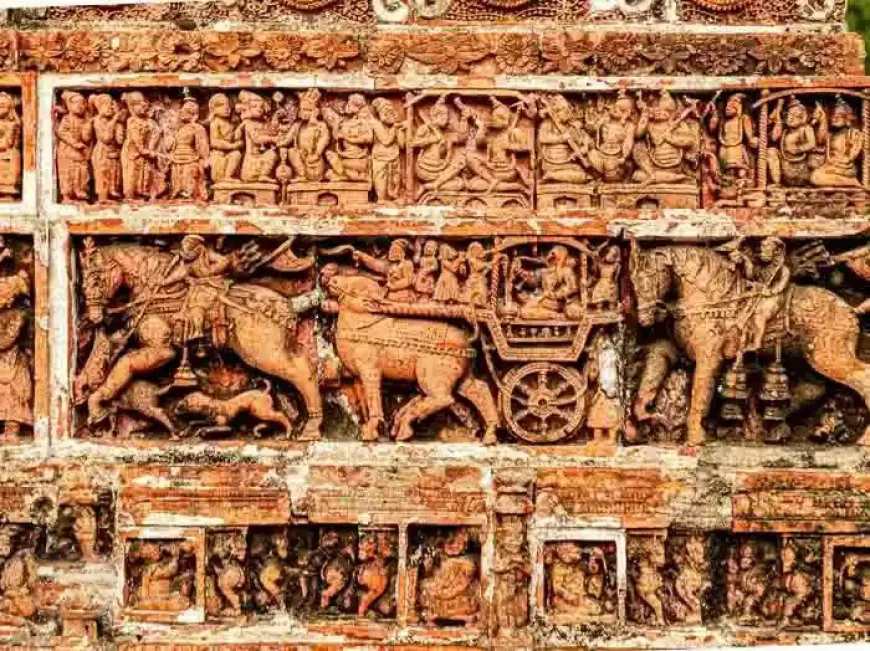
Terracotta adorned Kantaji Temple featuring nine spires symbol of enduring devotion. Photo: Royal Bengal Tours
Raja Prannath brought the image of Kanta, a revered name of Lord Krishna, from Brindaban and laid the foundation of the temple at Kantanagar, 18 kilometres north of his palace. No evidence has been found explaining why he built the temple so far from the town, though local legend says he was guided by a dream. A more practical explanation suggests that the Kantanagar area was fertile and strategically suitable for controlling the river route along the Dhepa River. To satisfy the Hindu inhabitants of the area and secure greater revenue, trade and prestige, Raja Prannath may have established the monument as part of his liberal policy, which was later continued by his successor Ramnath.
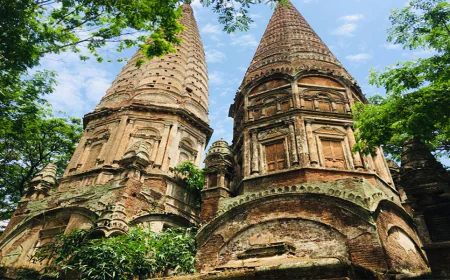
The temple’s beauty lies in its architecture, structural design and intricate craftsmanship. Rising in three tiers, the pyramid-shaped structure features nine decorated peaks at its corners, creating the appearance of a chariot standing on a high platform.
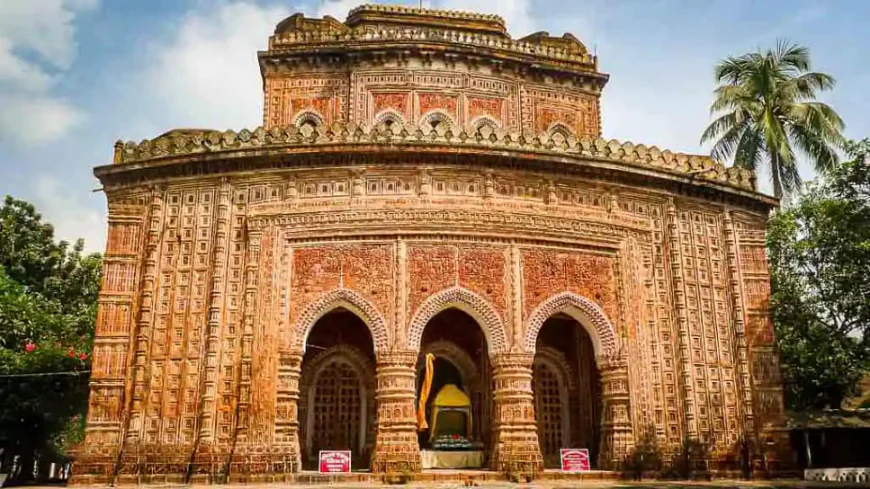
Intricately adorned Kantaji Temple in Dinajpur is a masterpiece of terracotta art. Photo: Royal Bengal Tours
The main building is centred around a square chamber. Built on a raised platform, the temple rises to nearly 50 feet in height. The ground floor contains 31 arches, the second floor also has 31, while the third floor has only three. Terracotta panels across the temple depict scenes from the Mahabharata and the Ramayana.
The first stage of decoration portrays various stories of Krishna alongside depictions of contemporary social life and entertainment enjoyed by landlords and aristocrats. The second stage features hunting scenes, royal processions with elephants, horses and camels, landlords relaxing in palanquins with hookahs, river scenes and festive celebrations aboard crowded boats. The third stage illustrates episodes from Krishna’s childhood, including attempts by the demon king Kansa to kill him, the slaying of the demon Bakasura, the defeat of the demon Kalikaya and Krishna’s joyful boat journeys.
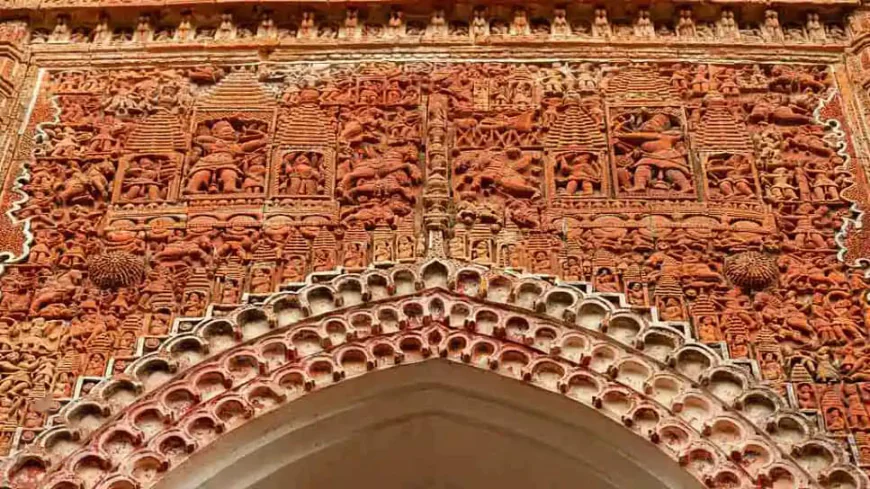
Arched doorway of Kantaji Temple is framed by intricate terracotta panels depicting mythological tales. Photo: Royal Bengal Tours
The temple suffered extensive damage during the earthquake of 1897. Later, renovation work was carried out under government supervision to restore its original splendour.
Alongside daily worship, a month-long Ras Mela and festival are held every November. Since the temple’s establishment, the fair has attracted visitors every year, drawing both local and foreign tourists.
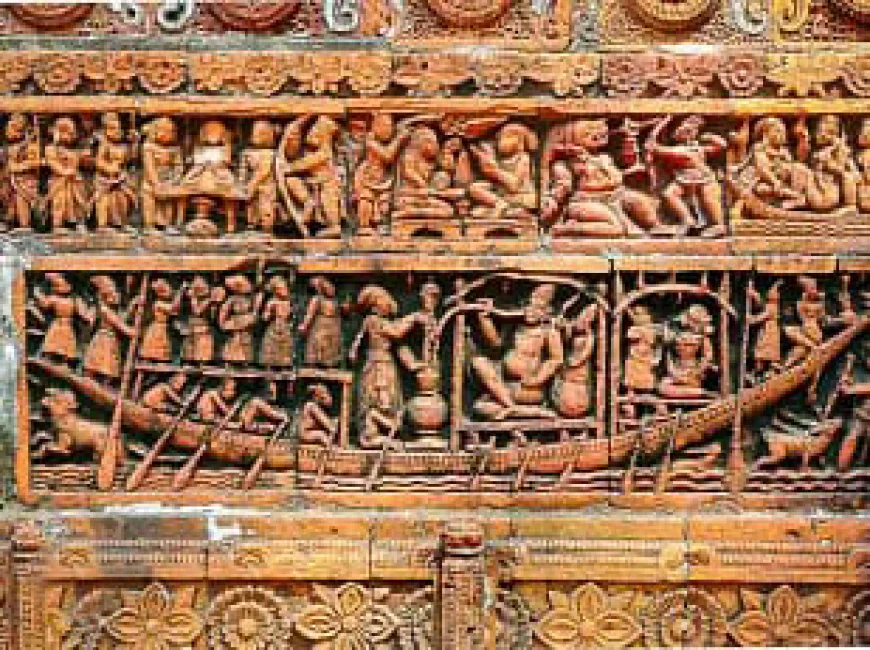
Terracotta artwork on Kantaji Temple is a masterpiece dedicated to Krishna and Rukmini. Photo: Royal Bengal Tours
Sharing his experience, Bimal Kumar Goswami, a visitor from West Bengal, India, said, "Since childhood, I’ve known that my Annaprashan, the ritual marking an infant’s first intake of solid food, was performed at Kantajew Temple in Bangladesh. Visiting this temple has been a long-cherished dream. I am amazed by the exquisite craftsmanship on the walls, created entirely by hand without modern technology.”
Sunil Kumar Dev from Halishahar in Chattogram, who visited last year’s Kantajew Mela, said: “I had seen the temple in pictures and videos, but seeing it in person is extraordinary. The intricate designs on the walls are impossible to believe unless seen firsthand.”
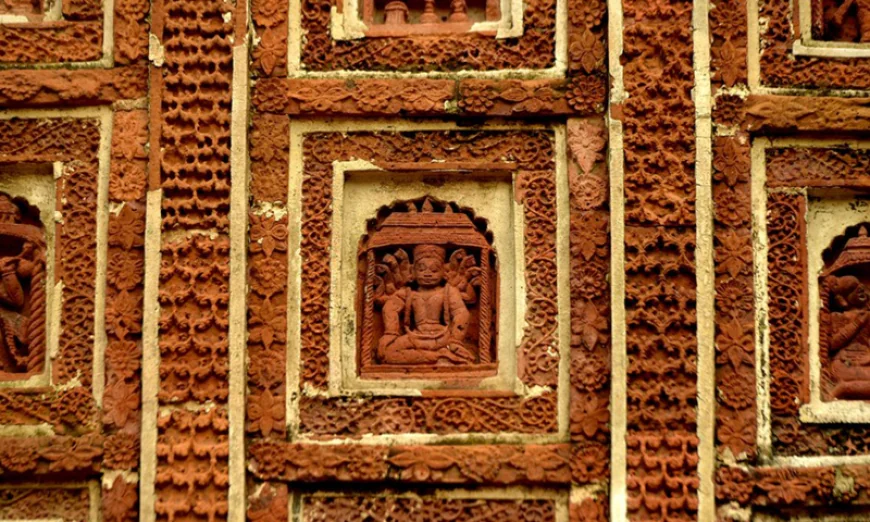
The photo shows the intricate terracotta design on the wall of Kantaji Temple in Dinajpur, Bangladesh. Photo: Xinhua
Bangladesh Bank introduced a new Tk 20 note into circulation on 1 June this year. The note features an image of the Kantaji Temple, highlighting its historical and architectural significance. According to the bank’s website, “On the left is a picture of the historical architecture of the Kantaji Temple in Dinajpur.” Residents of Dinajpur have expressed excitement and pride that the current interim government has recognised this historic monument by featuring it on the note. They also conveyed their gratitude to the government for the recognition.
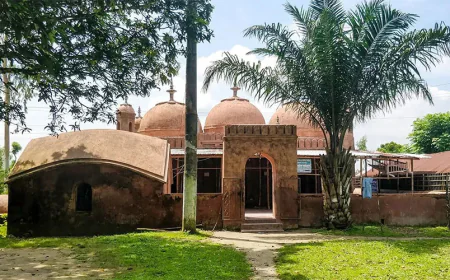
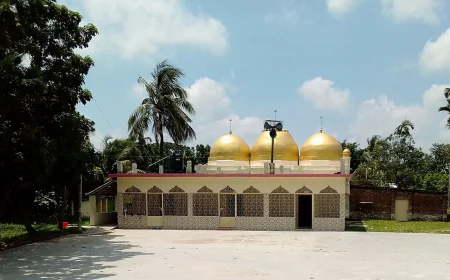
Visitors to the Kantaji Temple can also explore the nearby Nayabad Mosque, a small yet captivating site set in a tranquil environment. In addition, other notable attractions in Dinajpur, including Ramsagar, Sukhsagar, Dinajpur Rajbari and Shingra Forest, can be visited alongside the temple.
What's Your Reaction?
 Like
0
Like
0
 Dislike
0
Dislike
0
 Love
0
Love
0
 Funny
0
Funny
0
 Wow
0
Wow
0
 Sad
0
Sad
0
 Angry
0
Angry
0

I am a journalist


Comments (0)