

16th-century Kherua Mosque in Bogura battling neglect
Located around 1.5 kilometres south of Sherpur upazila town in the Khondkartola area of Shah Bandegi union, the mosque is regarded as one of Bogura’s finest examples of medieval architecture
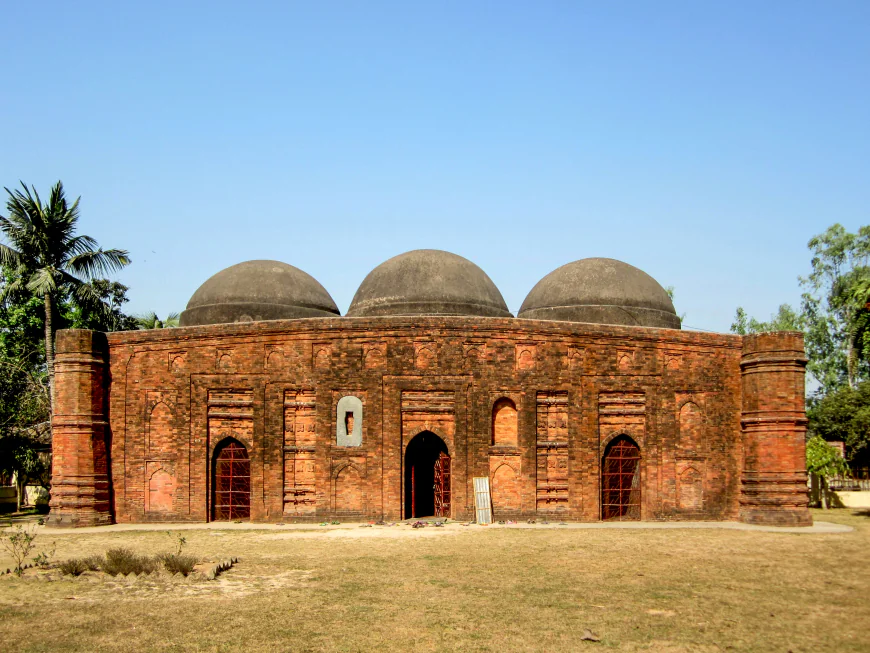
Standing quietly on the historic soil of Sherpur, the Kherua Mosque has borne witness to more than four centuries of history.
Located around 1.5 kilometres south of Sherpur upazila town in the Khondkartola area of Shah Bandegi Union, the mosque is regarded as one of Bogura’s finest examples of medieval architecture. Built in 1582 under the patronage of Nawab Mirza Murad Khan Kakshal, the structure still preserves its Persian inscription on the walls. The mosque reflects a rare fusion of Sultanate and Mughal architectural styles, although the exact origin of its name remains uncertain.
Despite its historical importance, the mosque is gradually falling into disrepair. Surrounded by greenery and enclosed by boundary walls, the 450-year-old structure now shows visible signs of neglect. Cracks have developed in all three domes, allowing rainwater to seep through during the monsoon. Worshippers often face difficulties as water drips inside the prayer hall. Although the Department of Archaeology took responsibility for the site more than 30 years ago, no major restoration work has yet been carried out.
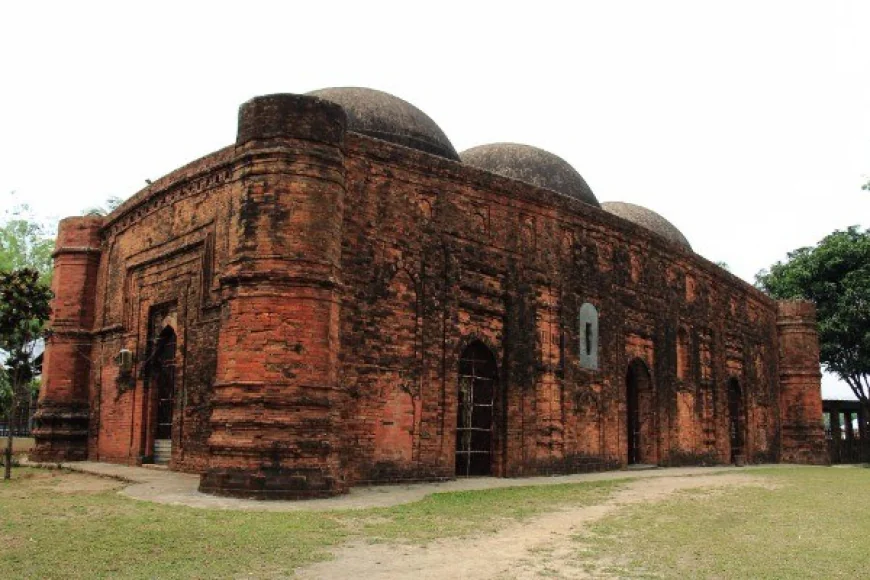
The exterior surfaces are plastered and paneled, the cornices are straight, and the buildings look less ponderous than Sultanate ones because of the higher domes. Photo: touristplaces.com
The mosque stands on 59 decimals of land. Its brick boundary walls are fitted with iron railings, while a large signboard near the main entrance once carried details of its history in Bangla and English. Over time, the writing has faded and is now unreadable. Researchers instead rely on books such as Oitihyer Sworup Shondhane by Mohammad Sirajul Islam and Sherpurer Itihash (Otit O Bortoman) by Principal Muhammad Rostom Ali for historical information.
According to these accounts, local mystic Fakir Abdus Samad first envisioned building the mosque around 1580. Construction began under the patronage of Mirza Murad Khan Kakshal, then a provincial jagirdar, during the reign of Mughal Emperor Jalaluddin Akbar.
In 1582, Akbar introduced the controversial Deen-i-Ilahi doctrine, triggering rebellion in parts of Bengal. Murad Khan Kakshal reportedly joined the uprising, leading to a halt in the mosque’s construction. Work resumed only after he accepted the emperor’s authority, and the mosque took nearly five years to complete.
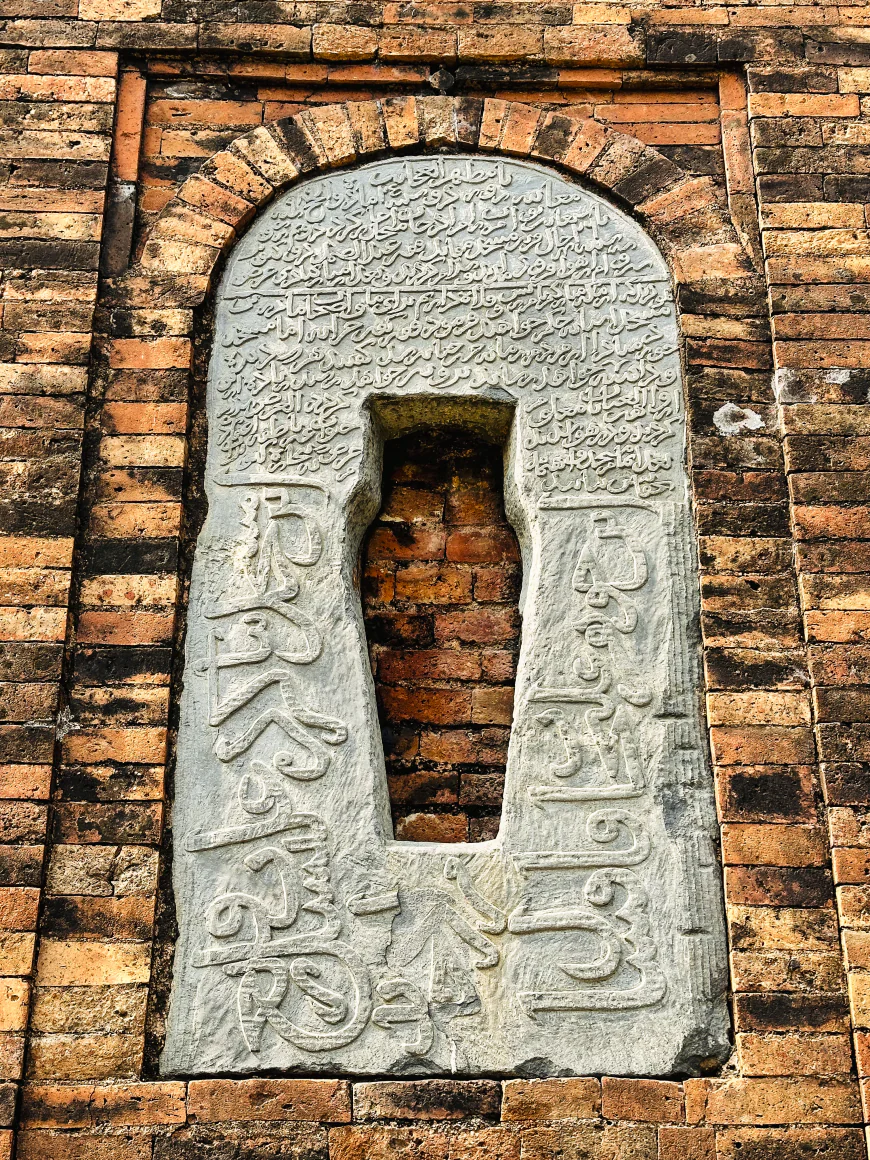
The mosque was built by Nawab Mirza Murad Khan, son of Jawahar Ali Khan Kakshal, in 1582 AD. Photo: Biddut Khoshnobish/Wikimedia Commons
Architecturally, the mosque is rectangular in shape, measuring 17.67 metres in length and 7.62 metres in width, with walls nearly two metres thick. The eastern façade features three entrances, with the central doorway larger and more prominent than the others.
Inside, three semi-circular mihrabs align with the entrances and are set within rectangular panels decorated with intricate ornamentation. Four octagonal corner towers extend to roof level, reinforcing the structure. The curved cornices reflect the Sultanate style and are decorated with terracotta motifs. Semi-circular domes and floral ornamentation further enhance the mosque’s visual appeal.
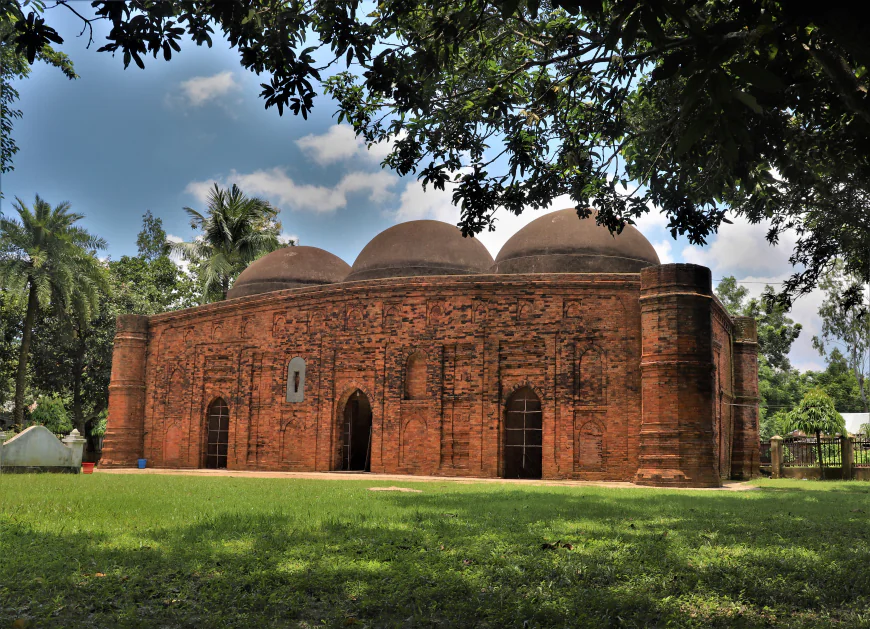
Mughal era mosques consist of only a prayer hall, which is now single-aisled with three or five bays. Photo: Arif Hossain/Wikipedia
The interior is divided into three bays. The western wall contains three decorated mihrabs, with the central niche flanked by two smaller ones for symmetry. The mosque can accommodate three rows of worshippers. Large black stones have also been incorporated into the structure, while the brickwork and vertical panels add further decorative variety.
The origin of the name ‘Kherua’ remains a matter of debate. Historian Abul Kalam Mohammad Zakaria, in his book Bangladesher Protnosompod, noted that the word has no meaning in Arabic. In Persian, however, ‘Khair gah’ means ‘inside a place’. Some historians believe the mosque may once have stood within Sherpur Fort, which was built by Raja Man Singh during his tenure as Subahdar of Bengal. Although the fort no longer exists, the mosque’s name may have evolved from ‘Khair gah’.
Caretaker Abdus Samad said visitors from both home and abroad come to the mosque every day. “People visit to learn about Muslim architecture and satisfy their curiosity about the site,” he said. He added that repairing the access road and preventing large buildings from being constructed nearby would help attract more tourists.
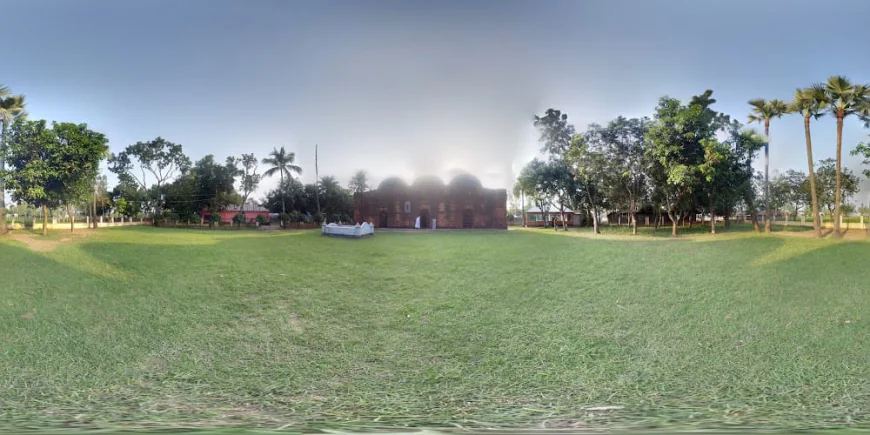
According to various sources, local mystic Fakir Abdus Samad first envisioned building the mosque around 1580. Photo: Collected
The mosque’s muezzin, Zubair, said regular congregational prayers, including Tarawih during Ramadan and Eid prayers, continue to be held there. “But the domes leak during the monsoon. Without urgent repairs, the mosque could face serious damage,” he warned, urging the Department of Archaeology to take immediate action.
Sherpur Upazila Nirbahi Officer Manjurul Alam acknowledged the deteriorating condition of the site. “Kherua Mosque is nearly 450 years old and its condition has worsened significantly. However, initiatives are being taken by the upazila administration and the Department of Archaeology to preserve it,” he said.
For now, the Kherua Mosque remains both a treasured historical monument and a symbol of long-standing neglect. Its cracked domes and fading inscriptions continue to tell a story of resilience, while also underlining the urgent need for preservation before one of Bogura’s most valuable heritage sites is lost to time.
What's Your Reaction?
 Like
0
Like
0
 Dislike
0
Dislike
0
 Love
0
Love
0
 Funny
0
Funny
0
 Wow
0
Wow
0
 Sad
0
Sad
0
 Angry
0
Angry
0

I am a journalist


Comments (0)